
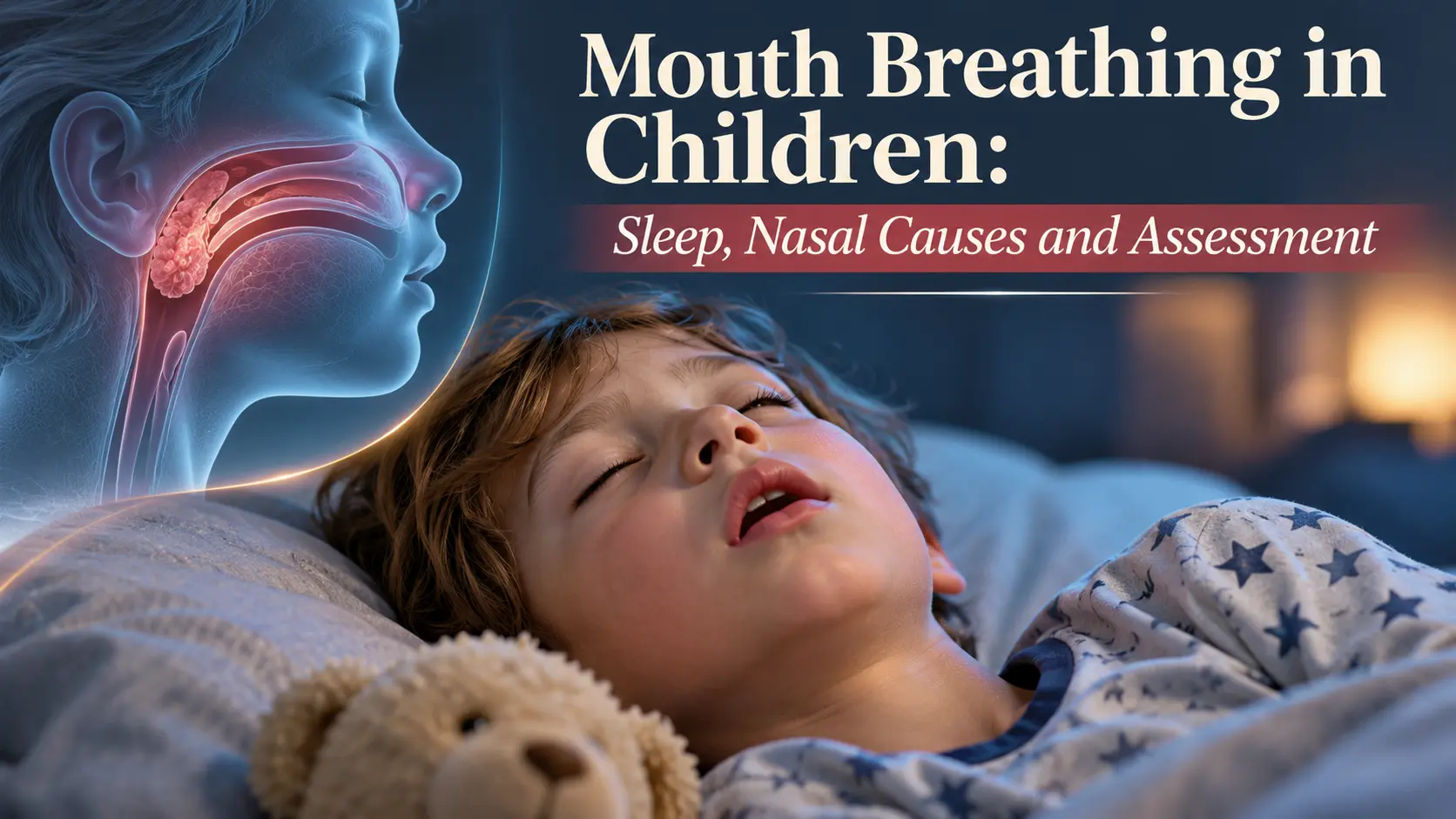
Children may breathe through the mouth when the nose is blocked or when enlarged adenoids, allergies, or other conditions affect airflow. Occasional mouth breathing during a cold is common, but persistent mouth breathing—especially with snoring, restless sleep, or daytime tiredness—deserves assessment to identify the cause.
Potential causes
Allergic rhinitis, prolonged nasal congestion, enlarged adenoids, enlarged tonsils, and structural narrowing may contribute. Dry mouth on waking, noisy breathing, nasal speech, or recurrent ear symptoms may provide additional clues. Mouth breathing alone does not prove that a child has sleep apnoea.
What an assessment may include
The clinician asks about sleep quality, snoring, pauses in breathing, school attention, growth, allergies, and recurrent infections. Examination of the nose, tonsils, and mouth may guide further assessment. A sleep study or specialist evaluation may be needed if obstructive sleep apnoea is suspected.
What parents can do
Keep a note of symptoms and, if safe and appropriate, share a brief sleep recording with the clinician. Manage known allergies with professional guidance and avoid using adult nasal medicines or decongestants without advice. Seek prompt help for breathing difficulty, bluish lips, or prolonged pauses with distress.
Frequently asked questions
Will mouth breathing change my child’s teeth? Persistent nasal obstruction and mouth breathing may be associated with oral and facial effects, but individual risk varies and a dental professional can assess concerns.
Does every snoring child need surgery? No. Treatment depends on the cause and severity; many children do not need surgery.
When is it urgent? Significant breathing difficulty, blue colour, or a child who is hard to wake needs emergency help.
Related reading
- Enlarged Adenoids in Children: Symptoms and Treatment Options
- Children Who Snore: When Sleep Breathing Needs Assessment