
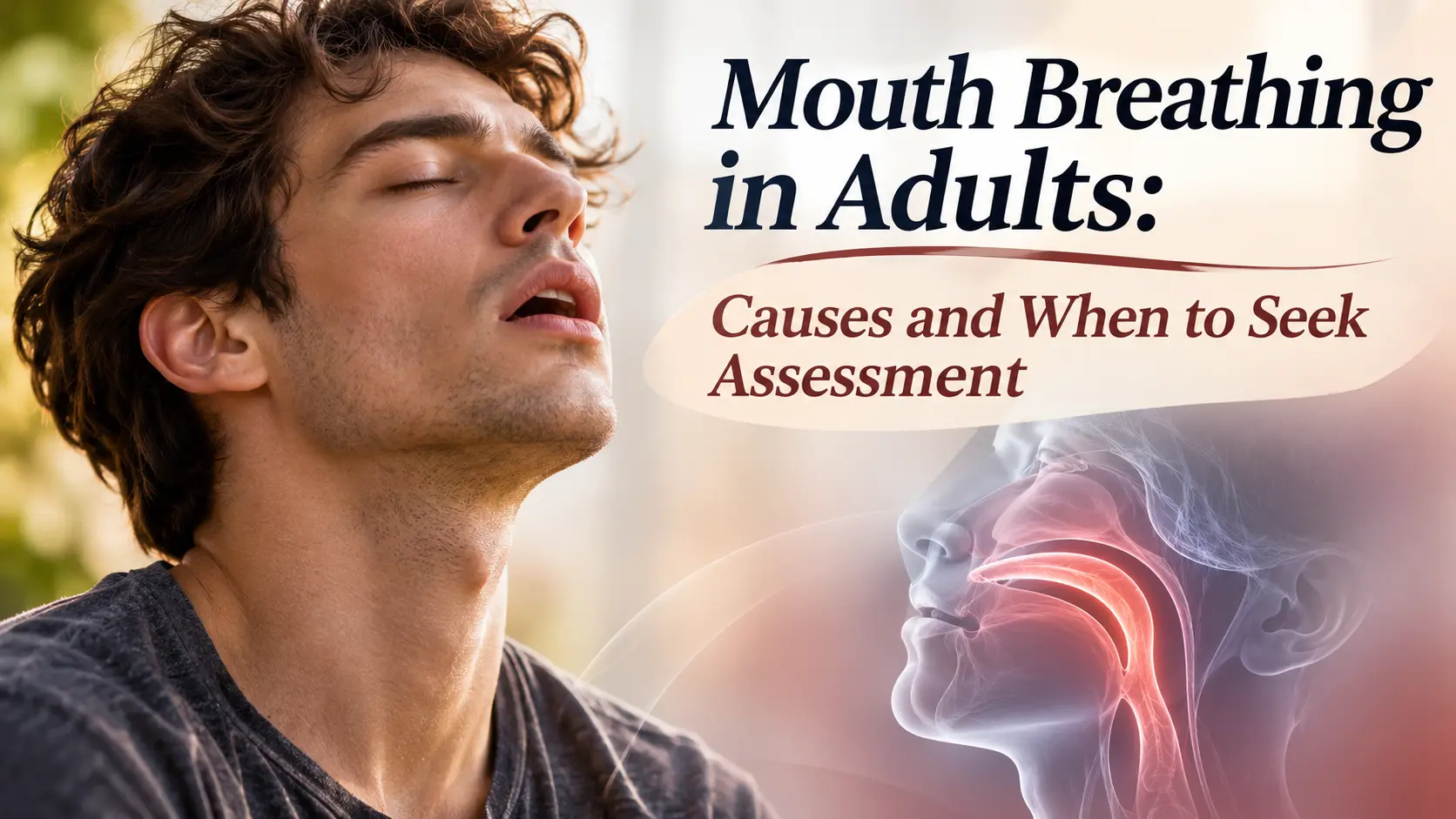
Mouth breathing can occur temporarily during a cold, but persistent mouth breathing may reflect nasal obstruction, rhinitis, structural narrowing or a sleep-related problem. It can contribute to dry mouth, throat irritation and disrupted sleep. The habit itself does not identify the cause. Assessment is useful when symptoms persist, one side of the nose is blocked, or snoring and daytime sleepiness suggest a broader sleep-breathing issue.
Common reasons for mouth breathing
Allergic or nonallergic rhinitis, a deviated septum, enlarged turbinates, nasal polyps and other causes may restrict airflow through the nose. Some people switch to mouth breathing during sleep or exercise. Mouth breathing can also coexist with obstructive sleep apnoea, but it is not diagnostic of that condition. A clinician asks about nasal symptoms, sleep quality, medicines and relevant medical history.
Why symptoms may matter
Dry mouth, sore throat on waking, bad breath or disturbed sleep may occur, but these symptoms are nonspecific. Loud snoring, witnessed pauses in breathing, gasping at night or marked daytime sleepiness should prompt assessment for sleep-disordered breathing. One-sided blockage, recurrent nosebleeds, smell loss or persistent discharge should be evaluated rather than attributed automatically to a deviated septum.
What may help after the cause is identified
Treatment depends on the underlying issue. Allergy management, appropriate nasal medicines, saline care or treatment of a structural obstruction may be considered. Do not tape the mouth shut at night as a self-treatment, especially if nasal airflow is limited or sleep apnoea is possible. Any device or exercise should be discussed with a clinician when breathing or sleep symptoms are significant.
When to seek care
Arrange an appointment for persistent nasal blockage, poor sleep, dry mouth that does not improve or frequent throat irritation. Seek prompt assessment for progressive one-sided symptoms or unexplained bleeding. Emergency care is needed for severe breathing difficulty, blue lips or acute deterioration.
Frequently asked questions
Is mouth breathing always harmful? Temporary mouth breathing during a cold is common. Persistent symptoms may indicate obstruction or sleep problems that deserve assessment.
Can nasal sprays help? They may help some causes but not all; the correct type and use depend on the diagnosis.
Should I tape my mouth at night? Do not use mouth taping as a substitute for assessment, especially with nasal blockage or possible sleep apnoea.
Explore our ENT consultation page for more information about this care option. A clinician can advise based on the individual history and examination findings.
Related reading
- Persistent Nasal Congestion: Common Causes and Assessment
- Snoring and Sleep Apnoea: Signs You Should Not Ignore
- Nasal Sprays: Types, Technique and Safe Use