
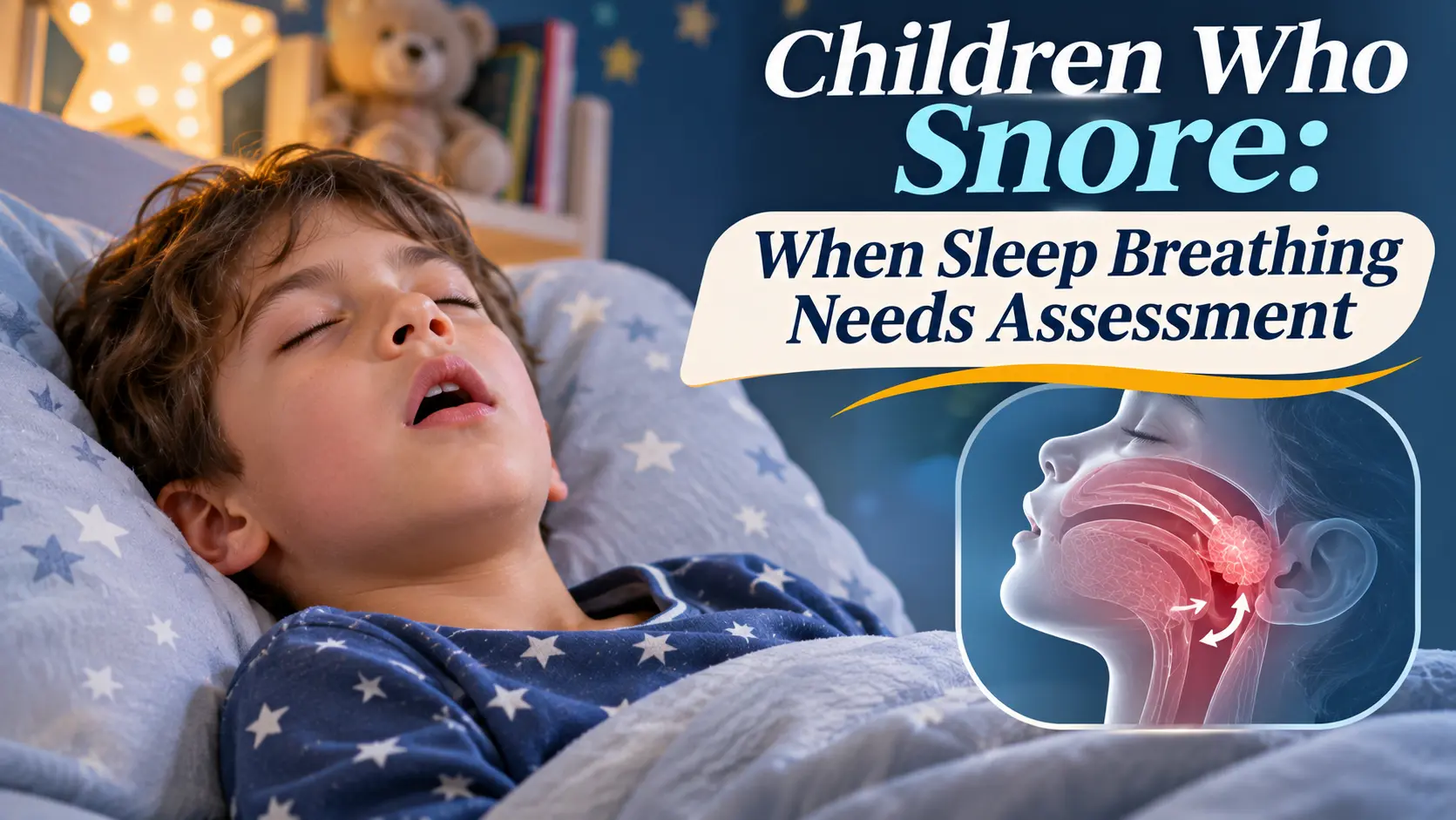
Occasional snoring during a cold is common, but habitual loud snoring in a child deserves attention, especially when breathing pauses, gasping, restless sleep, or daytime effects are present. Enlarged tonsils or adenoids can contribute, although nasal allergies, body weight, anatomy, and other conditions may also play a role.
What to observe at home
Notice how often the child snores, whether there are pauses or gasps, unusual sleep positions, sweating, frequent waking, bedwetting, morning headaches, or difficulty concentrating during the day. Children do not always appear sleepy in the same way adults do; some may seem unusually active or irritable. A short note of observations can help the clinician.
A phone recording may help illustrate a pattern if it is safe and appropriate, but it cannot diagnose sleep apnoea. Do not delay assessment while trying home remedies or devices. A clinician will examine the nose and throat and may recommend a sleep study when symptoms and examination suggest a breathing disorder.
How treatment is individualised
The plan depends on the cause, severity, age, sleep-study results if obtained, and other health needs. Allergy treatment may help when nasal inflammation contributes. If tonsils or adenoids are enlarged and obstruct breathing, surgery may be discussed, but surgery is not automatic for every child who snores.
Ask what benefit is expected, what symptoms should improve, and what follow-up is needed after treatment. If sleep breathing problems remain after an intervention, the child may need reassessment because more than one factor can narrow the airway.
When to seek urgent help
Arrange timely review for habitual snoring with pauses, gasping, poor sleep, or daytime difficulties. Poor-quality sleep can affect learning, mood and family life, and should not be dismissed as a phase without assessment.
Seek emergency care if a child is struggling to breathe, has blue or grey lips, becomes unusually unresponsive, or has severe breathing difficulty.
Common questions
Do all children who snore have sleep apnoea? No. Snoring has several causes, but repeated snoring with pauses or daytime effects should be assessed.
Will removing tonsils always solve the problem? Not always. Treatment depends on all contributing factors, and follow-up may be needed if symptoms continue.
Explore our airway assessment page for more information about this care option. A clinician can advise based on the individual history and examination findings.
Related reading
- Enlarged Adenoids in Children: Symptoms and Treatment Options
- Snoring and Obstructive Sleep Apnoea: Signs You Should Not Ignore