
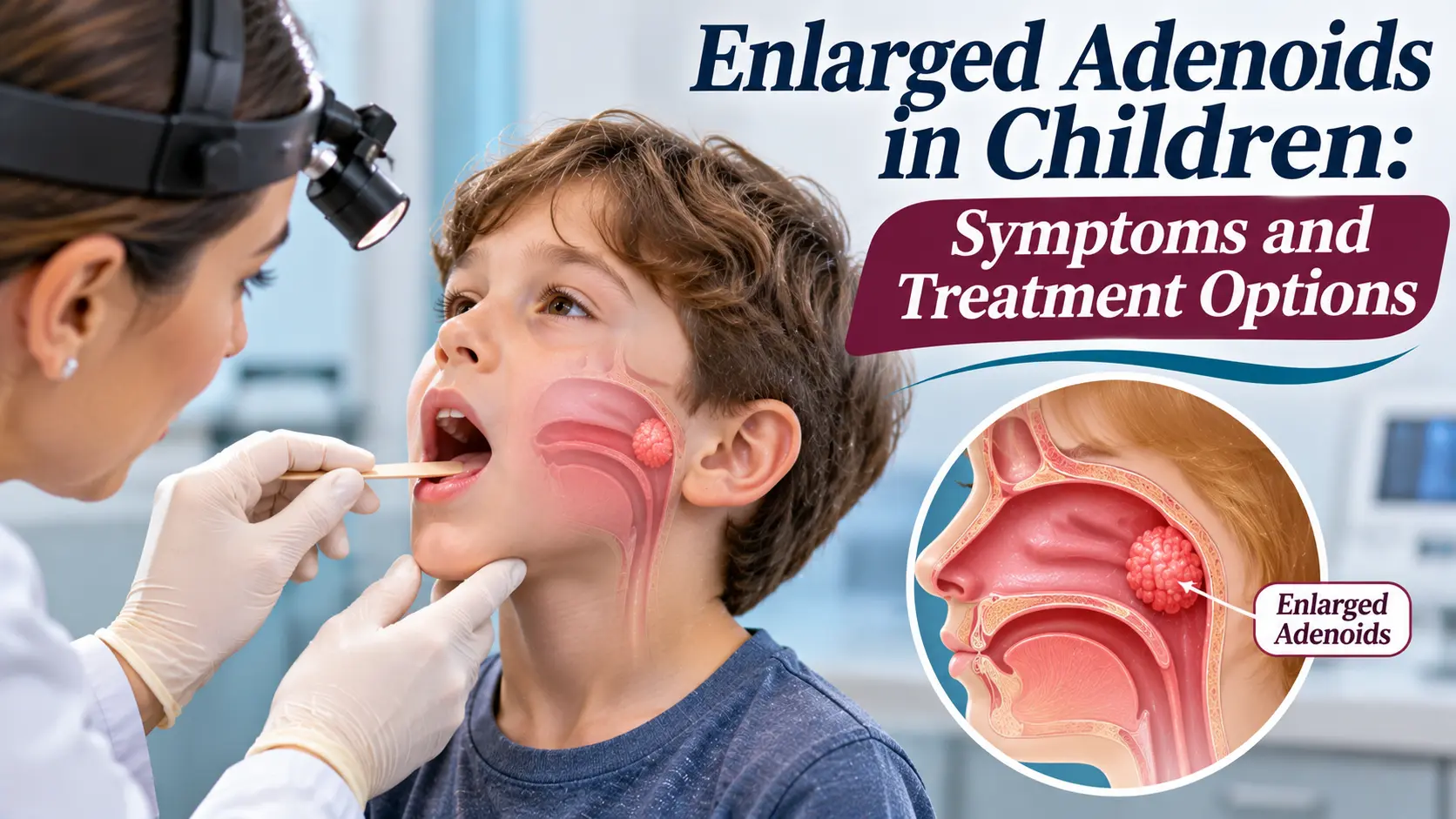
Adenoids are lymph tissue located high behind the nose, where they cannot usually be seen by simply looking into the mouth. They help the immune system recognise germs, but in some children they become enlarged or inflamed and contribute to nasal blockage, mouth-breathing, snoring, or middle-ear problems.
Symptoms to notice
Possible signs include persistent mouth-breathing, a blocked-sounding voice, snoring, restless sleep, pauses or gasps during sleep, chronic nasal symptoms, or recurrent middle-ear fluid and infections. None of these symptoms alone proves that enlarged adenoids are responsible. Allergies, enlarged tonsils, nasal inflammation, and sleep-disordered breathing may overlap.
Ask whether the child’s symptoms affect sleep quality, daytime behaviour, hearing, speech, feeding, or growth. Reports from a caregiver who observes sleep can be useful. A clinician examines the nose, throat and ears; a small scope or other investigations may be recommended depending on the symptoms and the child’s age.
How treatment is chosen
Treatment depends on severity, duration, and associated problems. Some children can be monitored, especially when symptoms are mild or likely to improve. When allergies or nasal inflammation contribute, medical treatment may be discussed. Persistent sleep-disordered breathing, recurrent ear problems, or significant obstruction may prompt a specialist discussion about surgery.
Adenoidectomy removes adenoid tissue, but it is not necessary for every child with snoring or a blocked nose. The clinician should explain the expected benefit, risks, recovery, and whether tonsils or other airway structures also contribute. The plan should be specific to the child rather than based only on the size of the adenoids.
When to seek help
Arrange assessment for persistent mouth-breathing, habitual snoring, observed pauses in breathing, recurring ear fluid, or hearing or speech concerns. Urgent care is needed if the child struggles to breathe, becomes blue or grey, is difficult to wake, or has severe acute symptoms.
If symptoms persist after treatment, return for review; another cause may need attention or additional sleep and hearing assessment.
Common questions
Can enlarged adenoids cause ear problems? They may contribute to Eustachian tube problems and middle-ear fluid in some children, but examination is needed to understand the cause.
Will adenoids shrink as a child grows? Adenoid tissue often changes with age, but significant breathing, sleep, or hearing symptoms should still be assessed rather than waiting without advice.