
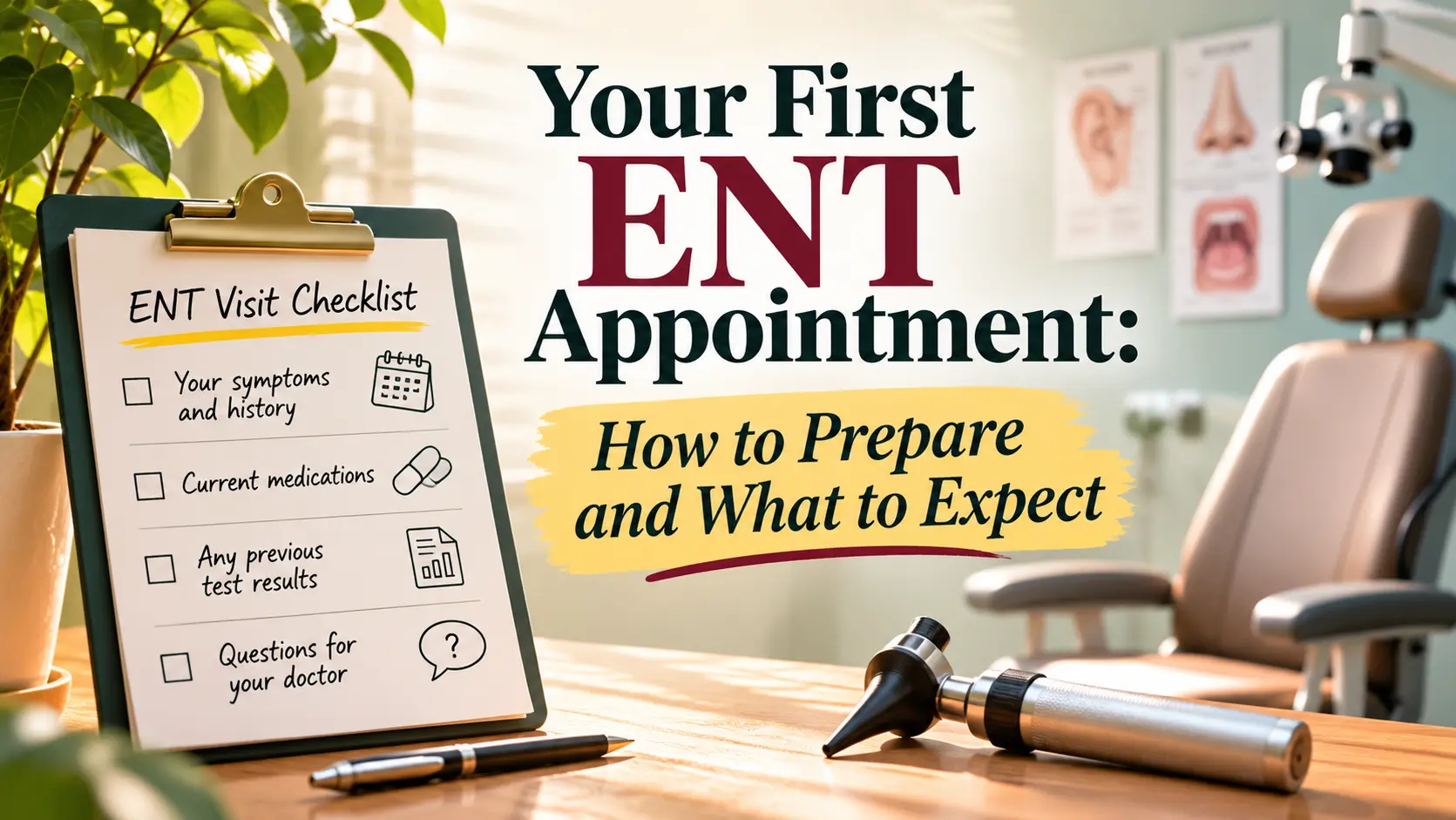
An ear, nose and throat appointment usually begins with a discussion of the main problem, how long it has been present and how it affects daily life. The clinician then chooses an examination or test based on the symptoms. You do not need to know the diagnosis before attending. A clear timeline, medicine list and a few questions can make the visit more productive and help you understand the plan.
What information to bring
Write down when symptoms began, whether they are constant or episodic, what makes them better or worse and which treatments you have tried. Mention sudden changes in hearing, dizziness, nosebleeds, swallowing problems, voice changes, breathing symptoms or a neck lump. Bring a list of medicines, allergies, relevant previous test results and details of prior ear or nasal surgery if applicable.
What examinations may involve
Depending on the concern, the clinician may examine the ears with an otoscope, inspect the nose and throat, feel the neck, assess voice or balance, or arrange a hearing test. A nasal or laryngeal scope may be recommended for particular symptoms. Not everyone needs every test. Ask the clinician to explain each procedure and tell them if you have anxiety, pain, mobility needs or a previous difficult experience.
Questions worth asking
Useful questions include: What are the most likely causes? What findings support that view? Is any test needed now? What treatment options and risks should I understand? When should I expect improvement, and what should I do if symptoms worsen? Ask for the plan in writing if it is complicated. For a child, mention developmental or school concerns and bring a caregiver who knows the symptom history.
When not to wait for a routine appointment
Seek urgent care for sudden hearing loss, severe breathing difficulty, inability to swallow saliva, significant facial weakness, major bleeding, severe dizziness with neurological symptoms or a rapidly expanding neck swelling. If symptoms change before your scheduled visit, contact the clinic or urgent service rather than waiting for the appointment date.
Frequently asked questions
Should I stop my medicines before the appointment? Do not stop prescribed medicines unless the treating clinician tells you to. Bring a complete list and ask about any specific preparation.
Will every ENT visit include a scope? No. The examination depends on symptoms and initial findings; a scope is used when it is helpful.
What should I do if symptoms suddenly worsen? Use urgent care for warning signs rather than waiting for a routine appointment.
Explore our ENT consultation page for more information about this care option. A clinician can advise based on the individual history and examination findings.
Related reading
- Hearing Tests: What to Expect and What Results Mean
- Nasal Endoscopy: What Happens During an ENT Examination?
- Laryngoscopy: How Clinicians Examine the Voice Box