
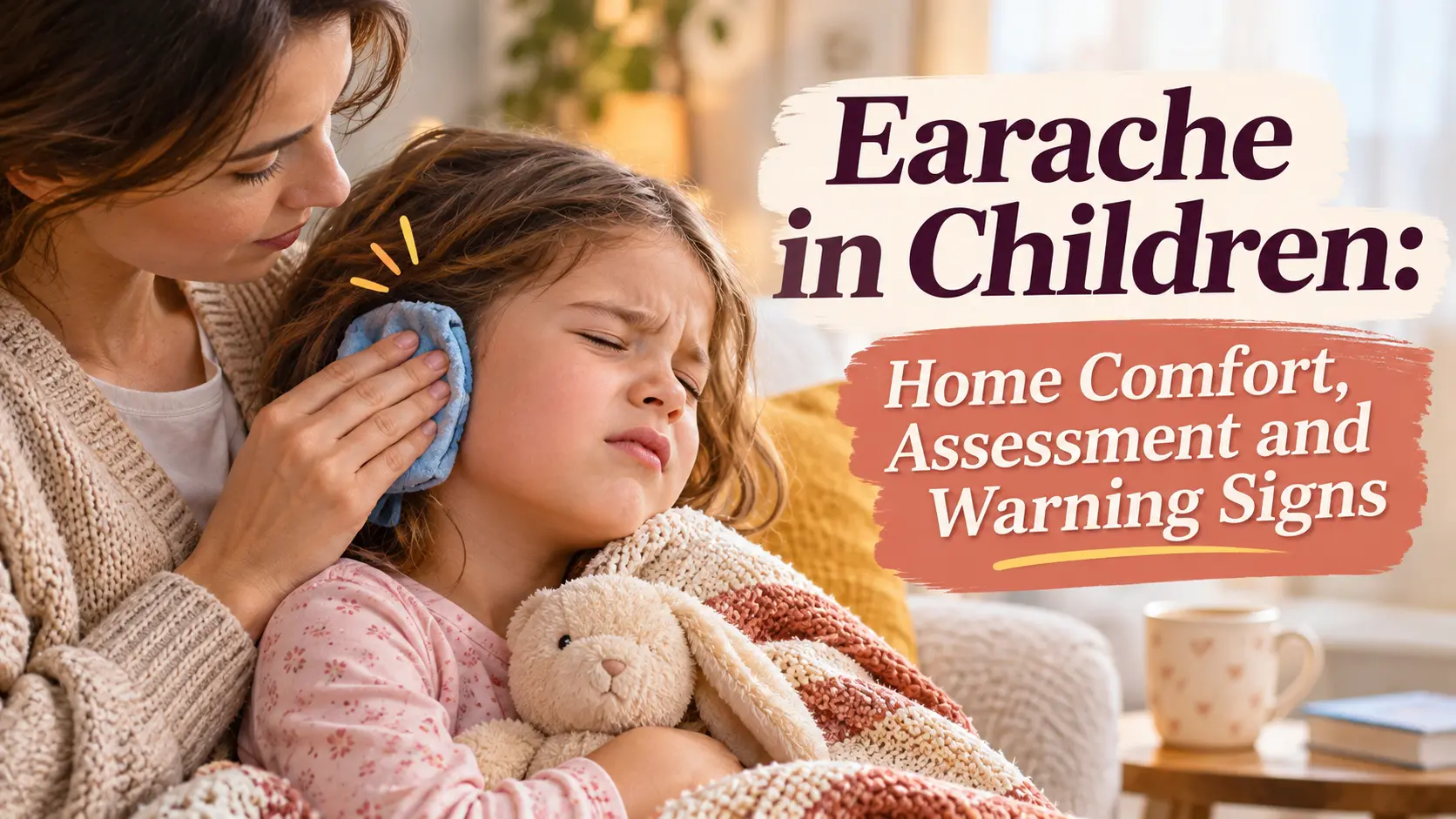
Earache is common in children and may be caused by a middle-ear infection, outer-ear irritation, pressure changes, wax or pain referred from the throat or teeth. Many episodes improve, but age, severity and associated symptoms matter. Parents should not assume that every earache needs antibiotics or that a child who is not pulling the ear cannot have an ear problem.
What symptoms can look like
A child may cry, sleep poorly, have fever, touch the ear or become less responsive to sound. Older children may describe pressure, sharp pain or muffled hearing. Ear discharge can suggest an outer-ear problem or a perforated eardrum. These patterns overlap, so a clinician may need to examine the ear before recommending treatment.
Comfort measures and medicine safety
Offer fluids and comfort, and use age-appropriate pain relief only according to the product label or professional advice. Never give aspirin to children unless a specialist specifically directs it. Do not insert cotton buds into the ear or use unprescribed ear drops, especially if there is discharge or possible eardrum perforation. Avoid putting oil or home remedies into the ear unless advised by a clinician.
When a child should be assessed
Seek medical advice if pain is severe, symptoms worsen, fever is high or persistent, discharge occurs, the child is very young, or the child has significant medical conditions. Recurrent episodes or ongoing hearing concerns also warrant review. Swelling or redness behind the ear, an ear that protrudes, severe headache, stiff neck, unusual drowsiness or a child who appears seriously unwell requires urgent care.
What to expect at a visit
The clinician asks about duration, fever, recent colds, previous ear problems and medicines. Examination of the ear drum helps decide whether there is an acute infection, fluid or another cause. Antibiotics are reserved for situations where they are likely to help under the relevant clinical guidance. Follow the advised plan and seek reassessment if the child deteriorates or does not improve as expected.
Frequently asked questions
Do all child ear infections need antibiotics? No. The decision depends on age, severity, examination and the likelihood of benefit.
Can I use leftover ear drops? No, not without professional advice. The cause and eardrum status influence which drops are safe.
What is an emergency sign? Swelling behind the ear, severe headache, stiff neck, abnormal drowsiness or a seriously unwell child needs urgent care.
Explore our paediatric ENT consultation page for more information about this care option. A clinician can advise based on the individual history and examination findings.
Related reading
- Recurrent Ear Infections in Children: Assessment and Next Steps
- Ear Discharge: Common Causes and When to Seek Care
- Glue Ear in Children: Hearing, Speech and When to Seek Help