
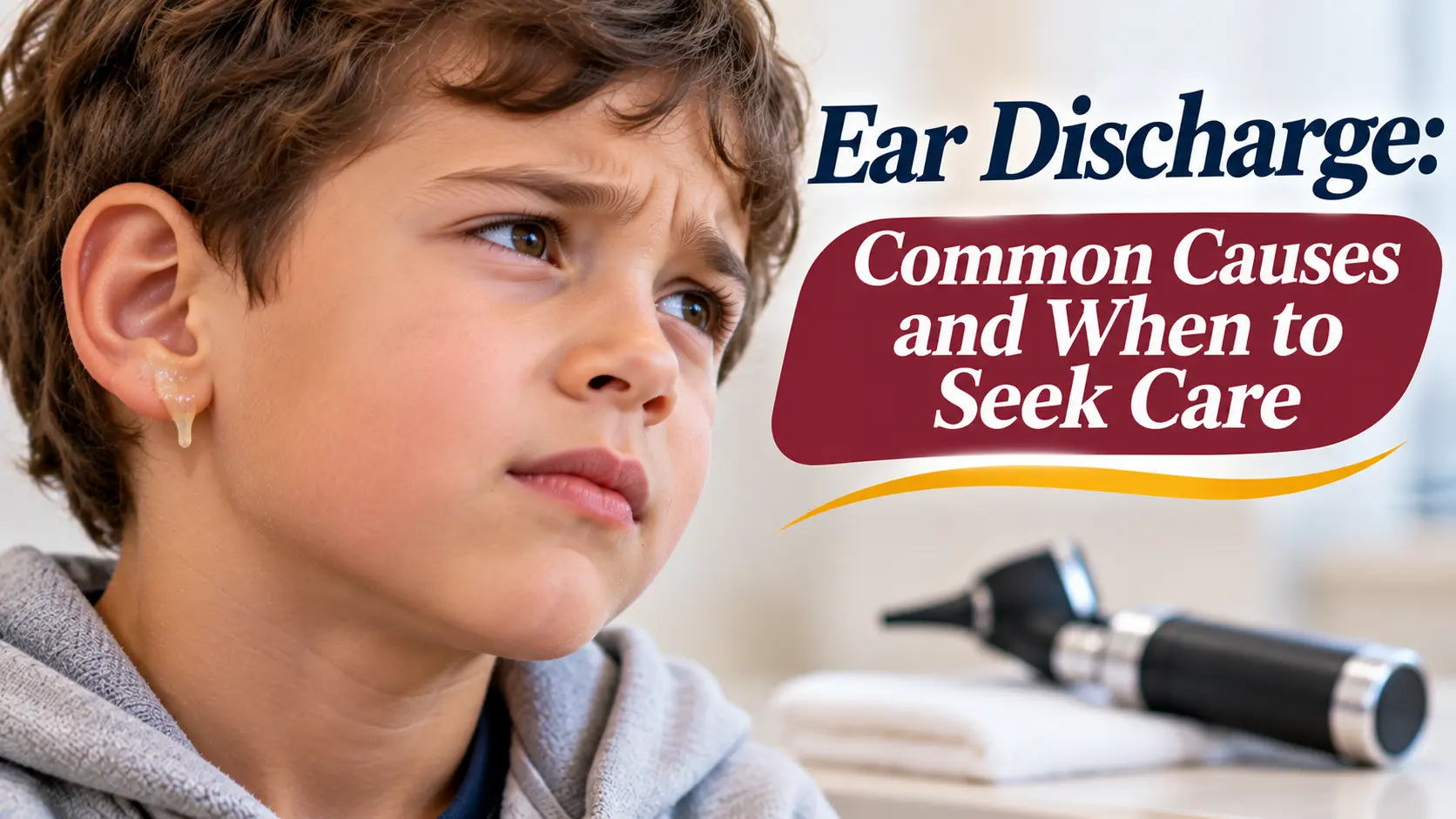
Fluid coming from the ear can have several causes, including an outer-ear infection, a middle-ear infection that drains through a perforated eardrum, eczema of the ear canal or, less commonly, a more serious condition. Colour and smell alone cannot establish the cause. The most useful clues are pain, fever, hearing change, recent swimming or injury, and whether the person has ear tubes or previous ear surgery.
Possible causes of ear discharge
Clear fluid may follow irritation or water exposure; pus-like discharge can occur with infection; blood may follow scratching, trauma or an eardrum injury. In a child, discharge after ear pain can sometimes mean pressure from a middle-ear infection has led to a small eardrum perforation. Long-lasting, recurrent or foul-smelling drainage needs assessment rather than repeated self-treatment because chronic infection or other ear disease may be present.
What to do while waiting for advice
Keep the ear dry and wipe only the outside gently. Do not insert cotton buds, fingers or other objects into the canal, and do not flush the ear. Avoid non-prescribed drops unless a clinician or pharmacist confirms they are appropriate: some ear drops should not be used when the eardrum may be perforated or when the person has ear tubes. Note when the discharge started, its appearance, pain, fever and any change in hearing.
When to seek urgent care
Get urgent medical help if discharge follows a significant head injury, or is accompanied by sudden hearing loss, severe dizziness, weakness of the face, severe headache, swelling or redness behind the ear, or the person appears seriously unwell. A baby, a person with diabetes or a weakened immune system, and anyone with persistent or recurrent discharge should be assessed promptly. Severe pain or fever also warrants timely clinical review.
How clinicians assess it
A clinician will ask about symptoms and inspect the ear canal and eardrum with an otoscope. Depending on the findings, they may clean the canal safely, take a sample, arrange hearing tests or refer to an ENT specialist. Treatment depends on the source; it may involve suitable ear drops, management of middle-ear infection or further evaluation. Antibiotics are not appropriate for every cause of discharge.
Frequently asked questions
Can I use leftover ear drops? Do not use leftover drops without advice. The correct treatment depends on the cause and whether the eardrum is intact.
Can water enter the ear? Water can aggravate some canal conditions. Keep the ear dry while discharge is being assessed and follow clinician-specific advice.
Does discharge always mean infection? No. Trauma, skin conditions and other disorders can also cause drainage, so examination may be needed.
Related reading
- Ear Infections: Symptoms, Treatment and When to Seek Care
- Perforated Eardrum: Causes, Care and Recovery
- Swimmer’s Ear: Symptoms, Prevention and Treatment
Sources and further reading
Related research involving Dr. Mohannad Almomani
A 2026 co-authored study investigated inflammatory signalling in cholesteatoma using population and molecular research data. It provides background on the condition, not a way to diagnose the cause of an individual’s ear discharge.
- A UK Biobank Study on Genetic Variants in Pattern-Recognition Receptor (PRR) Signaling Indicates Self-Perpetuating Inflammation of Cholesteatoma (2026, Journal of Personalized Medicine)