
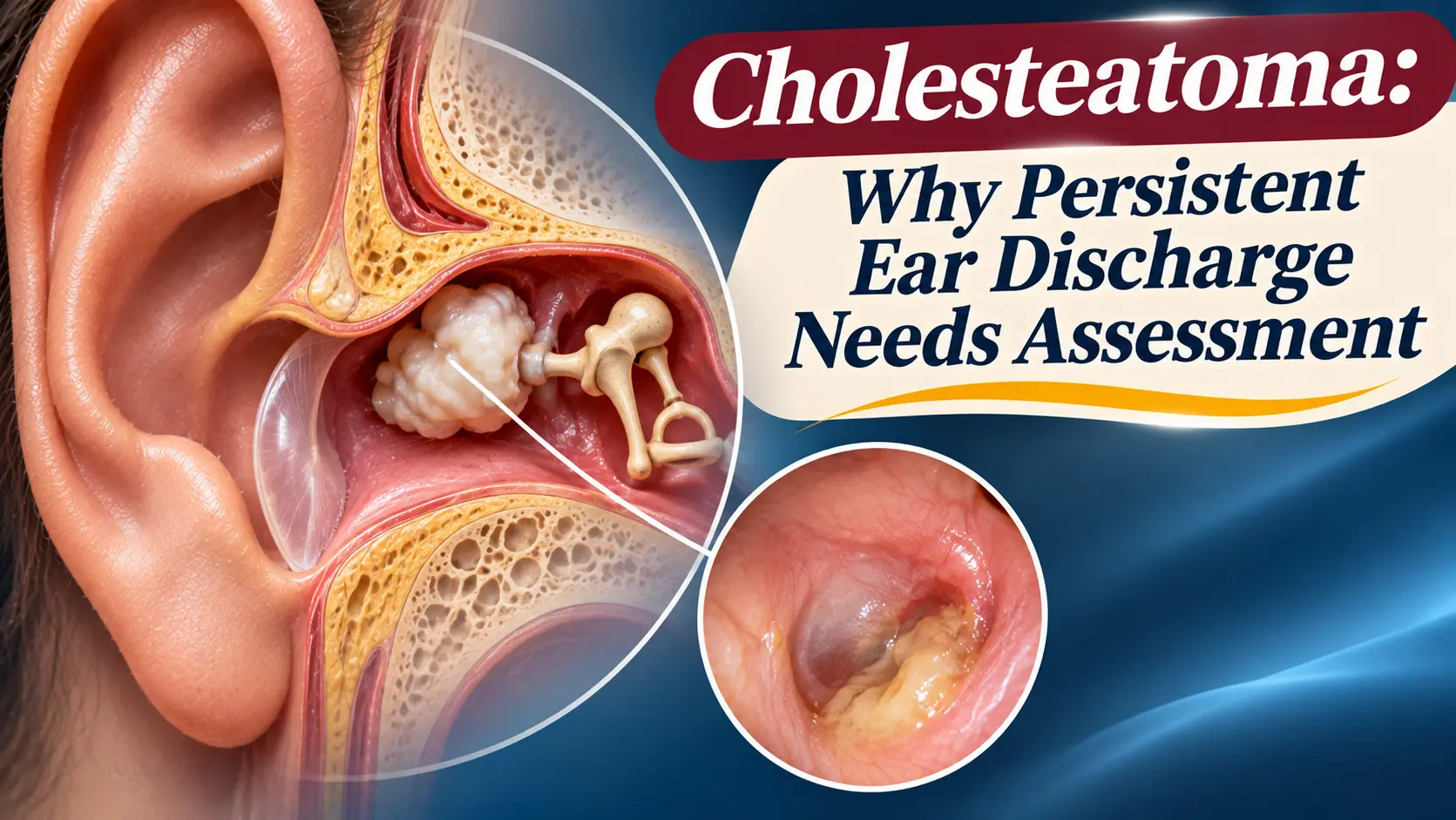
A cholesteatoma is an abnormal collection of skin cells in the middle ear or mastoid area, often associated with an eardrum pocket or a history of chronic ear disease. It is not cancer, but it can enlarge and damage nearby structures if left untreated. Persistent or recurrent foul-smelling discharge, hearing loss and repeated infections are reasons to arrange an ENT assessment, rather than relying on repeated short courses of treatment.
Symptoms that may occur
Symptoms can include ongoing or recurrent discharge, a feeling of ear blockage, gradual hearing loss, pressure or discomfort. Some people have few symptoms early on. Dizziness, facial weakness, severe pain or complications around the ear are concerning and need urgent assessment. An ordinary ear infection can cause similar symptoms, so a diagnosis cannot be made from smell or discharge alone.
How it is assessed
The clinician will examine the ear canal and eardrum, often using magnification or a microscope. A hearing test helps establish the effect on hearing. CT or MRI may be used in selected cases to map the extent of disease or clarify uncertain findings. The assessment is important because the location and size of a cholesteatoma influence the treatment and the follow-up plan.
Treatment and follow-up
Surgery is commonly recommended to remove the cholesteatoma and protect surrounding structures. The exact operation depends on the extent of the disease; hearing reconstruction may be possible at the same time or later, but hearing improvement cannot be guaranteed. Some patients need more than one procedure or long-term follow-up because recurrence can occur. The specialist should explain the goals, risks and expected recovery for the individual ear.
Why not to delay review
Cholesteatoma can damage the small hearing bones and nearby structures. Rare complications can involve balance, the facial nerve or infection spreading beyond the ear. Persistent discharge, especially if foul-smelling or repeatedly returning, deserves medical assessment. Seek urgent care for new severe vertigo, facial weakness, swelling behind the ear, high fever or severe headache.
Frequently asked questions
Is cholesteatoma cancer? No. It is an abnormal collection of skin cells, but it can still cause significant damage if untreated.
Can ear drops cure it? Drops may control associated infection but do not usually remove the underlying cholesteatoma.
Will hearing return after surgery? Hearing outcomes vary. The main aim is often to remove disease safely; hearing reconstruction may be possible depending on the findings.
Explore our otology consultation page for more information about this care option. A clinician can advise based on the individual history and examination findings.
Related reading
- Ear Discharge: Common Causes and When to Seek Care
- Ear Infections: Symptoms, Treatment and When to Seek Care
- Hearing Tests: What to Expect and What Results Mean
Sources and further reading
Related research involving Dr. Mohannad Almomani
Two co-authored publications examine cholesteatoma inflammation and recurrence risk. They add research context to this topic but do not predict an individual patient’s course or replace specialist assessment.
- A UK Biobank Study on Genetic Variants in Pattern-Recognition Receptor (PRR) Signaling Indicates Self-Perpetuating Inflammation of Cholesteatoma (2026, Journal of Personalized Medicine)
- Genetic risk score for cholesteatoma recurrence: using UK Biobank data toward more individualized patient management (2025, International Journal of Molecular Epidemiology and Genetics)