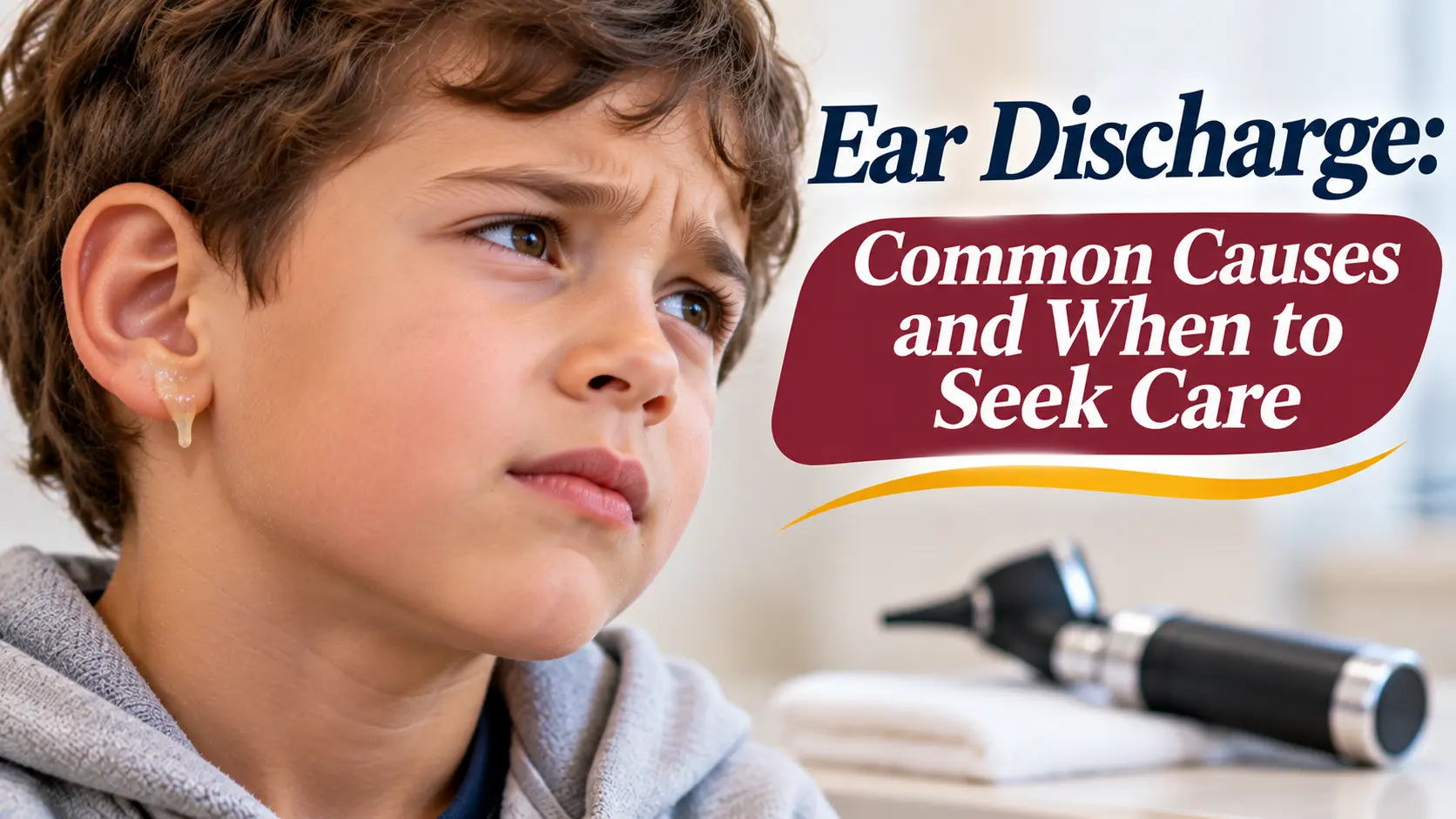
Ear Discharge: Common Causes and When to Seek Care
Understand what fluid from the ear may mean, why the eardrum matters, and when discharge needs urgent medical attention.
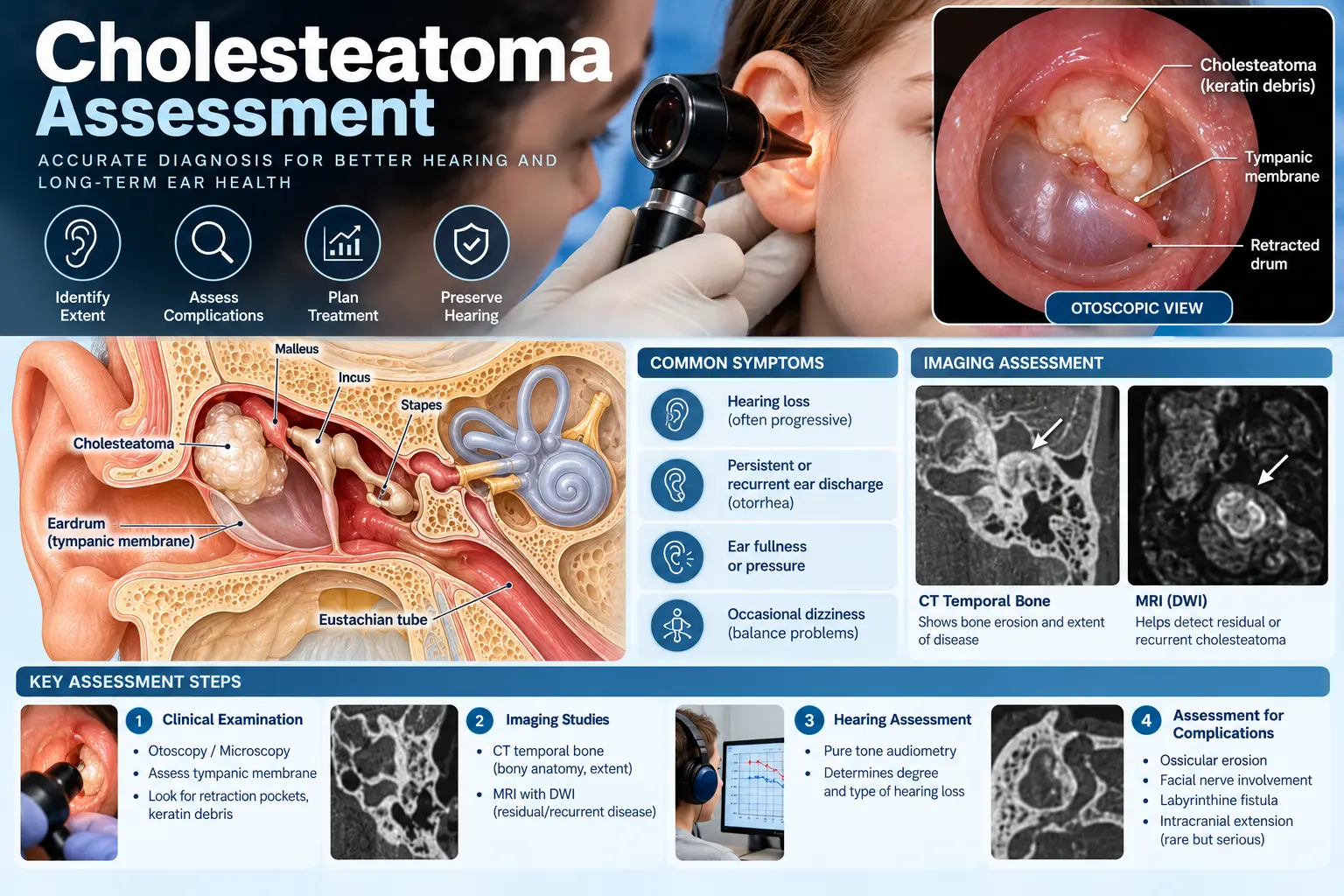
Read MoreA cholesteatoma can grow slowly and damage nearby ear structures if it is left untreated. Symptoms vary and may include discharge, hearing changes, pressure or dizziness. Examination is needed because these signs can also occur with other ear conditions.
Assessment may include a detailed ear examination and hearing tests; imaging or specialist investigations may be recommended depending on the findings. If a cholesteatoma is suspected, the clinician will explain monitoring or surgical options, expected aims and potential risks.
Ongoing or recurrent ear discharge should be examined rather than repeatedly self-treated. Sudden severe symptoms, facial weakness or marked dizziness need prompt medical attention.
This information is general and does not replace an individual medical assessment.
Patient Resources
Patient-friendly articles related to this service and common questions about assessment and care.
Understand what fluid from the ear may mean, why the eardrum matters, and when discharge needs urgent medical attention.
Read More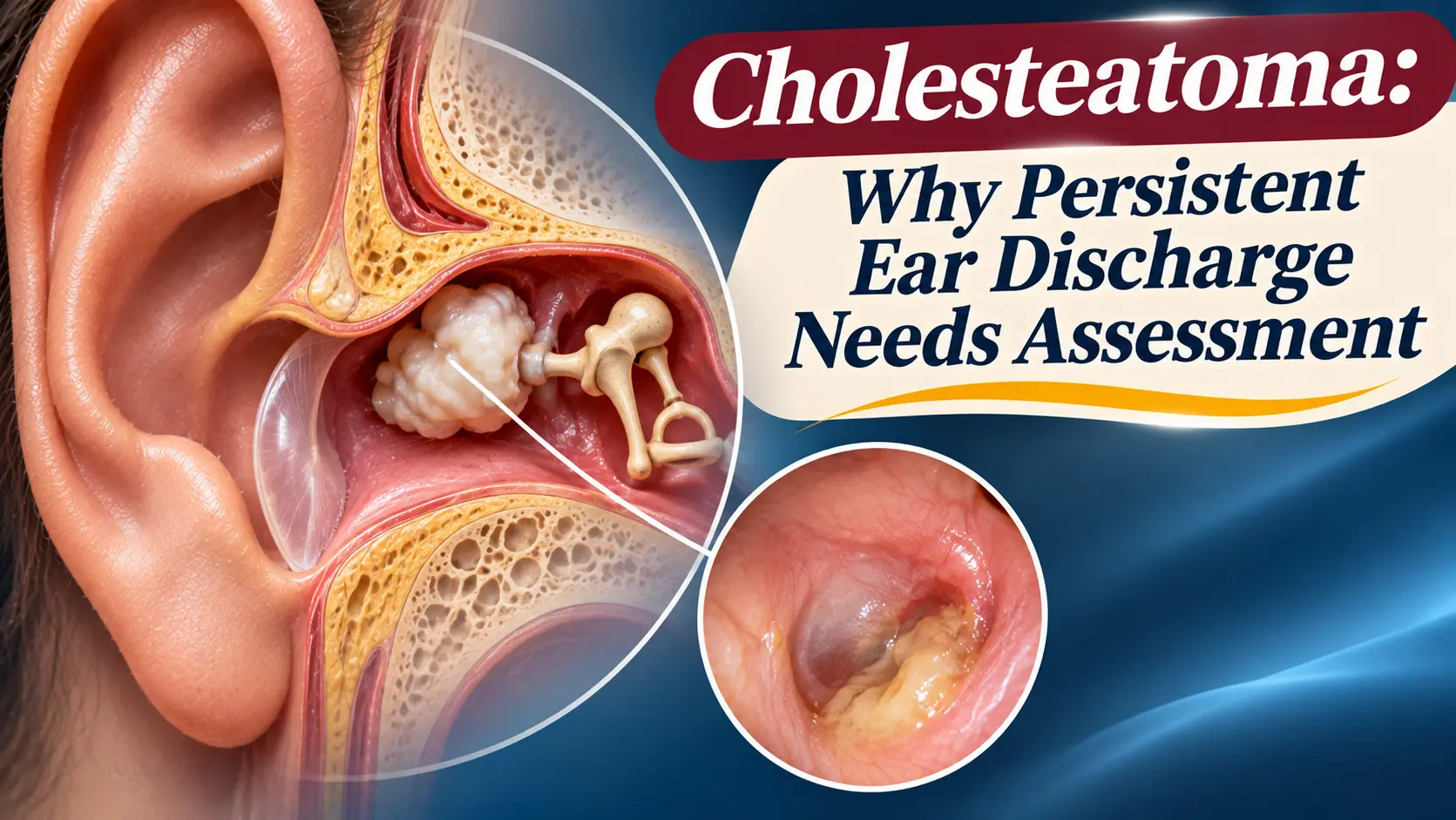
Find out what an ear cholesteatoma is, which symptoms can occur, and why specialist assessment and follow-up matter.
Read More