
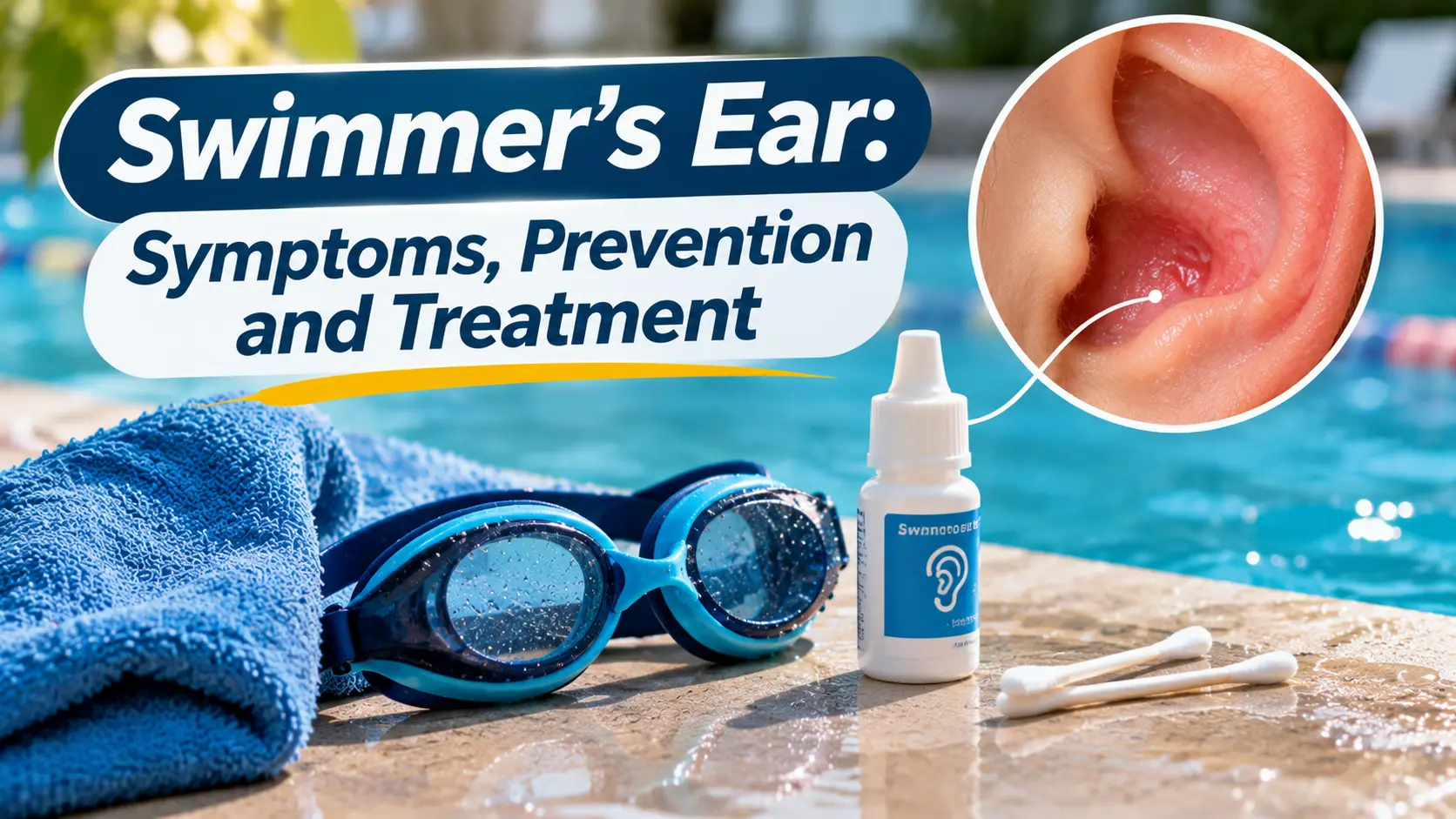
Swimmer’s ear, or otitis externa, is inflammation or infection of the ear canal between the outer ear and the eardrum. Water exposure can contribute, but swimming is not required: scratching the canal, cotton buds, earbuds, hearing devices, or skin conditions can also damage its protective barrier.
Typical symptoms and possible causes
Symptoms may include ear pain, itching, tenderness when the outer ear is moved, a swollen feeling, discharge, or muffled hearing. The discomfort can become more noticeable when chewing or touching the ear. These signs overlap with other ear problems, so an examination is important when symptoms are significant or persistent.
Water can soften the canal skin and encourage irritation, while small scratches let bacteria or fungi enter. Eczema and other skin conditions may make the canal more vulnerable. Do not put alcohol, peroxide, oils, or leftover prescription drops into the ear unless a clinician has confirmed they are appropriate.
Treatment and safer prevention
Treatment often involves prescription ear drops selected for the likely cause and the condition of the eardrum. A clinician may need to clear debris or use a wick if swelling prevents drops from reaching the canal. Tablets are not routinely necessary for every uncomplicated outer-ear infection; the treatment depends on severity and risk factors.
After swimming or showering, let water drain naturally and dry the outside of the ear. Avoid inserting cotton buds and pause in-ear devices if they worsen irritation. People with recurrent infections should ask a clinician about prevention before using drying drops, particularly if they have ear tubes, a perforated eardrum, or previous ear surgery.
Who needs prompt care?
Seek medical advice for worsening pain, discharge, hearing change, fever, or symptoms that do not improve with treatment. People with diabetes, reduced immunity, or severe pain need a lower threshold for prompt assessment because some infections can become more serious.
Urgent evaluation is warranted for spreading redness or swelling around the ear, severe pain out of proportion to the visible findings, facial weakness, or significant illness. A child with severe symptoms or a young infant should be assessed promptly.
Common questions
Is swimmer’s ear the same as a middle-ear infection? No. Swimmer’s ear affects the ear canal; middle-ear infections occur behind the eardrum and often follow a respiratory infection.
Can I swim while it heals? Usually the affected ear should be kept dry during treatment, but follow the clinician’s instructions for your specific infection and eardrum status.
Explore our hearing assessment and otology consultation pages for more information about related care options. A clinician can advise whether either is appropriate based on the individual history and examination findings.