
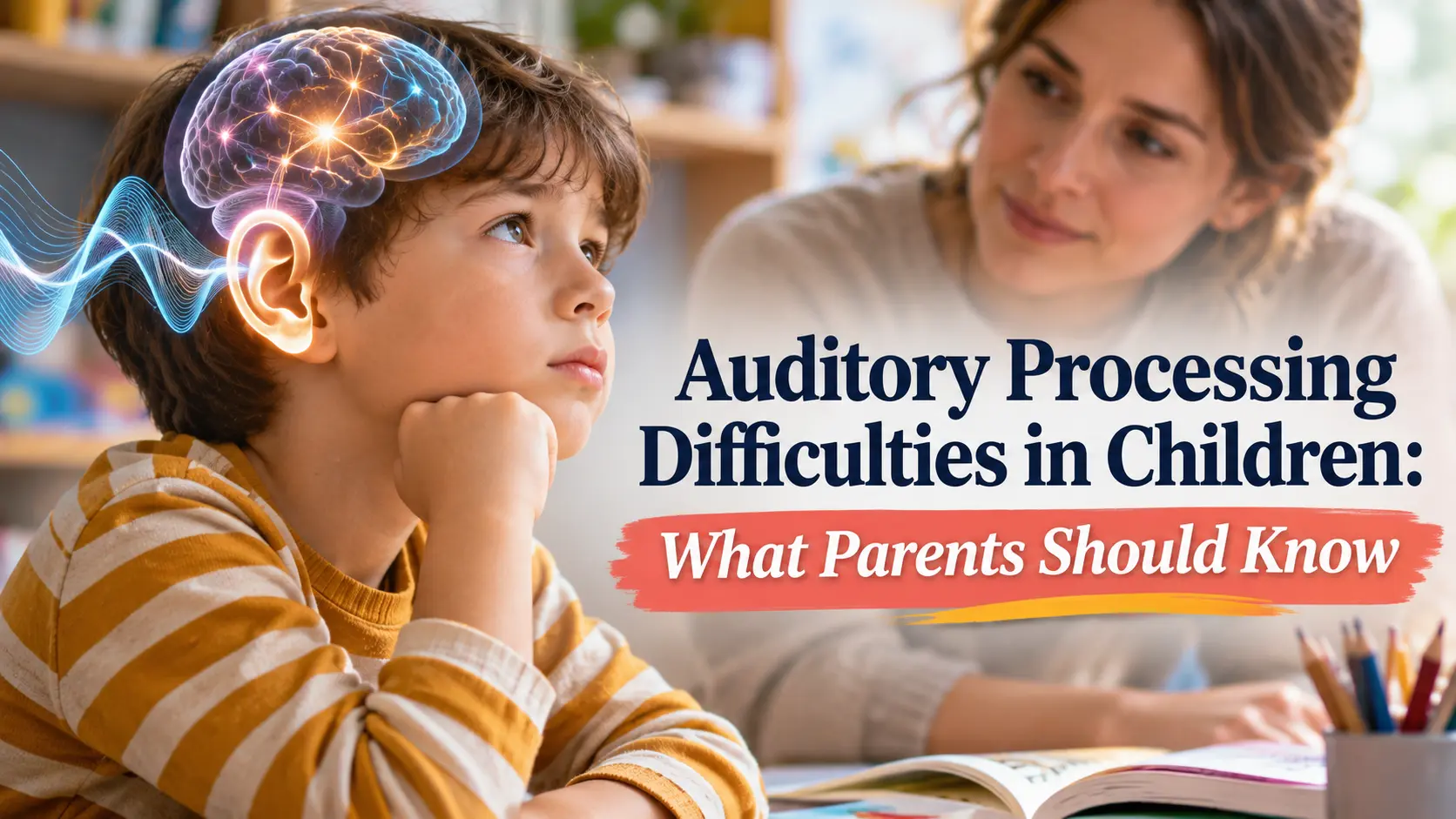
A child may hear that someone is speaking but struggle to follow the words, especially in a busy classroom. This can have several explanations, including hearing loss, language or attention difficulties, and auditory processing differences. The pattern deserves careful assessment rather than assumptions about effort or behaviour.
What does auditory processing mean?
Auditory processing describes how the brain interprets sounds after they reach the ears. A child may find it difficult to understand speech in background noise, follow multi-step spoken instructions, or tell similar-sounding words apart. These behaviours are not specific to one diagnosis and may also occur with language, attention, learning, or hearing problems.
How is a child assessed?
A clinician usually starts by checking hearing and reviewing development, language, school concerns, and relevant medical history. A specialist assessment of central auditory processing may be considered when age, language ability, and other factors make the tests meaningful. Results should be interpreted alongside speech-language, educational, and psychological information when indicated.
What support can help at school and home?
Reducing background noise, gaining the child’s attention before speaking, using short instructions, pairing spoken information with written or visual cues, and checking understanding can help many children. Teachers may consider preferential seating or classroom listening technology after an individual assessment. Support should target the child’s actual needs and be reviewed over time.
Frequently asked questions
Does this mean my child has hearing loss? Not necessarily. A standard hearing test checks whether sounds are detected; it does not measure every aspect of listening and understanding. Hearing should still be assessed.
Can a child outgrow the difficulty? Listening skills develop with age, but outcomes vary. Monitoring and appropriate support are more useful than assuming it will resolve on its own.
Should the school be involved? Yes, with the family’s agreement. Examples of classroom difficulties help clinicians plan practical support.
Explore our otology consultation page for more information about this care option. A clinician can advise based on the individual history and examination findings.
Related reading
- Children’s Hearing: Screening, Milestones and When to Seek Help
- Hearing Tests: What to Expect and What Results Mean