
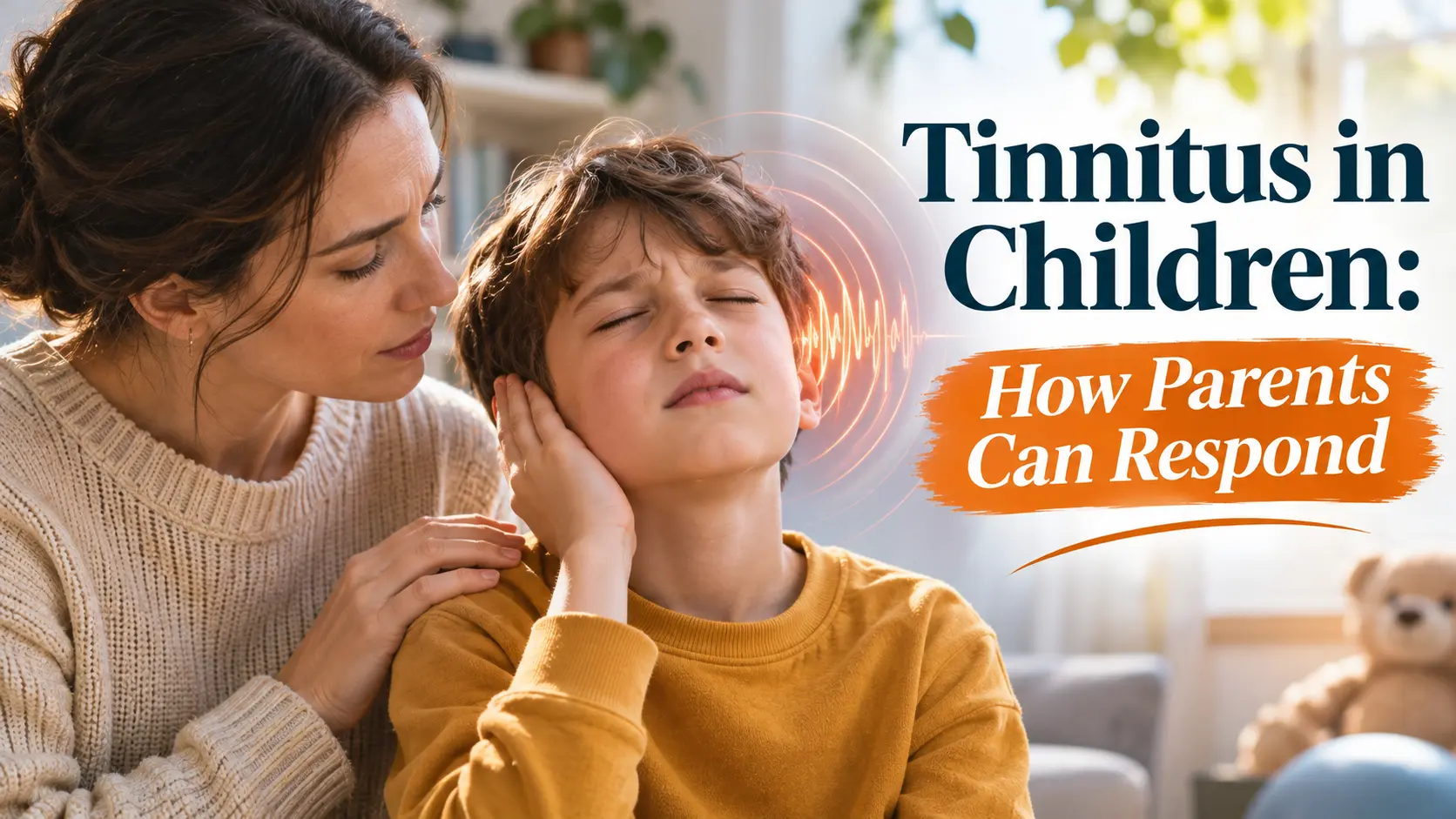
Children can experience tinnitus—a sound such as ringing, buzzing, or humming without an external source—but may struggle to describe it. It can be temporary or persistent and may relate to hearing changes, noise exposure, ear conditions, or other factors. Calm listening and appropriate assessment help avoid dismissing the child’s concern.
How a child may describe tinnitus
A child might say that an ear is making noise, that the room has a high sound, or that a sound appears when it is quiet. Ask gently when it happens, whether one or both ears are involved, and whether sleep, concentration, or mood is affected. Avoid leading questions or telling the child that the sound is imaginary.
What assessment may be recommended?
A clinician reviews ear health, noise exposure, medicines, headaches, and any dizziness or hearing concerns. Hearing testing is often useful. The type and timing of further investigation depend on the history and examination; not every child needs extensive tests.
Supporting a child day to day
A low-level background sound at bedtime, predictable sleep routines, reassurance, and reducing harmful noise exposure may help some children. Tell teachers if concentration is affected and seek support if anxiety or sleep problems persist. Avoid unproven products marketed as cures, and do not place loud sound directly into headphones to mask the noise.
Frequently asked questions
Will the tinnitus go away? Some episodes settle, while others persist. The outlook depends on contributing factors, and assessment helps identify treatable issues.
Is tinnitus always a sign of hearing loss? No, but hearing should be checked, especially when the sound is persistent or follows loud noise.
When is urgent care needed? Sudden hearing loss, severe dizziness, neurological symptoms, or tinnitus after a significant head injury needs urgent assessment.
Explore our hearing assessment page for more information about this care option. A clinician can advise based on the individual history and examination findings.
Related reading
- Tinnitus: Common Causes, Assessment and Ways to Cope
- Children’s Hearing: Screening, Milestones and When to Seek Help