
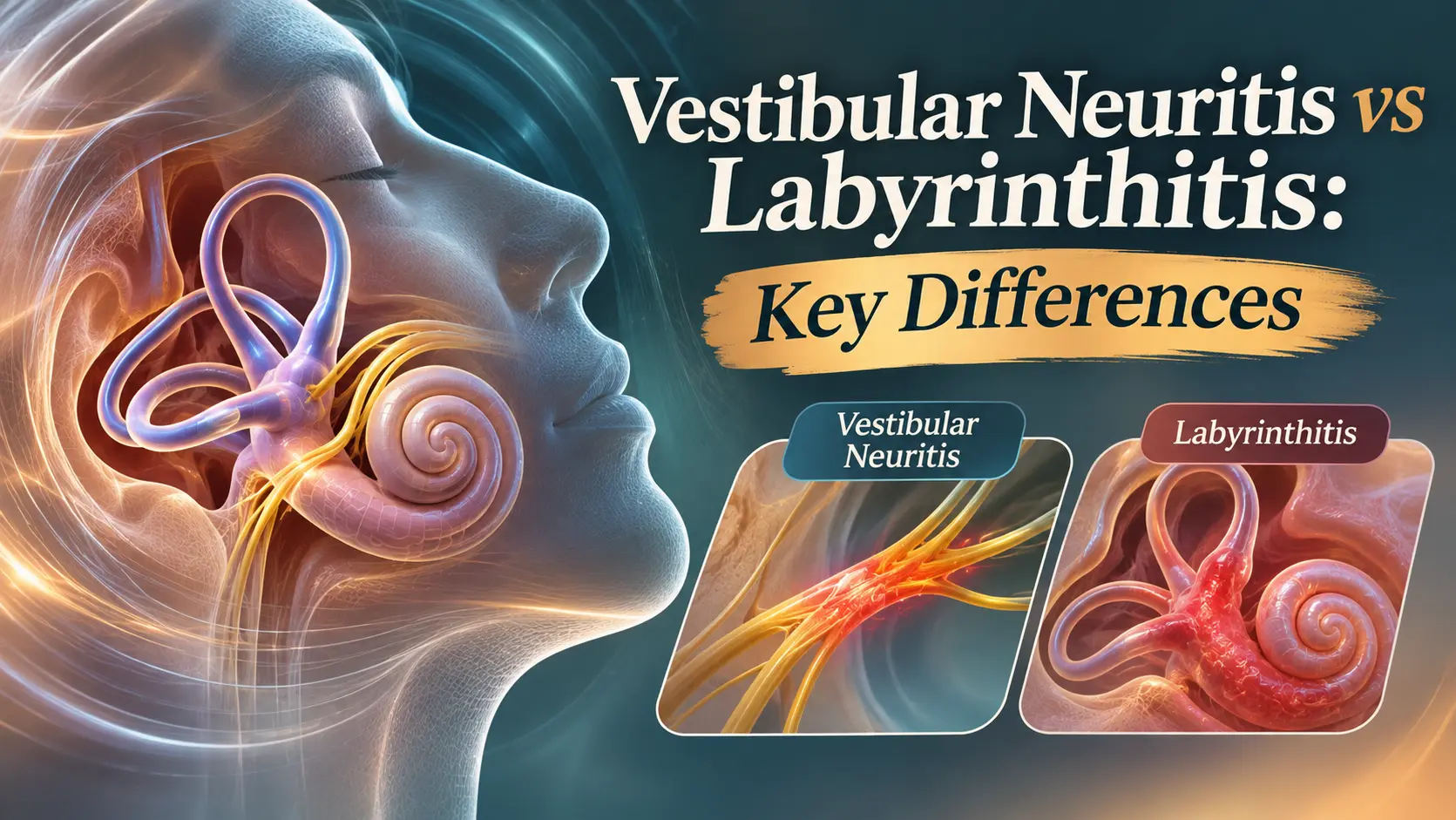
Vestibular neuritis and labyrinthitis can both cause acute spinning vertigo, nausea, and difficulty walking. A key distinction is that labyrinthitis may include hearing loss or tinnitus, while vestibular neuritis usually affects balance without a primary hearing change. Similar symptoms can also occur with other conditions, including stroke, so a new severe episode needs appropriate clinical evaluation.
Typical symptom patterns
Vestibular neuritis often causes sustained vertigo that worsens with head movement and may gradually improve over several days. Labyrinthitis can cause vertigo together with hearing symptoms because structures involved in both balance and hearing are affected. Symptom patterns overlap and do not replace an examination.
How clinicians assess the cause
The assessment considers onset, hearing change, headache, neurological symptoms, infection history, medications, and ability to walk. Eye movement findings and other bedside tests may guide decisions, with hearing tests or imaging used when indicated. A remote or self-administered test cannot reliably exclude a dangerous cause of sudden vertigo.
Treatment and follow-up
Early care may focus on hydration, nausea control, safe mobility, and identifying the diagnosis. Vestibular-suppressant medicines are generally not intended for prolonged routine use unless a clinician advises otherwise, because extended use can interfere with compensation. Hearing changes or lingering imbalance may need audiology, ENT follow-up, or vestibular rehabilitation.
Frequently asked questions
Does labyrinthitis always cause hearing loss? Hearing symptoms can occur, but the clinical picture varies; new sudden hearing loss needs urgent assessment.
Can I drive during vertigo recovery? Do not drive while dizzy, visually unstable, or unable to turn safely. Follow clinical and local driving advice.
When is vertigo an emergency? Seek emergency care for stroke-like symptoms, severe new headache, double vision, weakness, inability to stand, or other rapidly developing neurological signs.
Explore our ENT consultation page for more information about this care option. A clinician can advise based on the individual history and examination findings.
Related reading
- Vertigo and BPPV: Causes, Treatment and Warning Signs
- Vestibular Rehabilitation: Exercises for Certain Balance Disorders