
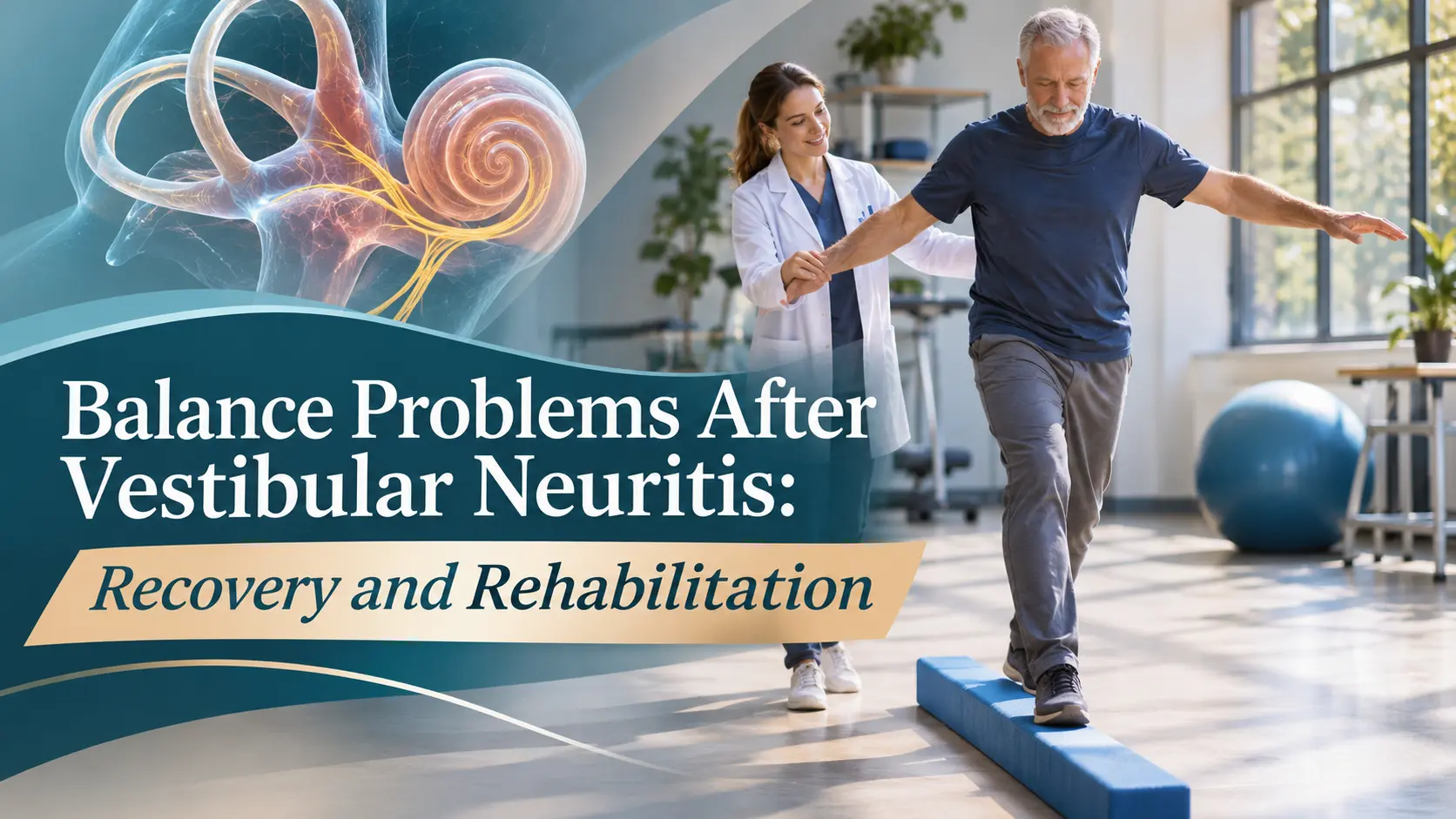
Vestibular neuritis is an illness affecting the balance part of the inner ear or its nerve. The intense spinning sensation may improve over days, but unsteadiness or motion sensitivity can persist while the brain adapts. Persistent symptoms deserve follow-up because recovery and the need for rehabilitation vary.
Why symptoms may continue
After one balance system is affected, the brain must adapt to differences between signals from the two sides. Walking in busy environments, turning the head, or moving quickly may briefly worsen symptoms. Prolonged bed rest can delay adaptation for some patients, although rest and support may be needed during the acute phase.
What assessment can clarify
A clinician reviews onset, hearing symptoms, neurological signs, medicines, falls, and previous episodes. Vestibular examination and selected tests may assess eye movements and balance function. New weakness, double vision, slurred speech, severe headache, inability to stand, or other stroke-like symptoms require emergency assessment rather than assuming neuritis.
Role of vestibular rehabilitation
A trained therapist may prescribe gaze-stabilisation, balance, and movement exercises based on the person’s deficits and safety. Exercises are usually progressed gradually and may briefly provoke symptoms, but they should not create dangerous instability or severe prolonged worsening. Review is important if progress stalls or the diagnosis is uncertain.
Frequently asked questions
How long does recovery take? Many people improve over weeks, but the pace differs and some need longer rehabilitation.
Should I avoid head movement? Avoiding all movement for long periods can hinder adaptation; follow an individual plan that accounts for fall risk and acute symptoms.
Can hearing loss occur with vestibular neuritis? Prominent hearing loss is not typical of isolated vestibular neuritis and may suggest another condition that needs assessment.
Explore our vertigo and balance assessment and ENT consultation pages for more information about related care options. A clinician can advise whether either is appropriate based on the individual history and examination findings.
Related reading
- Vestibular Rehabilitation: Exercises for Certain Balance Disorders
- Vertigo and BPPV: Causes, Treatment and Warning Signs