Vertigo and BPPV: Causes, Treatment and Warning Signs
Understand the difference between spinning vertigo and general dizziness, how positional vertigo is assessed, and which symptoms are urgent.
Read MoreThe clinician asks how attacks begin, how long they last, whether head movement triggers them and whether hearing change, tinnitus, headache or neurological symptoms occur. A focused examination may be followed by balance or hearing tests depending on the pattern.
Treatment depends on the cause and may include specific repositioning manoeuvres, rehabilitation, medication for selected situations or referral for further assessment. A general label of “vertigo” is not enough to choose the right treatment.
Sudden severe dizziness with weakness, facial droop, difficulty speaking, new double vision, severe headache or inability to walk requires emergency evaluation.
This information is general and does not replace an individual medical assessment.
Patient Resources
Patient-friendly articles related to this service and common questions about assessment and care.
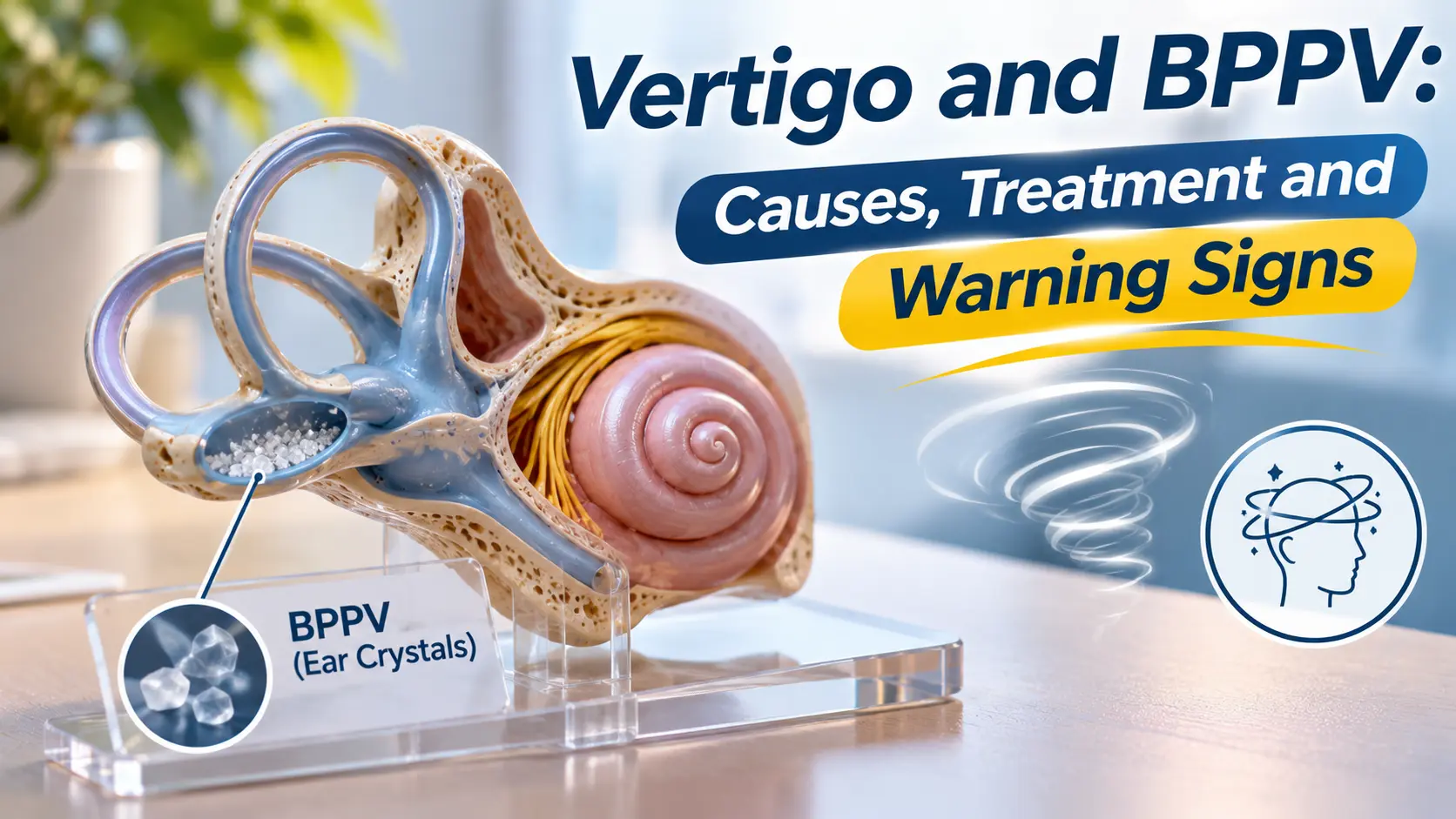
Understand the difference between spinning vertigo and general dizziness, how positional vertigo is assessed, and which symptoms are urgent.
Read More
Understand Dizziness on Standing vs Vertigo: How They Differ—how it is assessed, which care options may be discussed, and which symptoms need prompt medical.
Read More
Learn how vestibular migraine may cause episodes of dizziness, what can trigger symptoms, and why first or unusual episodes need assessment.
Read More