
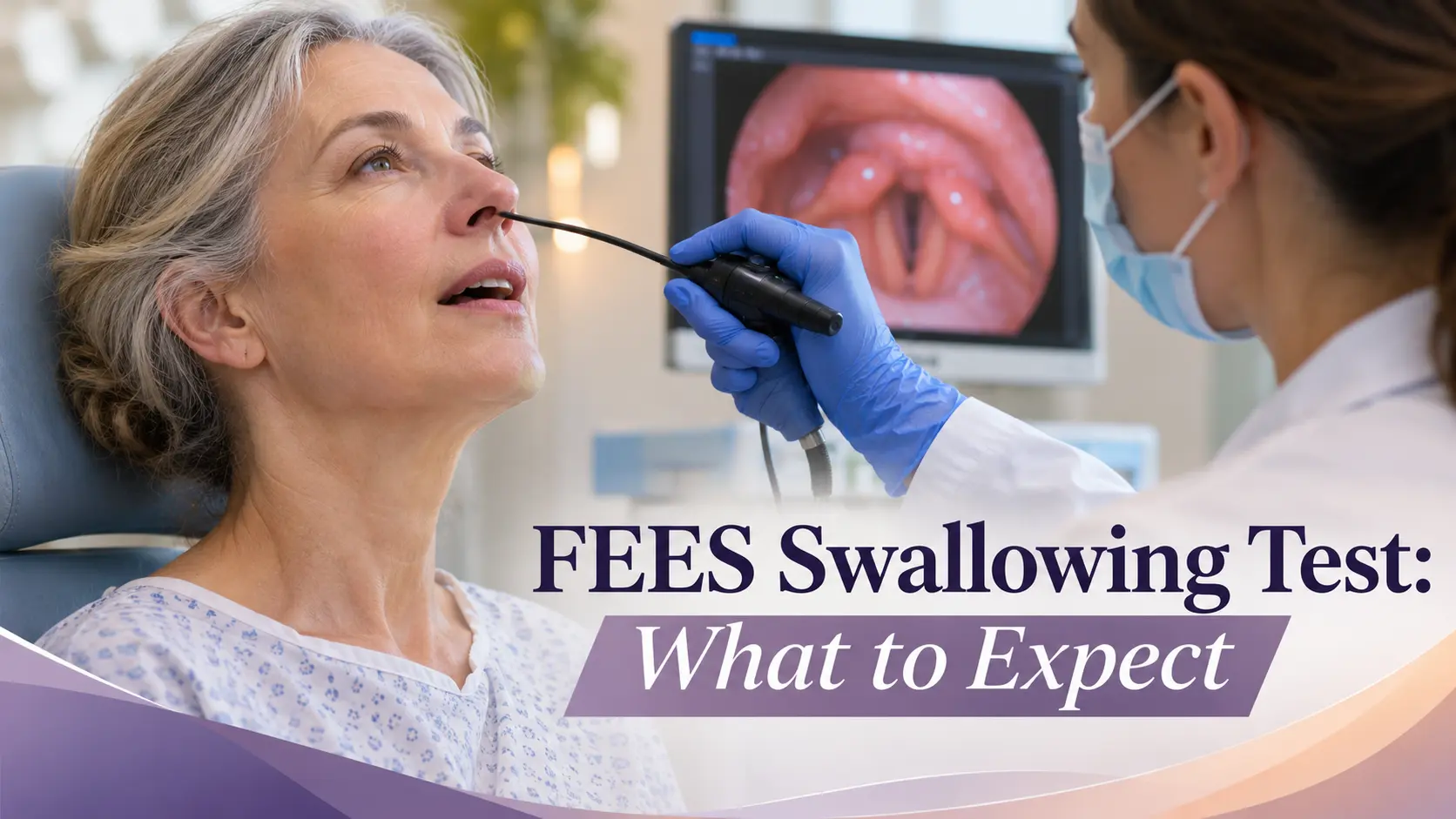
A fibreoptic endoscopic evaluation of swallowing, often called FEES, is a test that allows a trained clinician to observe parts of the throat during swallowing. It can help assess whether food or liquid enters the airway, whether material remains after a swallow, and which textures or strategies may be safer. The test is chosen according to the person’s symptoms and clinical needs.
How the test is performed
A thin flexible endoscope is passed through the nose to view the throat. The clinician may offer small amounts of selected food or liquid and observe swallowing, residue, and airway protection. The scope briefly gives a limited view during the swallow itself, but the examination provides useful information before and after each swallow.
Does it hurt or require special preparation?
Most people tolerate the examination, although the nose may feel unusual or cause mild watering. Instructions about eating, medicines, nasal sprays, or fasting depend on the clinical setting and individual risks. Tell the clinician about nosebleeds, anticoagulant medicines, nasal surgery, or breathing concerns beforehand.
What happens after the test?
The findings may guide food and liquid texture, posture, swallowing strategies, exercises, or further assessment. Recommendations should balance safety, hydration, nutrition, enjoyment, and the person’s goals. Do not change a prescribed swallowing plan without discussing it with the care team, particularly if aspiration has been identified.
Frequently asked questions
Can FEES diagnose every swallowing problem? No. It evaluates specific parts of swallowing, and some questions may require a different or additional test.
Can I eat during the test? The clinician usually provides small controlled samples when appropriate; follow their instructions.
What if I cough or choke frequently? Arrange medical assessment. Difficulty breathing, inability to swallow saliva, or a complete choking emergency needs immediate help.
Explore our voice and larynx assessment and flexible laryngoscopy pages for more information about related care options. A clinician can advise whether either is appropriate based on the individual history and examination findings.
Related reading
- Swallowing Difficulty (Dysphagia): Causes and When to Seek Help
- Your First ENT Appointment: How to Prepare and What to Expect