
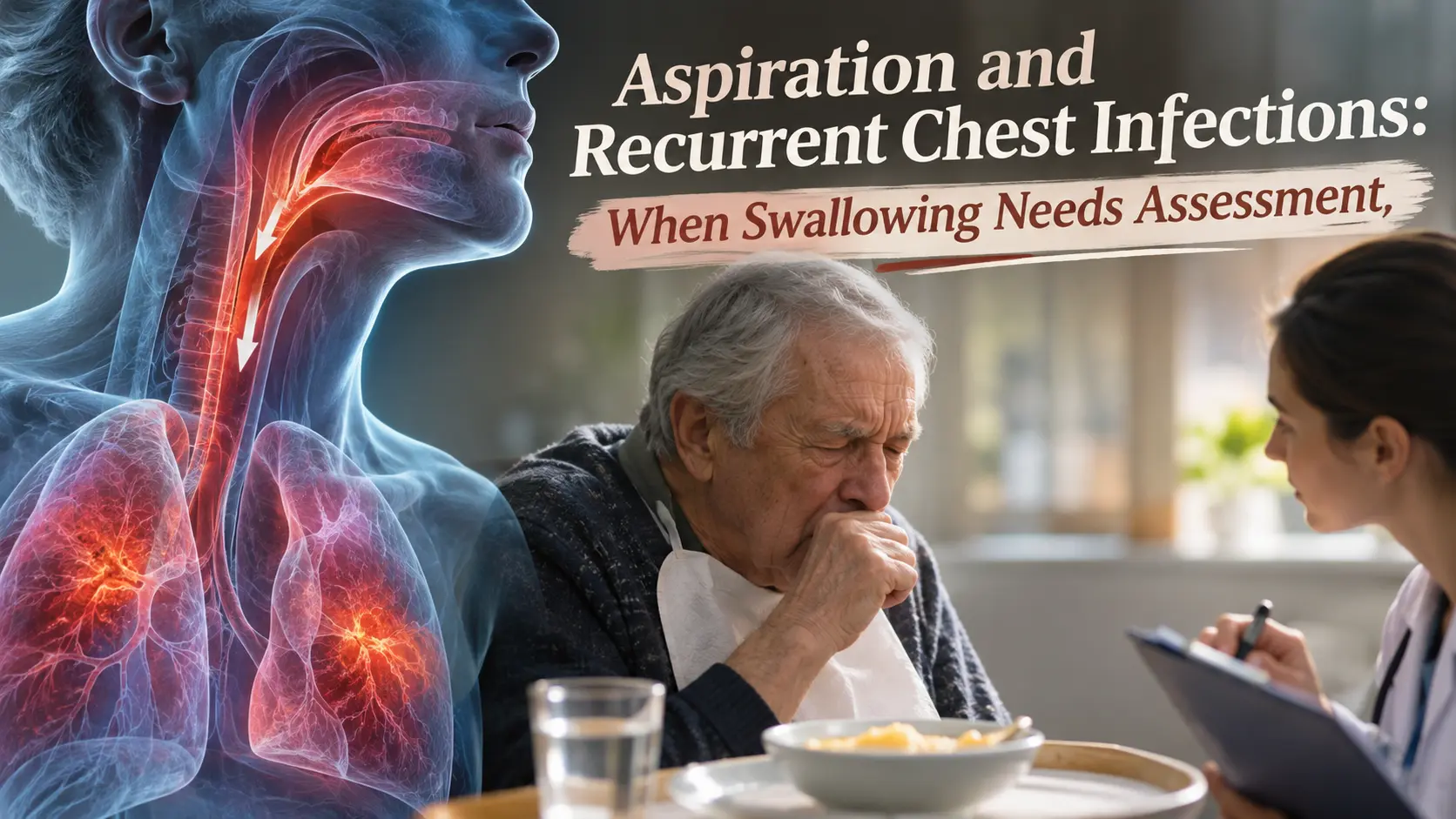
Aspiration occurs when food, drink, saliva, or stomach contents enter the airway instead of travelling safely to the stomach. Some people cough or choke when this happens, while others have few obvious symptoms. Repeated chest infections, unexplained weight loss, a wet voice after drinking, or difficulty swallowing can warrant assessment.
Symptoms and risk factors
Coughing during meals, throat clearing, a gurgly voice after swallowing, food sticking, prolonged meals, or recurring respiratory infections may suggest a swallowing problem. Neurological conditions, frailty, head and neck treatment, and some medicines can affect swallowing, but symptoms require individual evaluation.
How clinicians evaluate swallowing
A clinician reviews the medical history, oral function, breathing, nutrition, and the situations in which symptoms occur. A speech-language pathologist may perform a clinical swallowing assessment and recommend an instrumental test such as FEES or a videofluoroscopic swallowing study when needed. Not every cough during a meal means aspiration.
Reducing risk safely
Follow the prescribed food texture, posture, pacing, and supervision recommendations. Keep the person upright as advised during and after meals, and maintain oral hygiene. Do not thicken liquids or restrict foods without guidance, because inappropriate changes can affect hydration and nutrition. New breathing difficulty, severe choking, or inability to manage saliva is urgent.
Frequently asked questions
Can aspiration happen without coughing? Yes. Some people have silent aspiration, so symptoms and risk factors may need further evaluation.
Should I avoid drinking water if I cough? Do not make major diet or fluid changes without professional advice; seek assessment to establish a safe plan.
When is emergency help needed? Severe choking, breathing difficulty, blue lips, or inability to swallow saliva requires immediate assistance.
Explore our voice and larynx assessment and flexible laryngoscopy pages for more information about related care options. A clinician can advise whether either is appropriate based on the individual history and examination findings.
Related reading
- Swallowing Difficulty (Dysphagia): Causes and When to Seek Help
- FEES Swallowing Test: What to Expect