
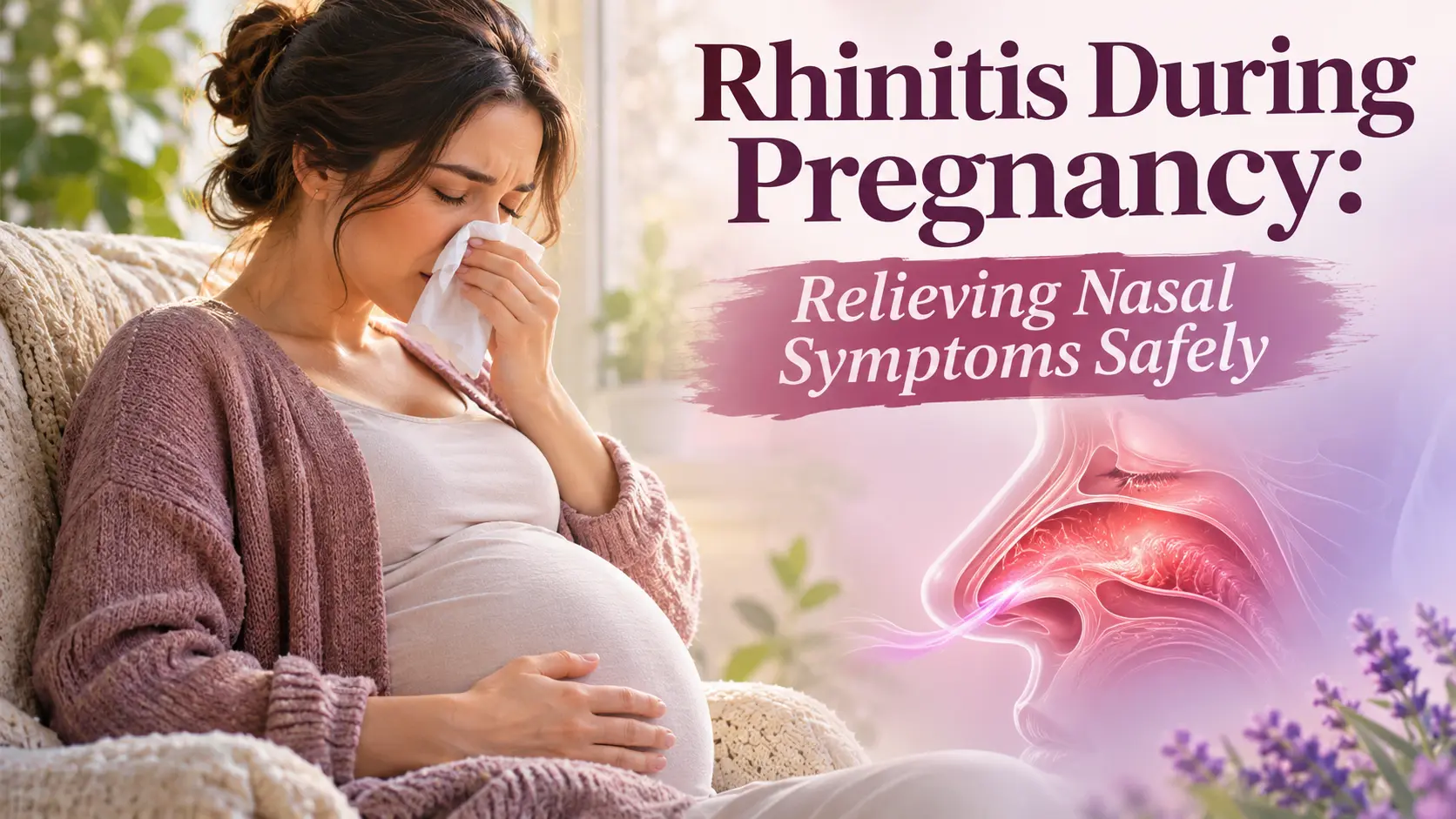
Nasal congestion can appear or worsen during pregnancy because of hormonal and blood-flow changes, allergies, respiratory infections or a combination of factors. Pregnancy-related rhinitis is a diagnosis made after other causes are considered; not every blocked nose during pregnancy has the same explanation. Medication safety depends on the product, trimester, medical history and other medicines, so check with a qualified clinician or pharmacist before starting treatment.
Possible explanations
Pregnancy can increase swelling of nasal tissues in some people, leading to congestion or increased discharge. Allergic rhinitis may also continue during pregnancy, while a cold or sinus infection can occur independently. Fever, facial pain, severe symptoms or a prolonged course may suggest another cause and should be discussed with a clinician. Do not assume persistent one-sided symptoms are simply hormonal.
Non-medicine comfort measures
Some people find saline spray or a rinse helpful; for rinses, use sterile, distilled or previously boiled and cooled water, and keep the device clean. Adequate fluids and avoiding smoke or known irritants may reduce discomfort. A humidifier must be cleaned properly. These steps may ease symptoms but do not treat every cause and should not delay review when symptoms are severe.
Discuss medicines before using them
Do not start, stop or change prescription or over-the-counter medicines based only on online advice. A clinician can weigh potential benefits and risks for your situation and advise on nasal corticosteroids, antihistamines or other options if appropriate. Some decongestants may not be suitable for certain pregnant people, especially with specific blood pressure or vascular concerns. Tell the clinician how long symptoms have lasted and what you have already tried.
When to get medical advice
Seek medical advice for persistent or severe congestion, fever, substantial facial pain, recurrent bleeding, worsening asthma symptoms or poor sleep that affects daily function. Urgent care is needed for breathing difficulty, severe headache with concerning symptoms, visual changes or significant deterioration. If symptoms are ongoing, a planned assessment can prevent repeated use of unsuitable products.
Frequently asked questions
Is nasal congestion common in pregnancy? It can occur, but infection, allergies and other causes should be considered when symptoms are severe, persistent or unusual.
Are all nasal sprays safe during pregnancy? No. Safety depends on the active ingredient and individual circumstances; check with a clinician or pharmacist.
Can saline rinses be used? They may be an option for some people. Use safe water and a clean device, and ask for advice if you have concerns.
Explore our nasal endoscopy page for more information about this care option. A clinician can advise based on the individual history and examination findings.
Related reading
- Allergic Rhinitis: Treatment Options and How to Use Them Well
- Nasal Sprays: Types, Technique and Safe Use
- Nasal Saline Rinses: Benefits, Technique and Water Safety