
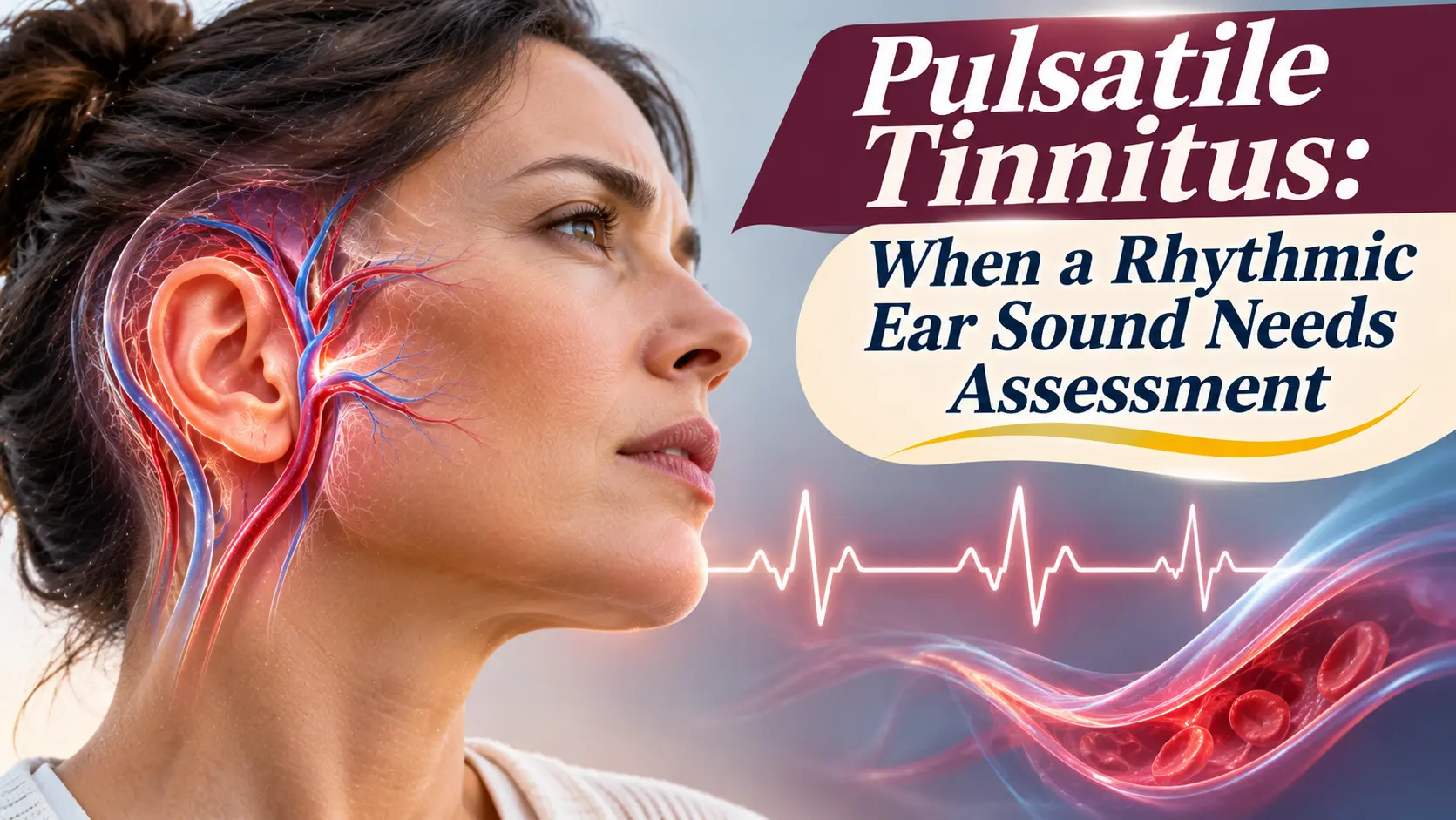
Pulsatile tinnitus is a rhythmic sound, often described as whooshing or thumping, that seems to match the heartbeat. It differs from the more familiar steady ringing or buzzing. It can have several causes, including changes in blood flow, and should not be diagnosed from sound alone. New, persistent or one-sided pulsatile tinnitus deserves a medical assessment so the clinician can decide whether further tests are needed.
How it differs from other tinnitus
Many people experience non-pulsatile tinnitus, which may be linked to hearing loss, noise exposure, medicines or other causes. Pulsatile tinnitus has a rhythmic quality that may be synchronous with the pulse. The distinction matters because the evaluation can be different. Do not press on the neck or attempt to change blood flow to test the sound; this can be unsafe and does not establish the cause.
What the assessment may involve
A clinician may ask whether the sound is in one or both ears, whether it follows the heartbeat, when it began, and whether there are associated headaches, visual changes, dizziness or hearing changes. Examination may include the ears, blood pressure and relevant head and neck assessment. Depending on the findings, hearing tests, blood tests or imaging may be considered. Not everyone needs every test.
When to seek urgent care
Seek urgent care if pulsatile tinnitus starts suddenly with neurological symptoms, severe headache, vision change, weakness, fainting or other significant new symptoms. Sudden hearing loss is also urgent. If the sound is new, persistent or repeatedly occurs, arrange timely clinical review even if you otherwise feel well. Keep a brief symptom record but do not delay care while tracking it.
Managing symptoms while awaiting assessment
Background sound at a comfortable level, regular sleep and attention to stress may make tinnitus less intrusive, but they do not replace investigation of pulsatile symptoms. Review medicines with a clinician rather than stopping them independently. Avoid assuming that a reassuring online explanation applies to your situation; the cause depends on the history, examination and sometimes targeted testing.
Frequently asked questions
Does pulsatile tinnitus always mean a serious condition? No, but it has a different range of possible causes and should be assessed rather than assumed harmless.
Can earwax cause a heartbeat sound? Ear canal problems can change how internal sounds are perceived, but persistent pulse-synchronous tinnitus needs clinical evaluation.
Should I wait for it to disappear? New or persistent pulsatile tinnitus should be discussed with a clinician; urgent symptoms require urgent care.
Related reading
- Tinnitus: Common Causes, Assessment and Ways to Cope
- Sudden Hearing Loss: Why Urgent Assessment Matters
- Hearing Tests: What to Expect and What Results Mean