
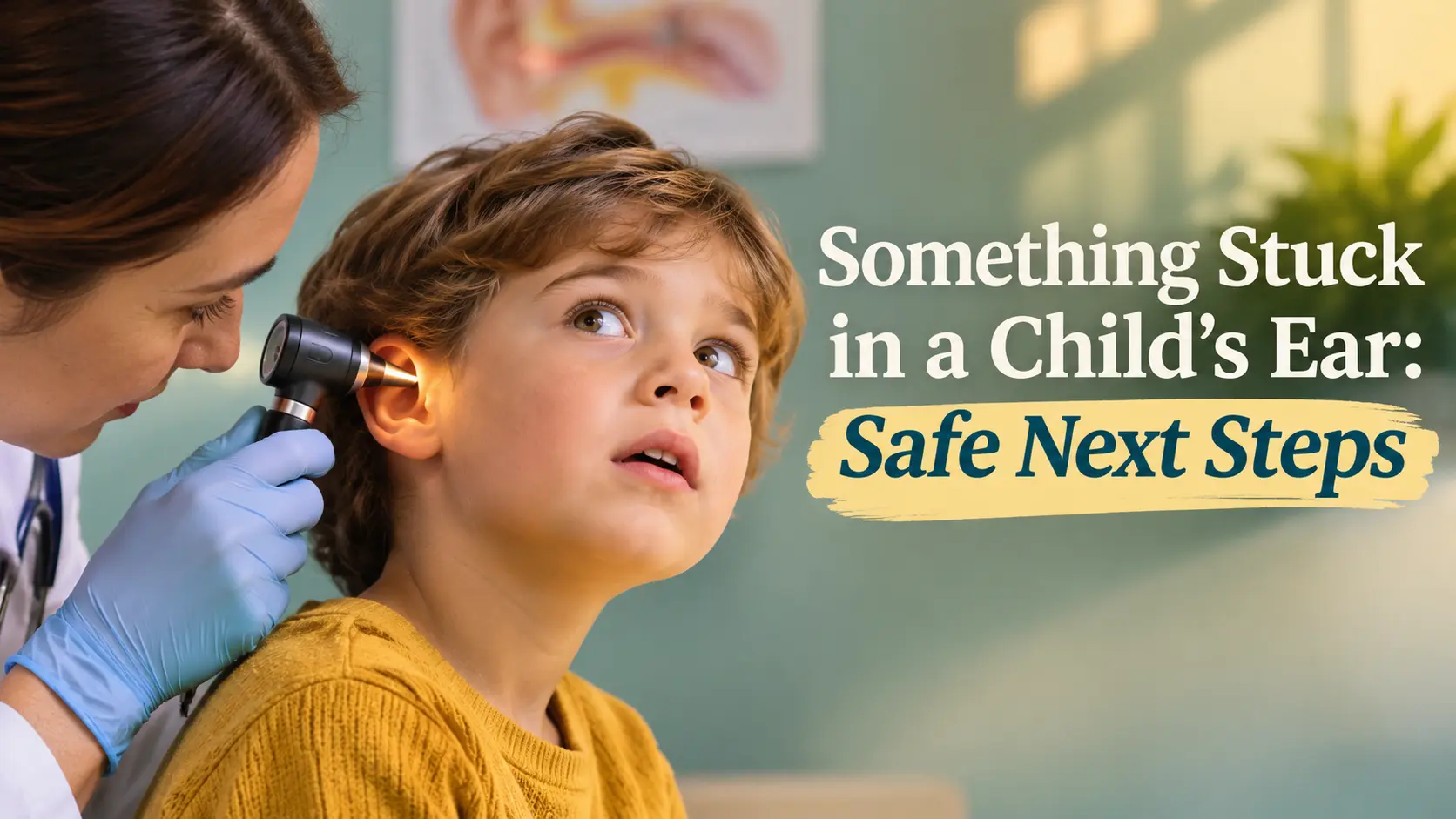
A small object in a child’s ear can cause pain, reduced hearing or canal injury. The safest response depends on the object, its location and the child’s symptoms. Repeated attempts to remove it at home can push it deeper or damage the ear canal or eardrum. Button batteries and sharp objects are emergencies because they can cause rapid tissue injury.
What parents should do first
Keep the child calm and prevent them from inserting fingers or other objects into the ear. Do not use cotton buds, tweezers, pins or improvised tools. Do not flush the ear with water or put drops in unless a qualified clinician specifically advises it; this can be dangerous for some objects and when eardrum injury is possible. Arrange prompt professional assessment.
Why object type matters
A button battery, sharp object or object that swells when wet needs urgent medical attention. Insects can cause severe discomfort and require appropriate management. Small smooth objects may sometimes be removed in a clinic, but the method depends on visibility, depth, cooperation and the risk to the eardrum. Do not attempt removal if the object is deep, painful or difficult to see.
After removal
A clinician may inspect the canal and eardrum for scratches, swelling or retained fragments. Follow any advice about keeping the ear dry or using prescribed drops. Seek reassessment if pain, discharge, hearing change, bleeding or dizziness develops after removal. If the object was a battery or caused significant injury, follow-up may be required even if it has been removed.
When to seek emergency care
Seek emergency care immediately for a button battery, sharp object, severe pain, bleeding, sudden hearing loss, dizziness or suspected eardrum injury. Do not delay for a routine appointment if a battery may be involved. If you are unsure what the object is, treat it as needing prompt professional assessment and avoid home extraction.
Frequently asked questions
Can I use tweezers if I can see the object? It is safest not to attempt removal at home because movement can push it deeper or injure the canal.
Can I rinse it out? Do not flush the ear unless a clinician confirms that it is appropriate for the object and eardrum.
Why are button batteries urgent? They can rapidly damage tissue and need emergency removal.
Explore our paediatric ENT consultation and enlarged adenoid assessment pages for more information about related care options. A clinician can advise whether either is appropriate based on the individual history and examination findings.
Related reading
- Ear Discharge: Common Causes and When to Seek Care
- Earache in Children: Home Comfort, Assessment and Warning Signs