
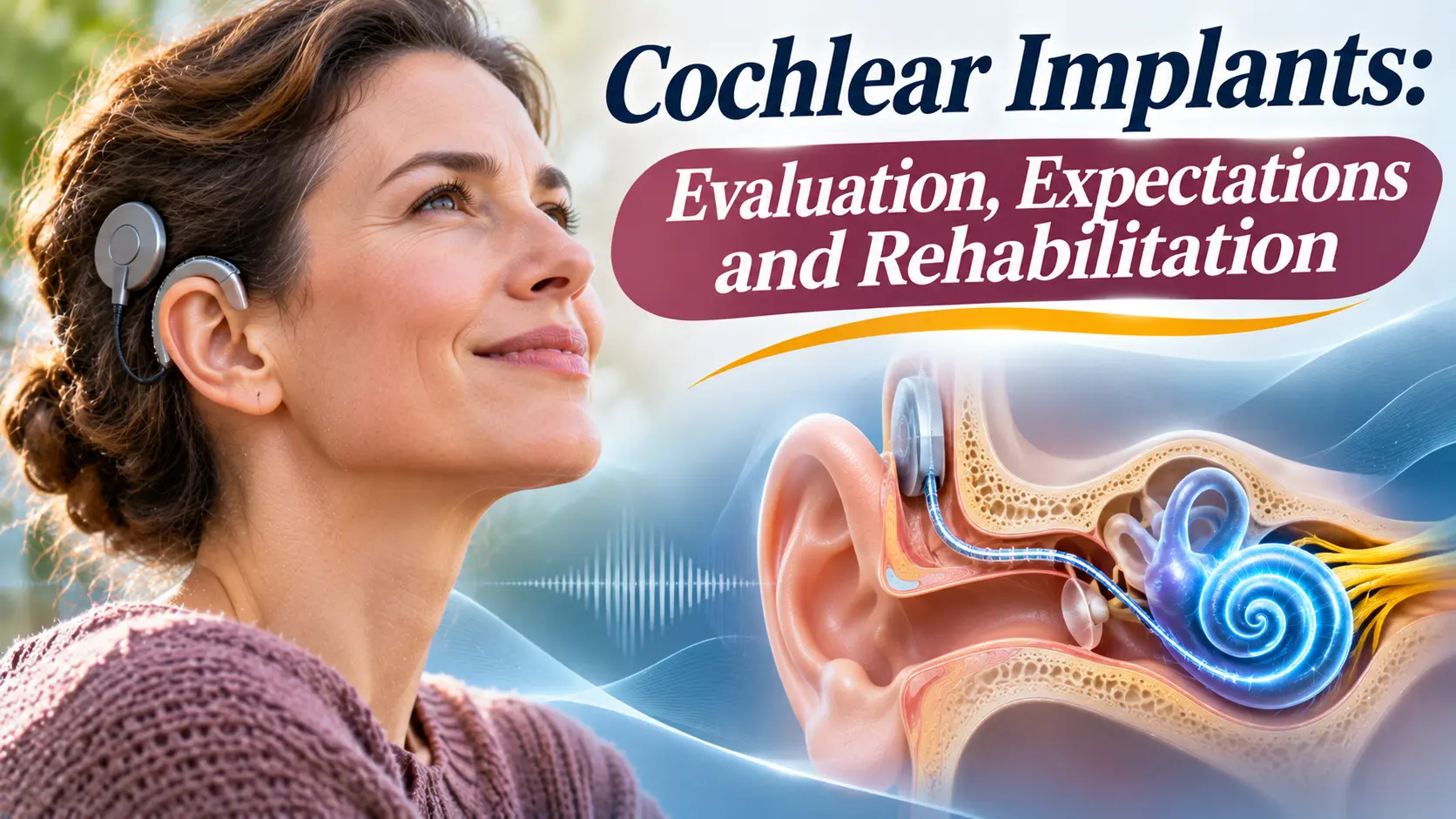
A cochlear implant is an electronic hearing device that bypasses damaged parts of the inner ear to stimulate the hearing nerve. It is different from a hearing aid, which amplifies sound. An implant does not restore typical hearing and is not suitable for every person with hearing loss. Assessment considers hearing tests, benefit from hearing aids, communication goals, medical factors and the support available for rehabilitation.
What a cochlear implant does
The system includes an external sound processor and an implanted component that sends electrical signals to the auditory nerve. The brain needs time and practice to learn to interpret these signals. Outcomes vary widely, and sound may initially seem unfamiliar. A specialist team explains expected benefits, limitations, device care and the need for programming visits and listening practice.
Who may be considered
Adults and children with severe or profound hearing loss who receive limited benefit from appropriately fitted hearing aids may be candidates for assessment. Eligibility criteria and pathways vary by age, health system and device. Candidacy is not decided by one hearing-test number alone; speech understanding, the history of hearing loss, ear anatomy, medical suitability and family or personal goals can all matter.
The assessment and surgery pathway
A specialist team may include an ENT surgeon, audiologist, speech and language therapist and other professionals. Evaluation can involve hearing and speech tests, medical examination and imaging. If an implant is recommended, the team explains surgical risks and recovery. After healing, the external processor is fitted and programmed. Follow-up is essential because the settings often require adjustment over time.
Rehabilitation and realistic expectations
Listening practice and communication support help people adapt. Some hear speech more clearly in quiet settings than in noisy groups, and results differ by prior hearing experience, age and other factors. Families of children may need ongoing support for listening, language and education. Ask how success will be measured for your needs, what continuing appointments are expected, and which alternatives remain available.
Frequently asked questions
Does a cochlear implant give normal hearing? No. It provides access to sound in a different way, and the quality of hearing is not the same as natural hearing.
Can everyone use a cochlear implant? No. Assessment determines whether the potential benefits outweigh the risks and whether the person meets relevant criteria.
Is rehabilitation optional? Programming, follow-up and listening rehabilitation are important parts of the process and should be discussed before choosing treatment.
Explore our otology consultation page for more information about this care option. A clinician can advise based on the individual history and examination findings.
Related reading
- Hearing Tests: What to Expect and What Results Mean
- Hearing Aids: Evaluation, Fitting and Follow-Up
- Conductive vs Sensorineural Hearing Loss: What the Difference Means