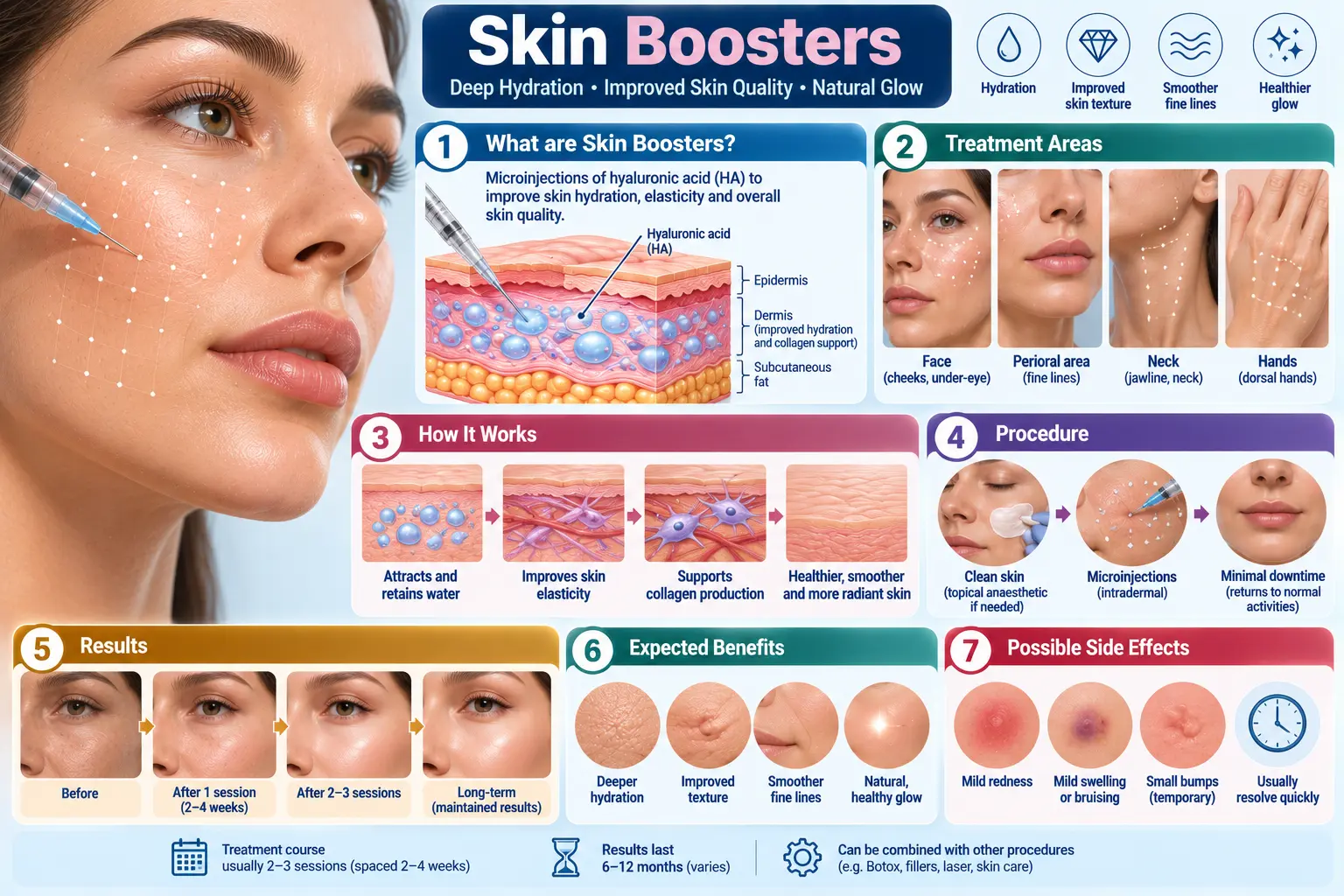
Skin Boosters: Product Choice, Suitability and Safety
Skin boosters are generally intended to improve selected skin-quality features, while traditional fillers are more often used to change or restore volume. The distinction depends on the product and technique, and neither approach is suitable for every person or concern.
The consultation should cover ingredients, evidence, expected duration, number of sessions, possible swelling or bruising, rare serious complications and alternatives such as skincare or other procedures. Results vary and should not be promised.
Before considering a skin booster
- The specific concern you want to improve
- The product name, ingredients and intended effect
- Previous fillers, injections or skin procedures
- Medical history, medicines, allergies and recovery expectations
“Skin booster” is a broad marketing term rather than one standard treatment. An informed decision requires clarity about the actual product, how it is used and its known risks.
What does “skin booster” mean?
“Skin booster” is a broad term used for injectable products intended to affect selected skin-quality features, such as hydration or texture. It is not one standard medicine. Products may differ in ingredients, concentration, depth of placement, injection technique, intended effect and regulatory status. The exact product matters more than the marketing label.
Skin boosters are often compared with dermal fillers, but the terms are not interchangeable. Some products are designed primarily for skin quality, while other fillers are used to change or restore volume in specific areas. The clinician should explain the intended effect of the actual product being considered and whether it is appropriate for your skin and treatment area.
What to confirm before an injection
- The exact product name, ingredients, manufacturer and intended use
- Whether the product is authorised for the planned injection site and method
- The expected change, how subtle or temporary it may be and what it will not address
- Previous fillers, skin boosters, dissolving agents or other facial procedures
- Allergies, skin conditions, active infection, medicines and bleeding history
- The number of sessions proposed, spacing, cost, aftercare and follow-up
The clinician should discuss the evidence for the product and avoid promising a particular degree or duration of improvement. If the concern is volume loss, deep folds, pigmentation or loose skin, another pathway may be more relevant. A skin booster should not be used as a substitute for diagnosing a skin condition.
Risks and aftercare
Temporary redness, swelling, bruising, tenderness and small injection-site bumps can occur. Depending on the ingredient and injection plane, other complications can include infection, inflammation, nodules, allergic reaction or delayed swelling. If a product has filler-like properties, accidental entry into a blood vessel is a rare but serious risk and may threaten skin or vision. Ask what specific complications apply to the product being proposed.
Aftercare should be matched to the product and technique. Obtain clear instructions about skin cleansing, makeup, exercise, sun exposure and when to arrange a review. Seek urgent medical help for severe pain, unusual skin whitening or blue-grey colour, sudden visual symptoms or signs of a severe allergic reaction.
Questions patients often ask
Are skin boosters the same as dermal fillers?
Not necessarily. The purpose and material vary by product. Ask whether the proposed product is intended for skin quality, volume or another indication.
Will one session be enough?
That depends on the product, concern and response. A treatment schedule should be explained before you consent.
Can results be guaranteed?
No. Responses differ, and the clinician should describe realistic limits and uncertainty.
Related assessment and treatment information
Further patient information
Appointments are based at the Limassol clinic. Patients from across Cyprus can enquire about a consultation to clarify whether the product and proposed treatment are appropriate.
This information is general and does not replace an individual medical assessment.