Hoarseness in Children: Common Causes and When to Seek Help
Learn why a child’s voice may become hoarse, what gentle voice care can do and which symptoms need prompt clinical assessment.
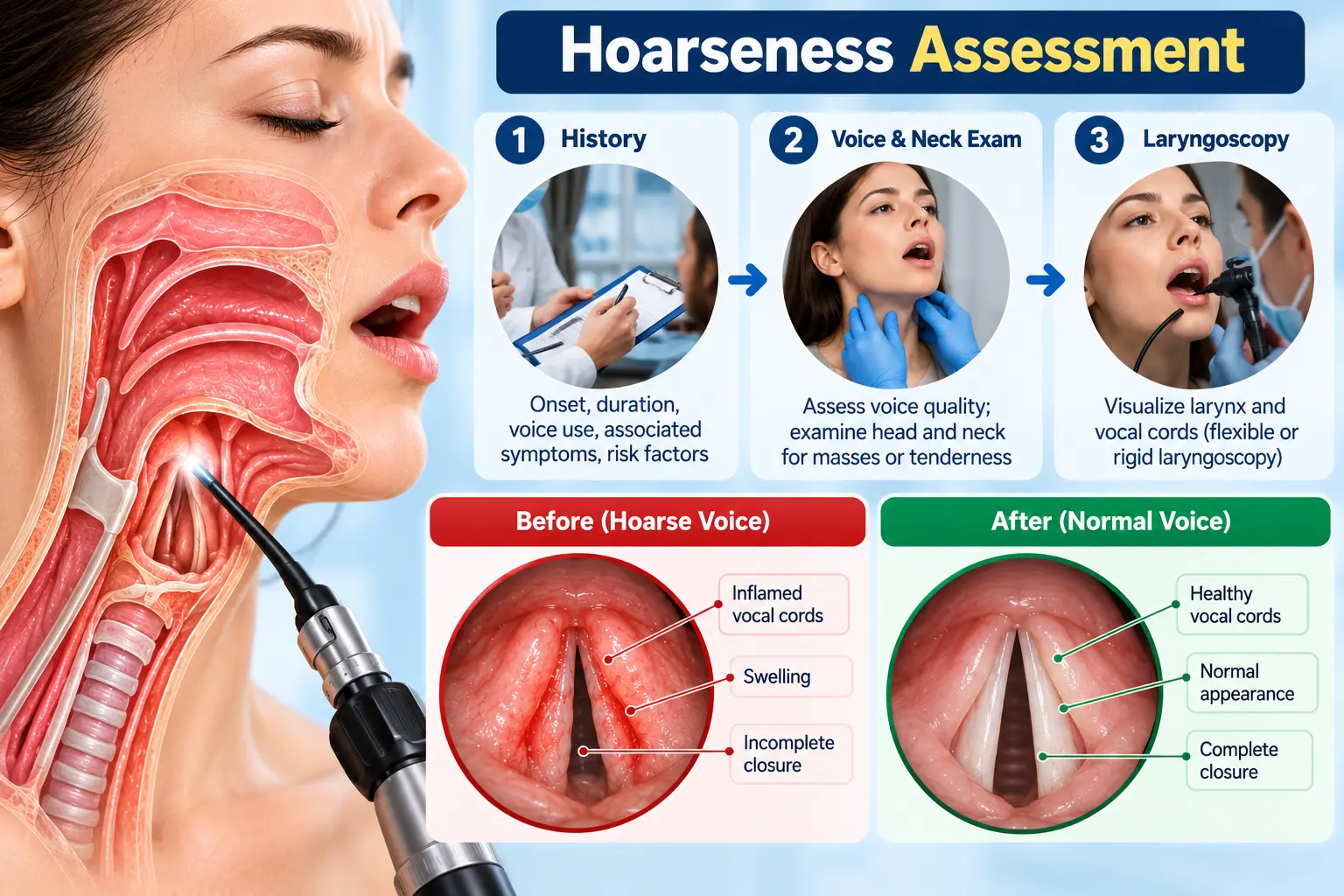
Read MoreThe assessment considers voice demands, smoking, reflux symptoms, recent infection, medications and whether speaking is painful or tiring. Depending on the duration and clinical picture, visual examination of the larynx may be recommended to assess vocal-fold movement and appearance.
Treatment depends on the cause and can range from voice care or treating contributing conditions to targeted therapy or further investigation. Persistent hoarseness should not be treated repeatedly without establishing why it is happening.
Hoarseness lasting around three weeks or longer should be assessed, particularly with a neck lump, pain or difficulty swallowing, breathing symptoms or coughing blood.
This information is general and does not replace an individual medical assessment.
Patient Resources
Patient-friendly articles related to this service and common questions about assessment and care.
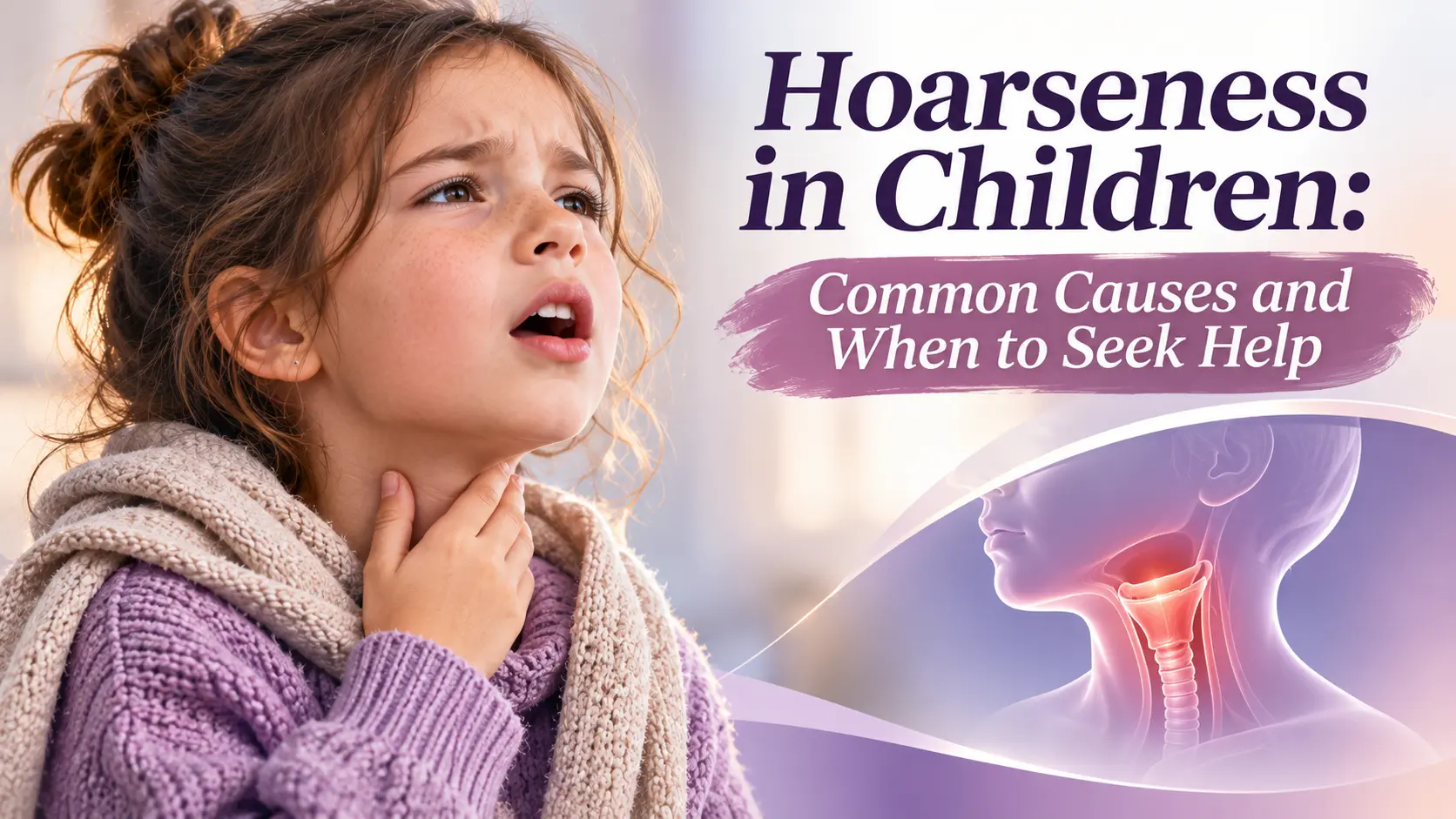
Learn why a child’s voice may become hoarse, what gentle voice care can do and which symptoms need prompt clinical assessment.
Read More
Explore common reasons for a hoarse voice, practical voice-care steps, what an ENT assessment may involve, and warning signs that need earlier review.
Read More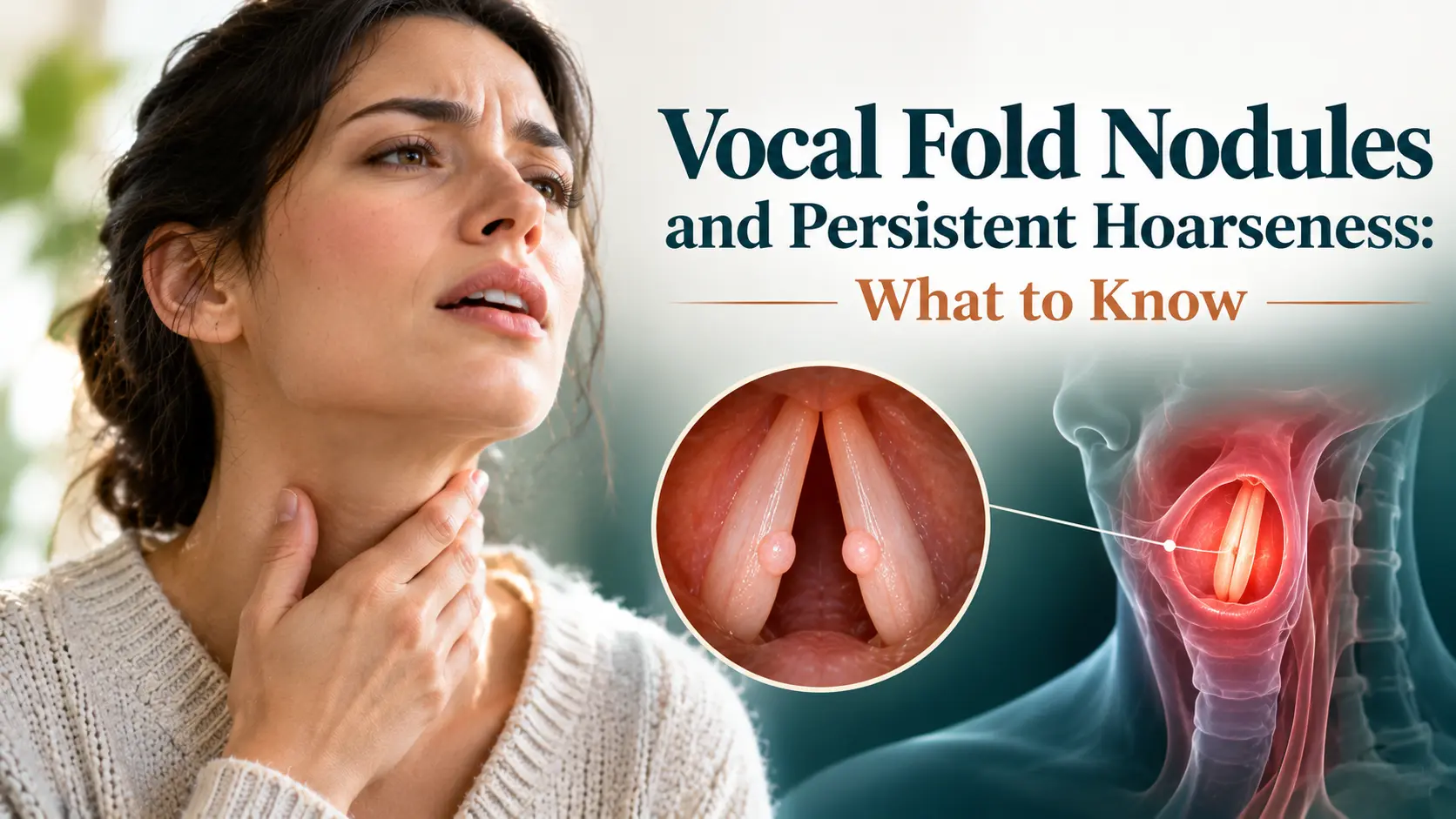
Learn how vocal-fold nodules can affect the voice, why examination is needed, and how voice therapy and changes in vocal load may help.
Read More