
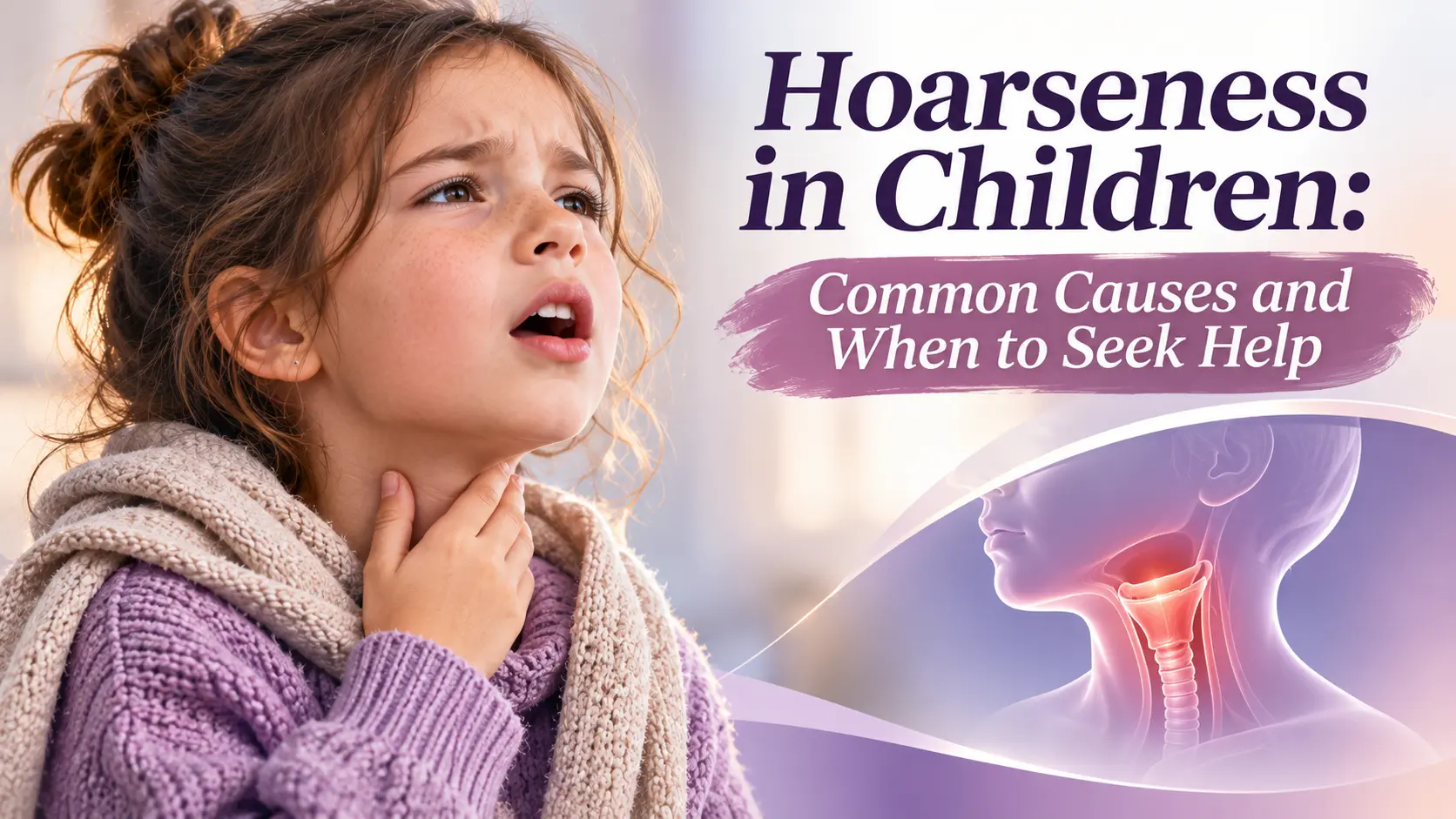
Hoarseness in children can follow a viral infection, shouting or prolonged voice use. It may sound rough, weak or breathy, and it often improves as the underlying irritation settles. However, persistent or recurrent hoarseness can have other causes, and breathing or swallowing symptoms change the urgency. Caregivers should focus on comfortable voice use and seek assessment when symptoms do not follow an expected course.
Common causes
A respiratory virus can inflame the larynx and temporarily change the voice. Frequent shouting or forceful voice use can also strain the vocal folds. Allergies, reflux-related irritation and structural or neurological issues are other possibilities in selected cases. A child’s age, duration of symptoms, voice demands and associated cough or breathing symptoms help guide the evaluation.
Voice care at home
Encourage quiet, comfortable speaking rather than shouting or whispering forcefully. Offer fluids and avoid smoke or other irritants. Do not give antibiotics or steroid medicines unless a clinician recommends them. If the child has a barking cough or noisy breathing, consider croup and follow urgent guidance according to the child’s breathing effort. Voice rest should be reasonable and should not become a punishment or distressing demand.
When assessment is needed
Arrange medical review if hoarseness lasts more than a few weeks, recurs frequently, affects communication or occurs with swallowing difficulty, poor growth, a neck lump or other concerning symptoms. Professional child voice users or children whose voice limits school or social participation may need earlier review. A clinician may recommend laryngeal examination or voice therapy depending on the cause.
Urgent warning signs
Seek emergency care for noisy or difficult breathing, blue lips, inability to swallow saliva, drooling with distress or rapidly worsening symptoms. A hoarse voice with stridor at rest should not be managed only with home remedies. If the child’s condition seems severe or you are unsure whether breathing is safe, get immediate medical advice.
Frequently asked questions
Does every hoarse child need antibiotics? No. Many episodes are viral or related to voice strain; treatment depends on the cause.
Should children whisper to rest the voice? Forceful whispering may also strain the voice. Encourage gentle, comfortable speech and breaks.
When is hoarseness urgent? Breathing difficulty, stridor at rest or inability to swallow saliva requires emergency care.
Related reading
- Acute Laryngitis: Voice Rest, Recovery and Warning Signs
- Croup in Children: Recognising a Barking Cough and Noisy Breathing
- Persistent Hoarseness: Causes and When to See an ENT Specialist