
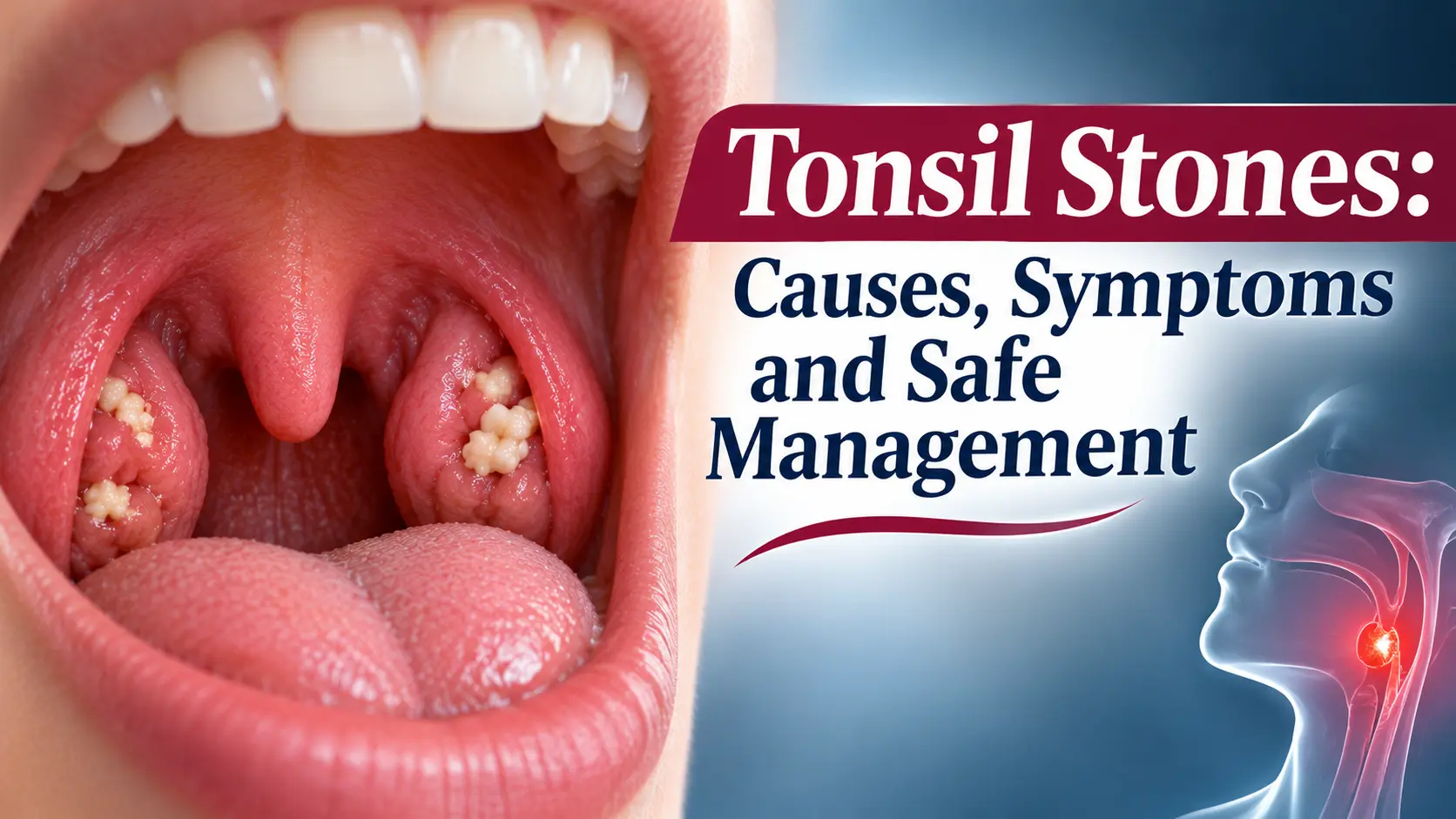
Tonsil stones, also called tonsilloliths, are small deposits that can form in pockets on the surface of the tonsils. They develop when debris such as food particles, mucus, and bacteria collects and hardens. Some people notice small white or yellow spots, bad breath, a foreign-body sensation, or occasional throat discomfort; others have no symptoms.
Why stones occur and how they are assessed
Tonsils have natural creases and pockets. Stones may be more likely when these pockets trap debris or after repeated tonsil inflammation. White material on the tonsils can also be infection or another condition, so appearance alone is not a diagnosis. A clinician can distinguish stones from acute tonsillitis and assess persistent pain or one-sided changes.
A clinician may inspect the throat and ask about bad breath, swallowing symptoms, recurrent infections, and whether the problem is persistent. Tests are not usually needed for straightforward visible stones, but unusual or ongoing symptoms may require more examination.
Low-risk care and what to avoid
Good oral hygiene, gentle brushing of the tongue and teeth, hydration, and gargling with water may help reduce debris for some people. Do not use sharp tools or forcefully dig into the tonsil, because the tissue can bleed or become injured. High-pressure water devices can also cause trauma if used too forcefully.
If stones are frequent, painful, large, or affecting quality of life, ask a clinician about options. Treatment varies; surgery is not necessary for everyone and should only be considered after discussing other causes, expected benefits, recovery, and risks. Antibiotics are not a routine treatment for a tonsil stone alone unless a separate bacterial infection is diagnosed.
When a symptom may be something else
Seek assessment for persistent sore throat, fever, swollen neck glands, difficulty swallowing, or recurrent episodes that interfere with eating or sleep. A persistent one-sided tonsil change, unexplained neck lump, or ongoing bleeding needs medical review.
Breathing difficulty, inability to swallow saliva, or rapidly increasing throat swelling requires emergency care. Do not assume a severe symptom is caused by a small stone.
Common questions
Are tonsil stones contagious? The stones themselves are not an infection that spreads, although an infection contributing to throat symptoms may be contagious.
Do tonsil stones always cause bad breath? No. Some are silent; others may contribute to odour or a sensation of something stuck in the throat.
Explore our voice and larynx assessment and flexible laryngoscopy pages for more information about related care options. A clinician can advise whether either is appropriate based on the individual history and examination findings.