
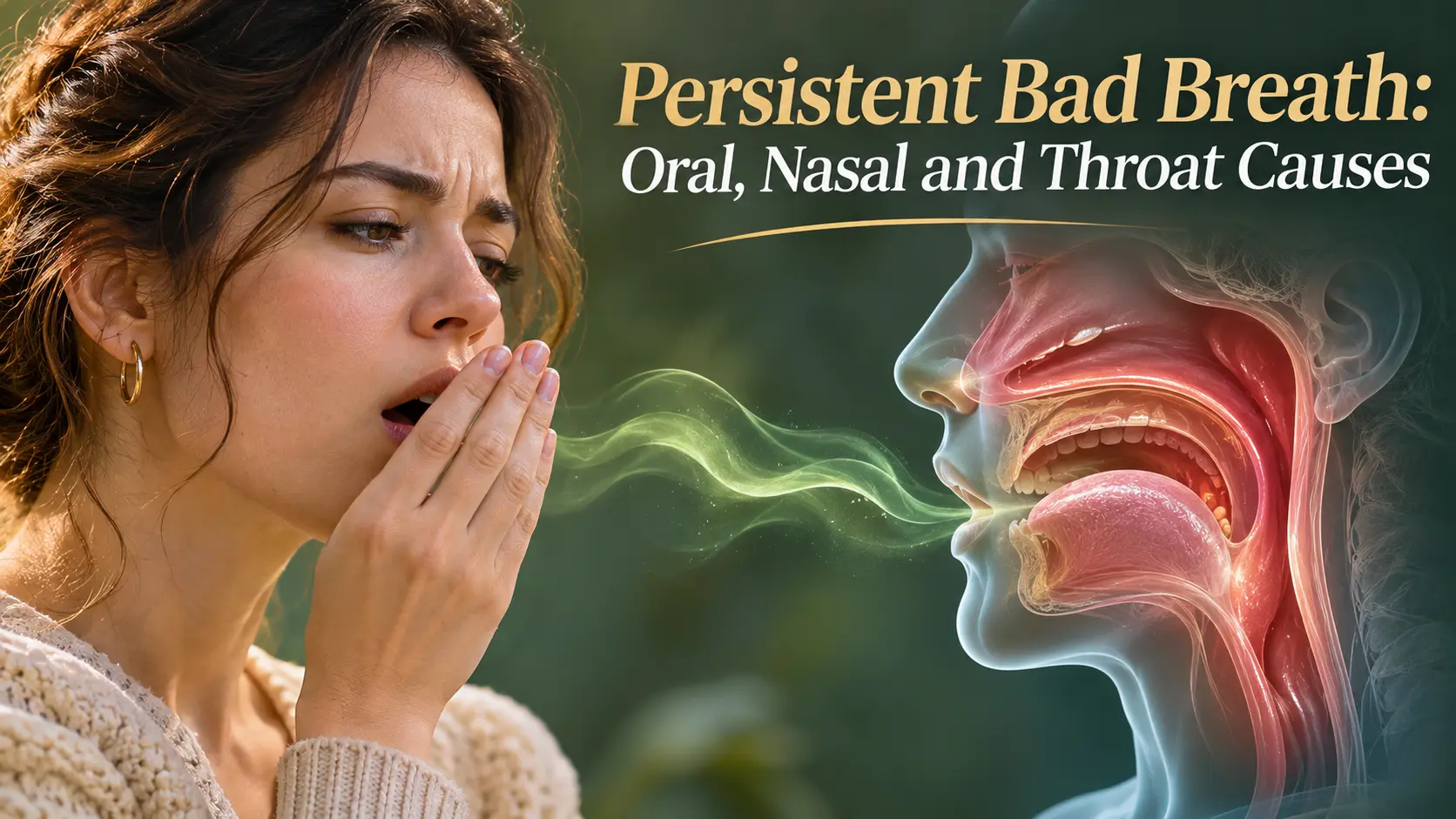
Persistent bad breath, or halitosis, is common and often begins in the mouth rather than the stomach. Dry mouth, gum disease, tongue coating, dental problems, tonsil stones, and some nasal or throat conditions can contribute. A practical assessment starts with the most common causes instead of assuming there is a serious hidden disease.
Common sources
Bacteria on the tongue and around the gums, dental decay, gum inflammation, dry mouth, smoking, and certain foods are frequent contributors. Tonsil stones or chronic nasal drainage may contribute in some people. Reflux and systemic illness are possible in selected circumstances but are not the default explanation for every case.
A stepwise assessment
Brush teeth and tongue gently, floss or clean between teeth, stay hydrated, and arrange dental review if the problem persists. A clinician may look for tonsil stones, chronic nasal symptoms, oral lesions, dry mouth, or medication effects. Avoid repeatedly using harsh mouthwashes that worsen dryness or masking products that do not address the cause.
When to see an ENT clinician
ENT assessment may be appropriate when symptoms continue despite good oral care and dental review, especially with tonsil problems, nasal blockage, persistent discharge, or throat symptoms. A non-healing oral ulcer, persistent white or red patch, neck lump, difficulty swallowing, or unexplained weight loss needs timely medical assessment.
Frequently asked questions
Does bad breath usually come from the stomach? Usually not; oral causes are more common, although other conditions can contribute.
Can tonsil stones cause odour? Yes, they can contribute to bad breath in some people.
When is bad breath a warning sign? A persistent oral lesion, neck lump, swallowing difficulty, or unexplained weight loss should be assessed promptly.
Explore our voice and larynx assessment and flexible laryngoscopy pages for more information about related care options. A clinician can advise whether either is appropriate based on the individual history and examination findings.
Related reading
- Tonsil Stones: Causes, Symptoms and Safe Management
- Persistent Mouth Ulcers or White Patches: When to Arrange an Examination