
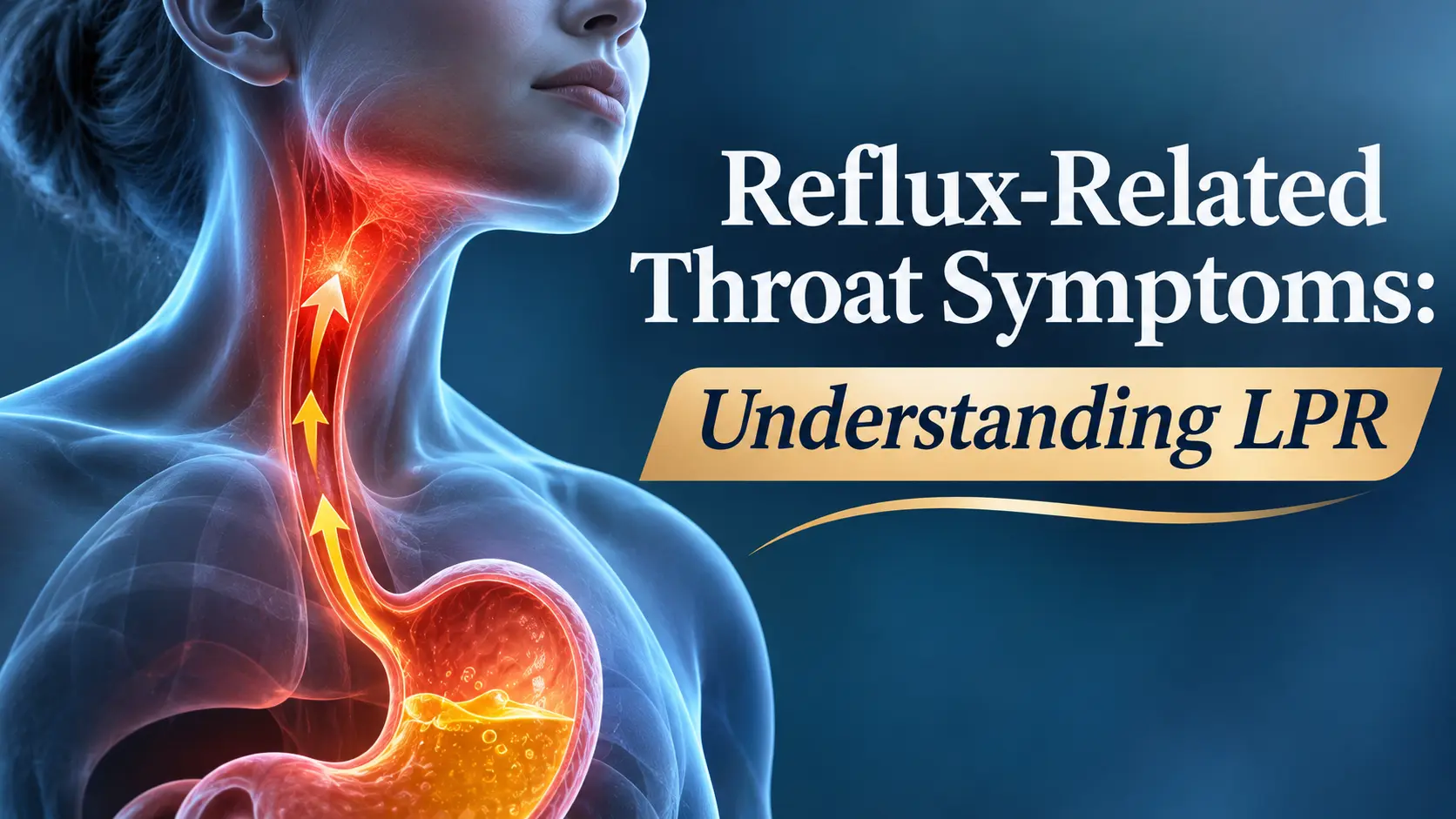
Laryngopharyngeal reflux (LPR) describes reflux reaching the throat area. Some people report frequent throat clearing, a cough, hoarseness, a lump-like sensation, or throat irritation. These symptoms are common and have many possible causes, so LPR should not be self-diagnosed from a symptom list or assumed whenever the throat feels irritated.
What symptoms can look like
Unlike classic heartburn, people with throat-predominant symptoms may not notice burning in the chest. Symptoms can vary through the day and may be affected by meals, lying down, voice use, smoking, or other irritants. However, allergies, postnasal drip, infection, asthma, medication effects, and vocal strain can cause overlapping symptoms.
A clinician will consider the pattern and duration, review medicines and risk factors, and examine the throat or voice when needed. Depending on the findings, further testing or assessment by a gastroenterology, respiratory, or voice specialist may be appropriate. Visual redness alone is not always enough to prove that reflux is the cause.
Practical steps and treatment discussions
Some people benefit from avoiding large meals close to bedtime, identifying foods or drinks that reliably trigger symptoms, elevating the head of the bed where advised, stopping smoking, and maintaining healthy routines. There is no single trigger list that applies to everyone, and unnecessarily restrictive diets can reduce quality of life without clear benefit.
Medication may be appropriate for some patients but should be chosen based on the suspected diagnosis and associated symptoms. Do not start, stop, or extend acid-suppressing treatment indefinitely without professional guidance, especially when symptoms persist despite a trial. Treatment plans should be reviewed if the expected benefit does not occur.
When to seek further assessment
Seek medical advice for hoarseness that persists, recurring unexplained throat symptoms, painful or difficult swallowing, or symptoms that fail to improve. A persistent neck lump, coughing blood, unexplained weight loss, or progressive swallowing difficulty deserves prompt assessment.
Difficulty breathing, inability to swallow, or sudden severe symptoms require urgent care. Reflux should not be used as an explanation for alarm symptoms without examination.
Common questions
Can LPR happen without heartburn? Yes, some people report throat symptoms without typical heartburn, but other causes must also be considered.
Should I take acid-reducing medicine for every hoarse voice? No. Hoarseness has many causes; prolonged or significant voice change warrants assessment before assuming reflux is responsible.
Explore our voice and larynx assessment and flexible laryngoscopy pages for more information about related care options. A clinician can advise whether either is appropriate based on the individual history and examination findings.