
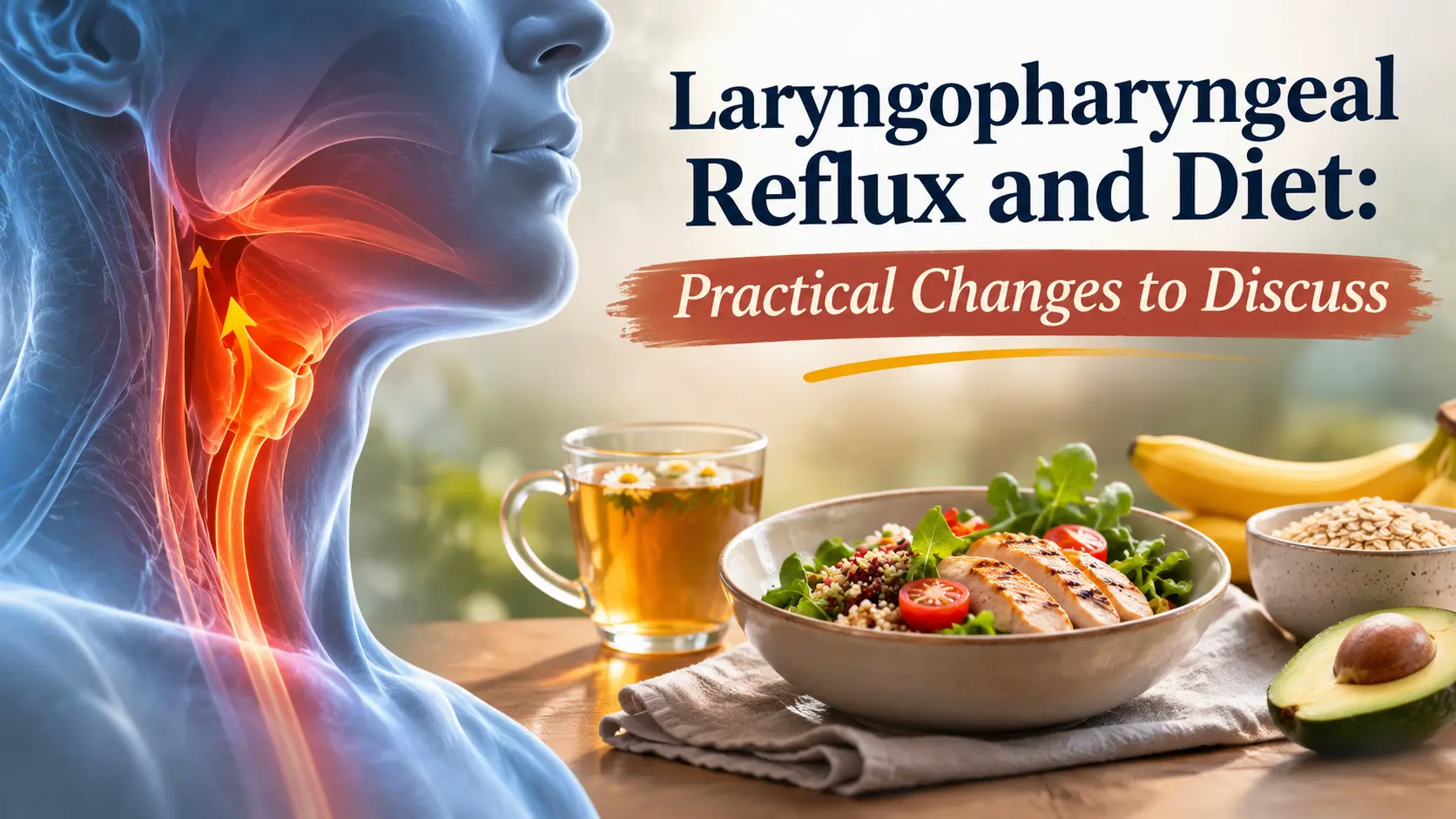
Laryngopharyngeal reflux is often discussed when people have throat clearing, cough, hoarseness, or a lump sensation. These symptoms have many possible causes, and reflux cannot be confirmed from symptoms alone. Food and lifestyle changes may help some people, but broad restrictive diets are not necessary for everyone and should not replace appropriate assessment.
Why symptoms can be confusing
Throat symptoms may occur without classic heartburn, but nasal drainage, voice overuse, asthma, medication effects, and laryngeal sensitivity can produce similar complaints. A clinician may consider the duration, meal relationship, night symptoms, and response to prior treatment while deciding whether reflux testing or laryngeal examination is appropriate.
A practical food and routine approach
Notice whether particular foods or large late meals reliably worsen symptoms rather than assuming every commonly listed trigger applies. Some people benefit from smaller meals, avoiding lying down soon after eating, reducing alcohol, or addressing weight-related factors where relevant. Keep nutrition balanced and avoid extreme elimination diets without professional guidance.
Medication and follow-up
Acid-suppressing medicines help some reflux conditions but are not a universal treatment for all throat symptoms. Review persistent symptoms with a clinician instead of repeatedly adding medicines or supplements. Difficulty swallowing, painful swallowing, vomiting blood, black stools, unexplained weight loss, or a neck lump requires prompt medical evaluation.
Frequently asked questions
Does a sore throat prove reflux? No. Reflux is one possible cause among several and needs to be considered in context.
Should everyone avoid coffee and tomatoes? No. Trigger sensitivity differs, so focus on reproducible personal patterns and balanced nutrition.
Can I take reflux medicine indefinitely? Long-term treatment should be reviewed with a clinician to confirm the indication, benefits, and risks.
Explore our voice and larynx assessment and flexible laryngoscopy pages for more information about related care options. A clinician can advise whether either is appropriate based on the individual history and examination findings.
Related reading
- Reflux-Related Throat Symptoms: Understanding LPR
- Globus Sensation: Feeling a Lump in the Throat Without a Blockage