
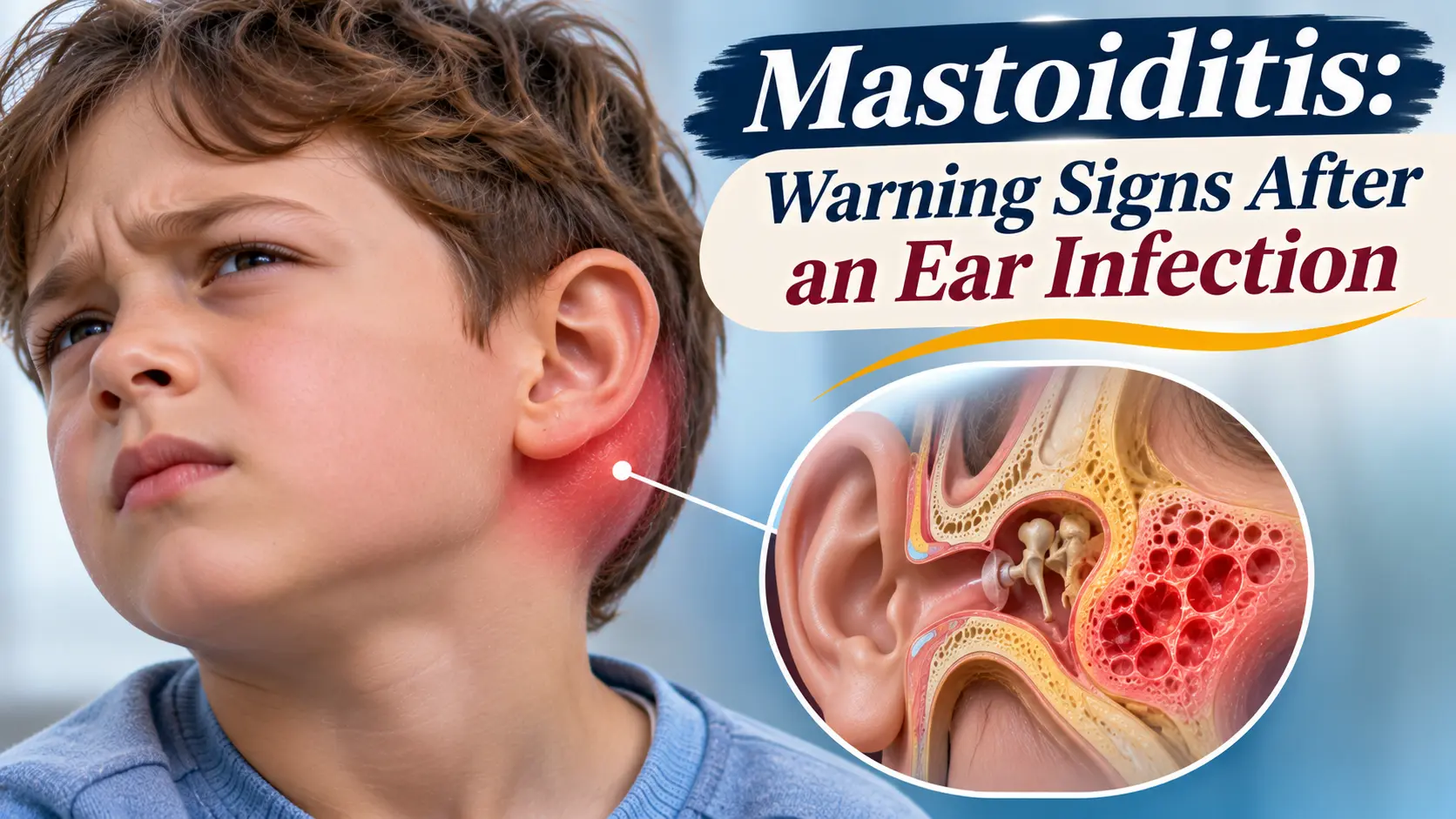
Mastoiditis is an infection of the mastoid bone, the part of the skull located behind the ear. It can develop when an infection in the middle ear spreads to nearby bone and tissues. Although it is uncommon, it can be serious and needs urgent medical assessment. A person with an ear infection who develops swelling or redness behind the ear, worsening pain or fever should not wait for a routine appointment.
Symptoms to recognise
Possible features include tenderness, redness or swelling behind the ear, an ear that appears pushed outward, fever, ear discharge, headache and feeling generally unwell. Hearing may also be affected. Symptoms in a child can progress quickly, and young children may show irritability, poor feeding or unusual sleepiness. These signs are not specific enough to diagnose mastoiditis at home, but they are important reasons to seek urgent care.
How it is diagnosed
A clinician examines the ear and the area behind it, checks the general condition and reviews any recent ear infection. Blood tests or imaging may be needed depending on severity and uncertainty. Because infection can spread, assessment may take place in hospital and involve an ENT specialist. Do not try to drain swelling or press hard on the area.
Treatment and monitoring
Treatment generally involves antibiotics and close clinical observation; some patients need intravenous medication or surgery to drain infected fluid or remove diseased tissue. The exact plan depends on the extent of infection and the person’s age and health. Complete the prescribed treatment and attend follow-up even if symptoms improve, because complications or persistent infection may need further care.
When to seek emergency help
Seek urgent medical care now for swelling or redness behind the ear with pain or fever, especially after a recent ear infection. Emergency assessment is particularly important with severe headache, confusion, neck stiffness, facial weakness, marked dizziness or a child who is difficult to wake. Do not rely on home remedies or leftover antibiotics for suspected mastoiditis.
Frequently asked questions
Can mastoiditis go away by itself? Suspected mastoiditis requires urgent medical assessment and should not be managed by watchful waiting at home.
Is it always caused by an ear infection? It often follows middle-ear infection, but the clinical picture and risks need assessment by a clinician.
Can it affect hearing? Yes. Infection may affect hearing, and prompt treatment helps address the infection and reduce risk of complications.
Explore our hearing assessment and otology consultation pages for more information about related care options. A clinician can advise whether either is appropriate based on the individual history and examination findings.
Related reading
- Ear Infections: Symptoms, Treatment and When to Seek Care
- Ear Discharge: Common Causes and When to Seek Care