
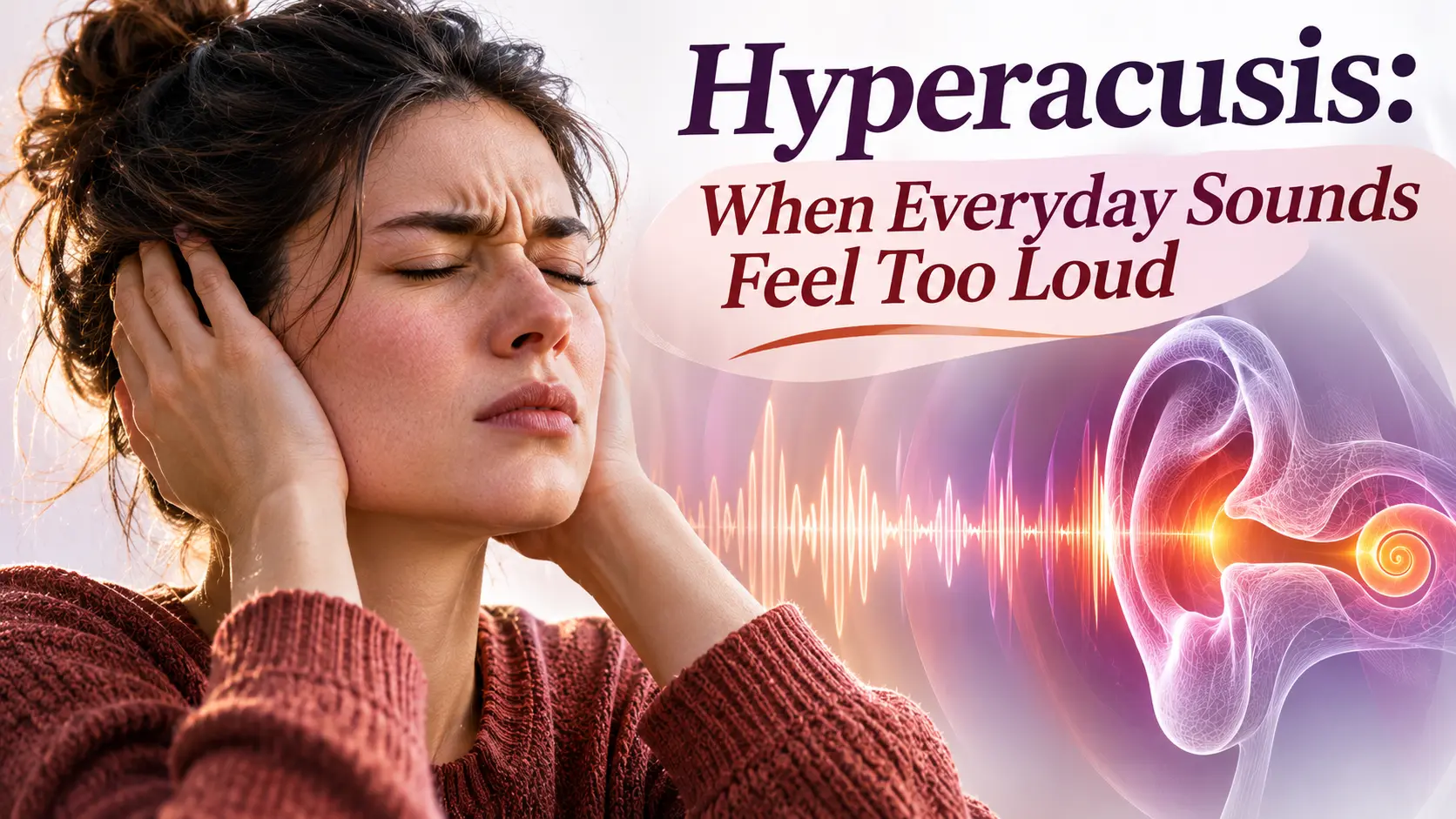
Hyperacusis is a reduced tolerance for sounds that most people find comfortable. Everyday noises such as dishes clinking, traffic, or a vacuum cleaner may feel excessively loud or uncomfortable. Sound sensitivity can affect sleep, work, and social life, and should be assessed in context rather than managed only by avoiding sound.
How is hyperacusis different from other sound concerns?
Hyperacusis usually refers to loudness or discomfort that seems out of proportion to the sound. Misophonia is more often a strong emotional response to particular trigger sounds, while phonophobia may describe fear of sound. Tinnitus is hearing a sound without an external source. A person can experience more than one of these concerns.
What might contribute to sound intolerance?
Sound sensitivity may occur with migraine, tinnitus, some inner-ear or neurological conditions, head injury, or significant stress. Sometimes no single cause is identified. A careful history and ear and hearing assessment can help identify treatable contributors and ensure that new hearing symptoms are not overlooked.
What approaches may help?
A clinician may advise gradual, tolerable sound exposure and psychological support where distress and avoidance have become entrenched. Hearing protection is useful in genuinely loud environments, but wearing earplugs all day in ordinary settings can increase sound vigilance for some people. Any sound-based plan should be personalised and should not force exposure that causes pain.
Frequently asked questions
Should I wear earplugs all day? Use protection when sound levels are hazardous or painful, but discuss constant use in everyday environments with a clinician because it may reinforce sound intolerance for some people.
Can hyperacusis be cured? The course differs. Treatment focuses on contributing conditions, reducing distress, and improving function; no single approach works for everyone.
Does sound sensitivity need urgent review? Seek prompt assessment if it begins suddenly, follows head injury, or comes with sudden hearing loss, severe dizziness, weakness, or other neurological symptoms.
Explore our otology consultation page for more information about this care option. A clinician can advise based on the individual history and examination findings.