
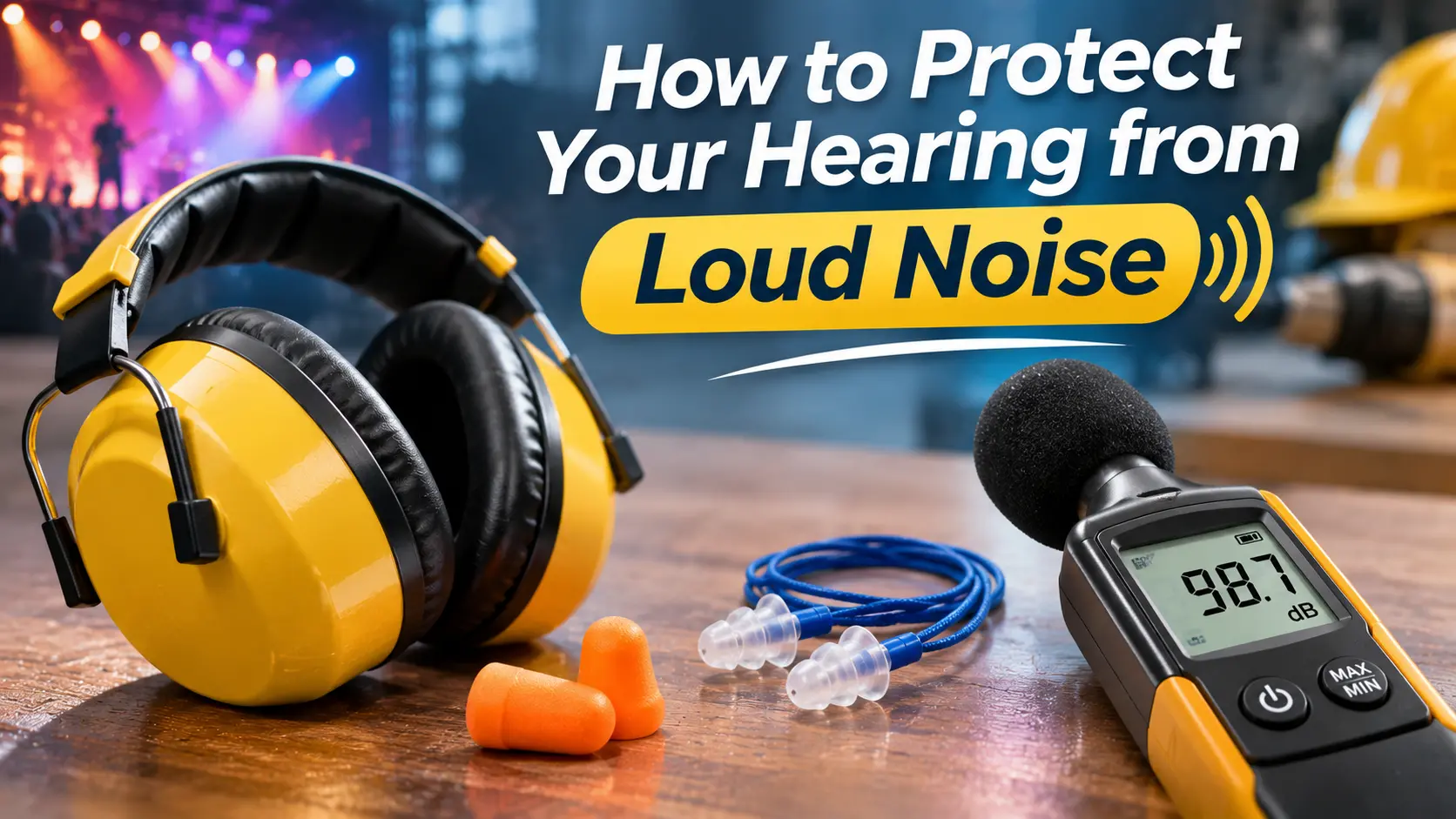
Noise-related hearing loss can happen after a very loud sound or gradually after repeated exposure to harmful noise. Damage may occur even when a person does not notice immediate pain. Early signs can include ringing after a concert, muffled hearing, or difficulty understanding speech in busy places. Protecting hearing is easier than reversing permanent damage.
Understand the risk
Risk depends on both loudness and duration. The louder the sound, the less time it may take to harm hearing. Work equipment, power tools, firearms, loud events, and personal audio at high volume can all create risk. A temporary muffled feeling after loud sound is a warning sign to reduce exposure, not proof that the ears have fully recovered.
Repeated exposure can injure delicate sensory cells in the inner ear. These cells do not simply grow back in humans, so established noise-induced hearing loss is often permanent. Tinnitus may accompany the loss, but a person can have noise-related damage without obvious ringing.
Practical ways to lower exposure
Move farther from speakers or machinery, shorten time near loud sound, take quiet breaks, and lower headphone volume. If you need to raise your voice to talk to someone at arm’s length, the environment may be too loud for prolonged unprotected exposure. Choose hearing protectors suited to the noise and make sure they fit correctly.
At work, follow occupational safety rules and ask for a noise assessment when equipment is loud. Earplugs and earmuffs can be combined in very noisy settings when recommended by a safety professional. Do not rely on ordinary earbuds as hearing protection unless they are specifically rated for that use.
When to seek help
Arrange a hearing test if you notice persistent ringing, trouble following speech, or a change after ongoing noise exposure. Sudden hearing loss after a blast or other exposure needs urgent assessment. If hearing becomes muffled after a loud event, avoid further noise and seek advice if it does not quickly return to normal or is accompanied by other symptoms.
Children and teenagers also need hearing protection at concerts, sporting events, and around loud toys or equipment. Model safe volume habits early and avoid using maximum volume as a way to overcome background noise.
Common questions
Can a single loud sound damage hearing? Yes. A very intense impulse sound can injure hearing immediately; repeated lower-level exposure can also cause damage over time.
Does ringing after a concert matter? It can indicate that the sound exposure was excessive. Allow quiet recovery and seek assessment if ringing or hearing change persists or is severe.
Explore our otology consultation page for more information about this care option. A clinician can advise based on the individual history and examination findings.