
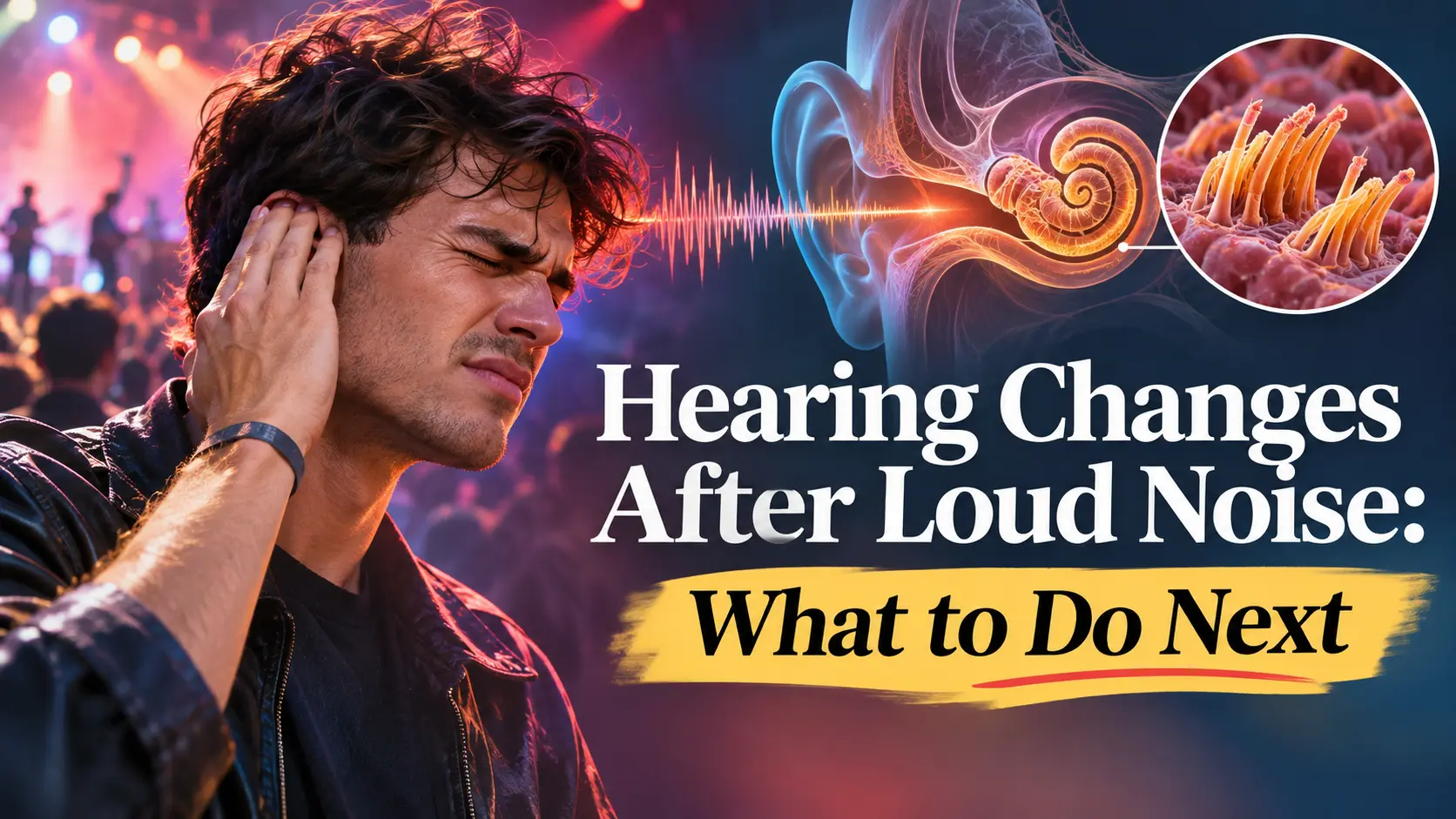
After a concert, power-tool use, fireworks or another loud event, some people notice ringing, muffled hearing or sound sensitivity. These symptoms can reflect stress or injury to the auditory system. Even if hearing seems to return, repeated exposure can cause lasting damage. A sudden or persistent change should not be dismissed as normal tiredness of the ears.
What loud sound can do
Intense sound can damage delicate sensory cells and connections in the inner ear. Symptoms may include tinnitus, muffled hearing, difficulty understanding speech or sensitivity to sound. A temporary improvement does not guarantee that no injury occurred, and repeated high-level exposure increases risk. The level and duration of sound both matter; distance from speakers and the use of hearing protection can make a difference.
What to do after an exposure
Move away from the noise and give your ears a quieter environment. Do not put drops or objects into the ear unless advised. If hearing loss is sudden, marked or persists, seek urgent medical assessment because sudden sensorineural hearing loss is time-sensitive. Tinnitus or muffled hearing that does not settle also deserves review. A clinician may arrange audiometry to establish the type and degree of change.
How to protect hearing next time
Reduce volume, increase distance from loud sources, take quiet breaks and use well-fitting hearing protection in noisy workplaces or at events. Noise-cancelling headphones do not automatically protect hearing if the music remains loud. Follow workplace safety guidance and have hearing protection fitted appropriately when required. If you need to raise your voice to be heard at arm’s length, the environment may be too loud for prolonged exposure.
When to seek urgent care
Sudden hearing loss in one or both ears needs urgent evaluation, especially with new tinnitus, dizziness or a feeling of fullness. Seek immediate care for neurological symptoms, severe vertigo or injury associated with the noise exposure. Do not wait several days hoping that sudden loss will resolve, because prompt assessment may affect treatment options.
Frequently asked questions
Can hearing return after loud noise? Temporary symptoms can improve, but this does not guarantee that the ear was unharmed. Persistent or sudden change needs assessment.
Do earbuds damage hearing? Risk depends on volume, duration and listening conditions. Reduce sound exposure and take breaks.
Can I sleep off sudden hearing loss? No. Sudden hearing loss needs urgent medical assessment rather than watchful waiting.
Explore our otology consultation page for more information about this care option. A clinician can advise based on the individual history and examination findings.
Related reading
- How to Protect Your Hearing from Loud Noise
- Sudden Hearing Loss: Why Urgent Assessment Matters
- Tinnitus: Common Causes, Assessment and Ways to Cope