
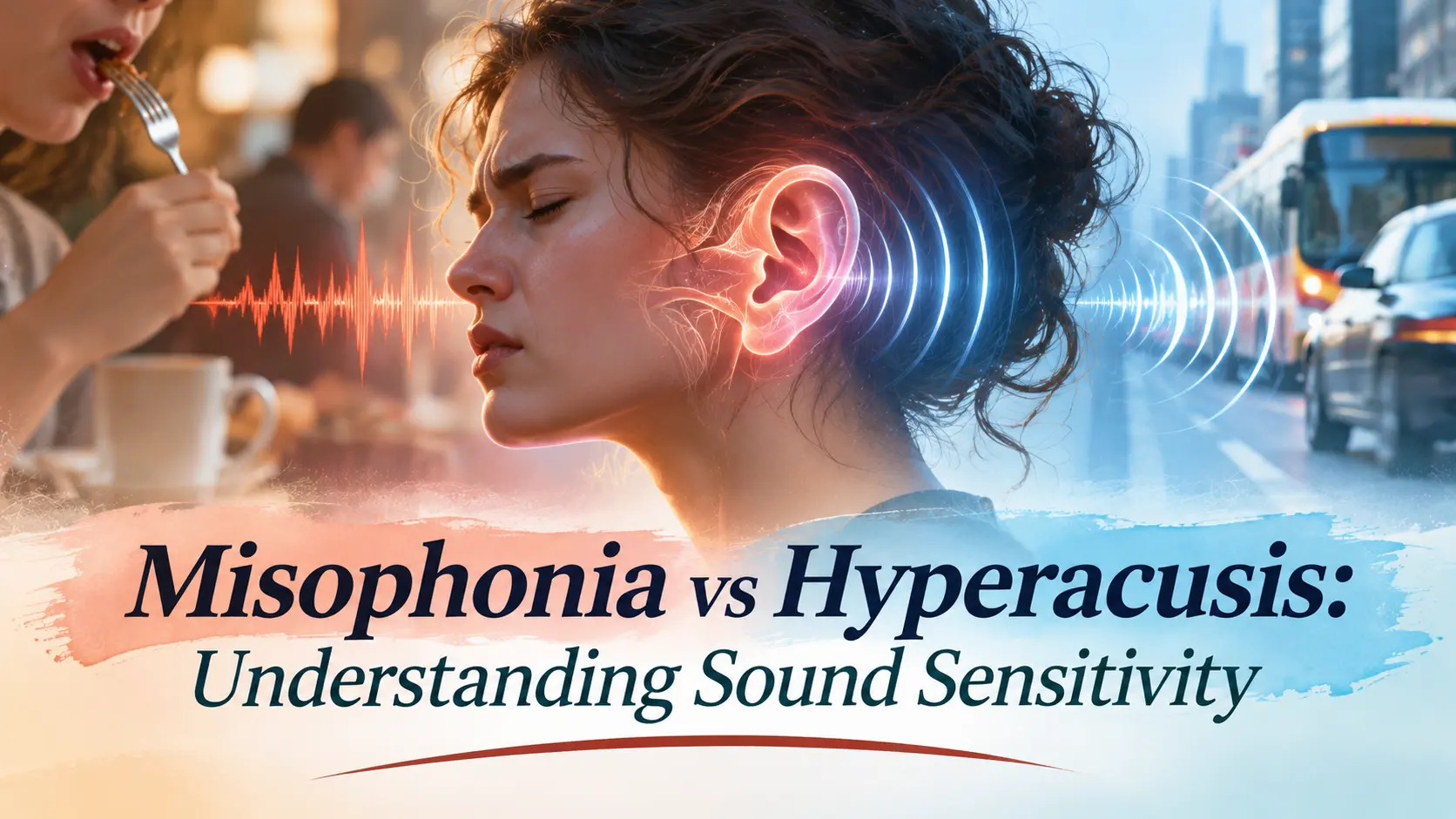
Not all sound sensitivity feels the same. Some people experience a strong reaction to specific sounds, such as chewing or repetitive tapping; others feel that ordinary sounds are uncomfortably loud or painful. Describing the type of reaction can help a clinician recommend the right assessment and support.
What is misophonia?
Misophonia describes an intense emotional, physical, or behavioural response to certain trigger sounds. The reaction may be strongest for particular patterns or sounds and can vary between people. It is not simply choosing to be irritated, and the person’s distress should be taken seriously.
How is hyperacusis different?
Hyperacusis is usually related to reduced tolerance for sound intensity or loudness across a wider range of sounds. Tinnitus is a sound perceived without an external source. These conditions may overlap, so an interview should explore trigger types, loudness, pain, hearing changes, migraine symptoms, and how the problem affects daily life.
What can be done?
A clinician may check hearing and ear health and consider related migraine, anxiety, sleep, or neurological factors. Psychological approaches that help people manage triggers and distress may be useful for some individuals. A plan should preserve normal activities when possible and reserve hearing protection for sound levels that are truly loud or painful.
Frequently asked questions
Is misophonia the same as being sensitive to loud noise? No. Misophonia often centres on specific trigger sounds and a strong response, while hyperacusis is more about sound loudness or discomfort.
Should I avoid every trigger? Avoidance may be reasonable temporarily, but broad restrictions can make daily life smaller. Individual support can help develop practical coping strategies.
Can an ENT specialist help? An ENT or hearing professional can assess ear and hearing issues and help direct further care if the pattern suggests another contributor.
Explore our hearing assessment and otology consultation pages for more information about related care options. A clinician can advise whether either is appropriate based on the individual history and examination findings.
Related reading
- Hyperacusis: When Everyday Sounds Feel Too Loud
- Tinnitus: Common Causes, Assessment and Ways to Cope