
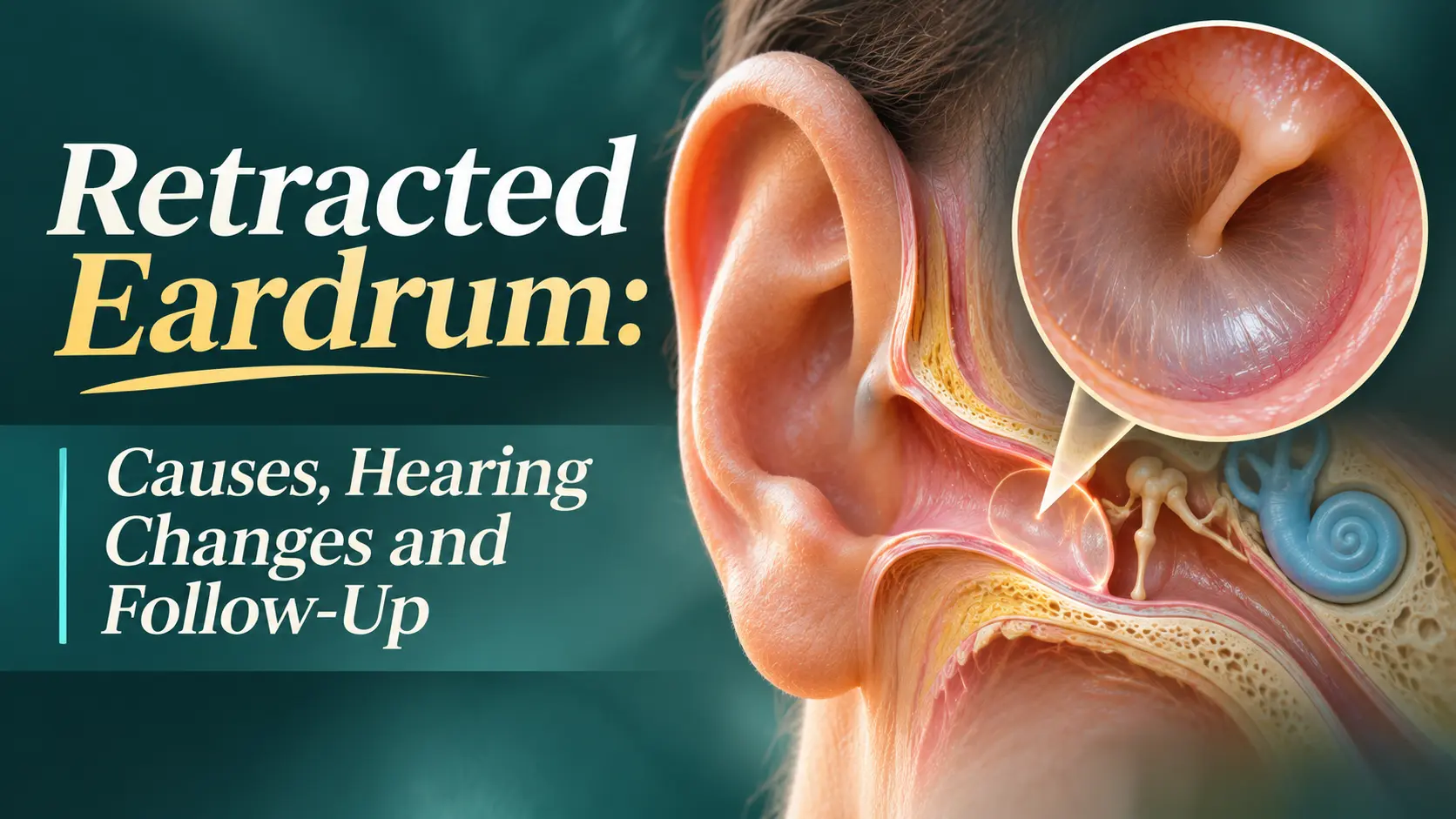
A retracted eardrum is pulled inward rather than sitting in its usual position. It may be associated with Eustachian tube dysfunction, fluid in the middle ear, or other pressure problems. Some cases remain stable, while others can affect hearing or develop a pocket that needs specialist follow-up.
Why does the eardrum retract?
The Eustachian tube helps equalise pressure between the middle ear and the environment. If it does not ventilate adequately, pressure can fall and pull the eardrum inward. Symptoms may include fullness, popping, or reduced hearing, though a retraction can also be found during an examination without clear symptoms.
How is it evaluated?
An ENT clinician examines the eardrum and may recommend a hearing test or tympanometry. The depth and location of the retraction, any trapped debris, evidence of infection, and the degree of hearing change help determine the next step. Photographs or repeat examinations may be used to monitor stability.
Observation or treatment?
Mild, stable retractions may only need monitoring. When there is worsening hearing, recurrent infection, trapped skin debris, or concern for cholesteatoma, more active assessment may be needed. There is no single treatment suitable for every retraction, so follow-up should match the examination findings and risk.
Frequently asked questions
Can a retracted eardrum return to normal? Sometimes, especially if the pressure problem improves, but the outcome depends on the cause and severity.
Is it the same as a perforated eardrum? No. A retracted eardrum is pulled inward; a perforation is an opening through the eardrum.
Why are follow-up visits important? They help detect changes in the pocket, hearing, or middle-ear health before complications progress.
Explore our otology consultation page for more information about this care option. A clinician can advise based on the individual history and examination findings.
Related reading
- Perforated Eardrum: Causes, Care and Recovery
- Cholesteatoma: Why Persistent Ear Discharge Needs Assessment