
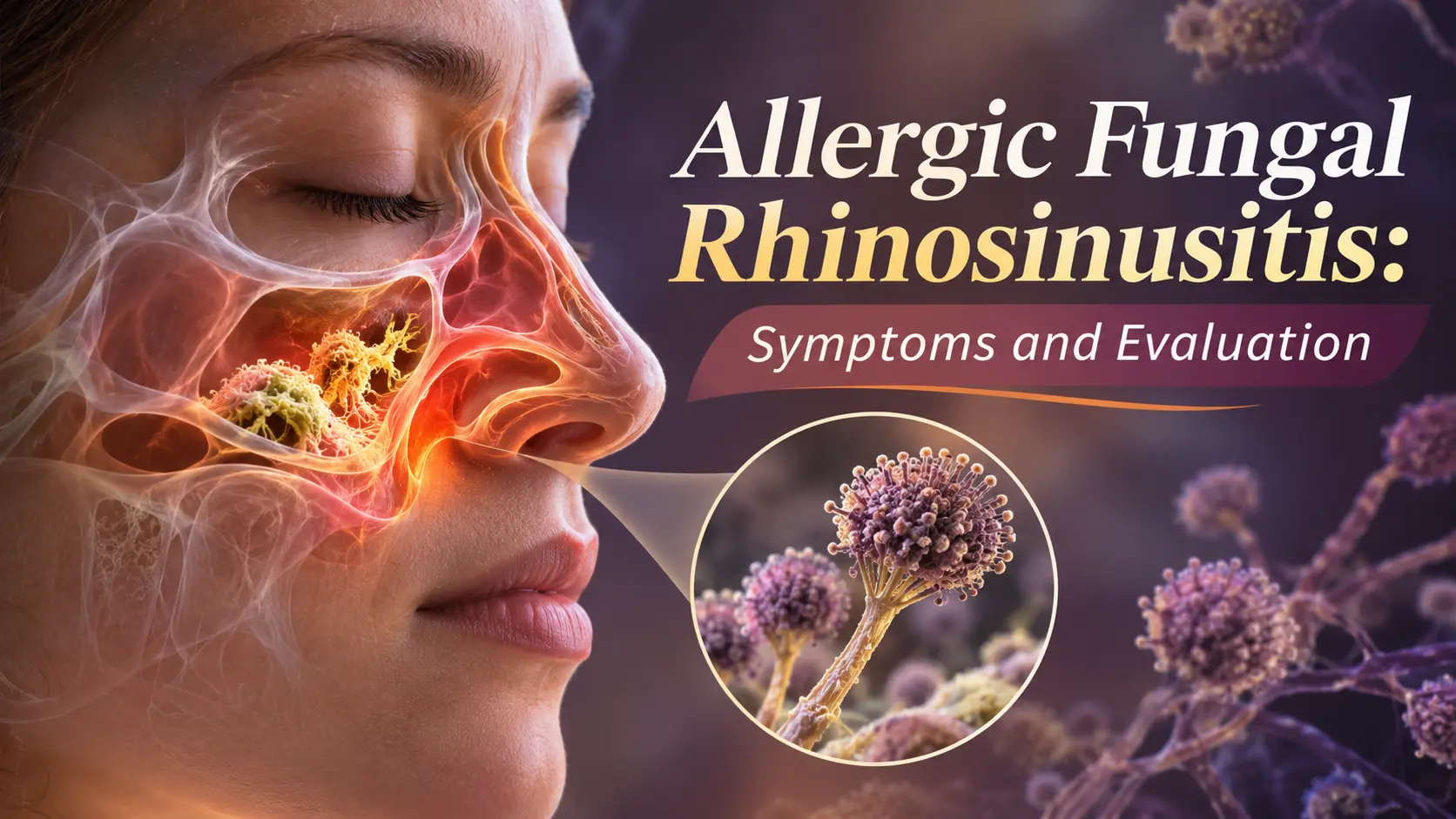
Allergic fungal rhinosinusitis is an inflammatory sinus condition associated with allergy and thick mucus, sometimes occurring with nasal polyps. This guide provides general education for patients and caregivers; it cannot diagnose an individual or replace advice from a qualified clinician who knows the medical history and examination findings.
Why assessment matters
Diagnosis combines symptoms, nasal examination, imaging, and sometimes laboratory or surgical findings. Treatment is individualised and may include anti-inflammatory therapy and endoscopic surgery for selected cases. Because similar symptoms may have different causes, assessment should be guided by the history, examination, and any relevant test results rather than by a single symptom or online description.
What an appointment may involve
When discussing allergic fungal rhinosinusitis: symptoms and evaluation, describe the pattern rather than only the worst episode: when it began, how often it occurs, whether it is changing, and what seems to trigger or relieve it. Mention any related symptoms, previous assessments, current medicines and relevant medical history. These details help the clinician decide whether examination or further testing is appropriate; the choice of tests should be individualised.
Treatment and practical steps
Care for allergic fungal rhinosinusitis symptoms and evaluation should follow the cause established during assessment, not the wording of a symptom alone. Depending on the findings, the discussion may cover observation, conservative care, medication, rehabilitation, a device or a procedure. Ask why a particular option is being considered, what improvement is realistic, what limitations or risks apply, and what follow-up is needed. Do not start, stop or change prescription treatment without advice from the clinician responsible for your care.
When to seek urgent help
Eye swelling, vision change, severe headache, or rapidly worsening pain needs urgent assessment; a scan alone does not prove this diagnosis. Seek emergency help for severe breathing difficulty, blue lips, new stroke-like symptoms, collapse, or a rapidly deteriorating condition. When in doubt about a severe or sudden symptom, choose urgent professional assessment rather than waiting for a routine appointment.
Questions to ask your clinician
For an appointment about allergic fungal rhinosinusitis: symptoms and evaluation, consider asking: Which possible causes best fit my history and examination? Is there a specific finding that needs confirmation? Would a test change the plan? What are the reasonable options and their trade-offs? What should I monitor at home, and when should I return if the problem persists or changes?
Frequently asked question
What should I do first?
The next step for allergic fungal rhinosinusitis symptoms and evaluation is to match the symptoms with the examination and, where appropriate, test results. A procedure is not automatically necessary; the decision depends on the diagnosis, severity, previous care and the person’s priorities. Seek prompt medical advice if symptoms become severe, sudden or rapidly worse, or if the warning signs described in this article occur.
Related research involving Dr. Mohannad Almomani
Dr. Mohannad Almomani is listed as a co-author of this peer-reviewed narrative review on the nasopharyngeal microbiome and ENT inflammation. It offers broader research context for the relationship between the upper-airway microbiome and inflammatory conditions; it does not establish a diagnosis or treatment recommendation for an individual patient.
- The Nasopharyngeal Microbiome: A Narrative Review of the Hidden Regulator of Ear, Nose, and Throat (ENT) Inflammations (2026, Cureus)
Explore our nasal breathing assessment page for more information about this care option. A clinician can advise based on the individual history and examination findings.