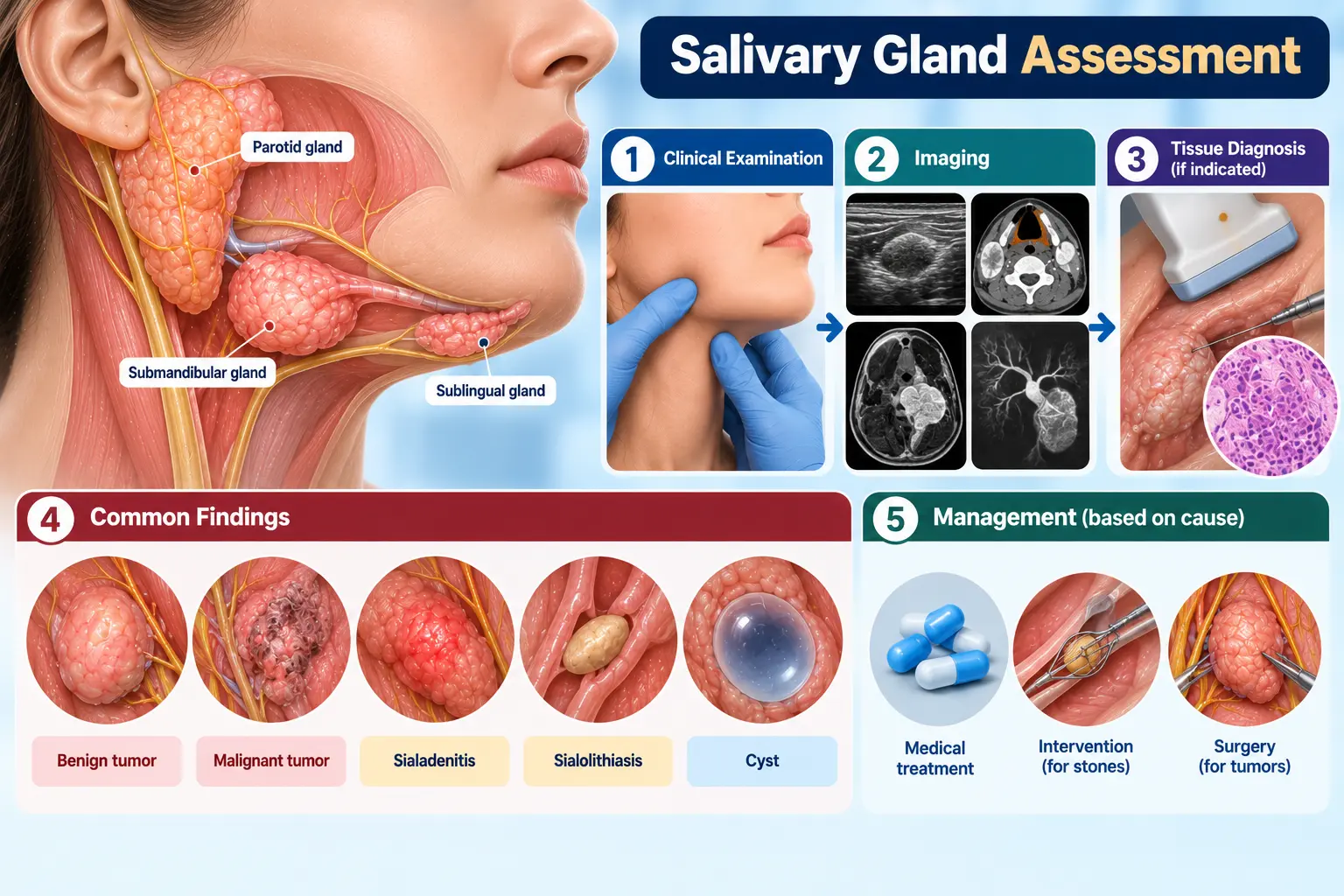
Salivary Gland Stones: Why Swelling May Worsen During Meals
Learn why salivary stones can cause pain or swelling around meals, how they are assessed and when infection requires prompt care.
Read MoreThe clinician reviews where swelling occurs, whether it changes with eating, whether there is fever or a bad taste, and how long it has been present. Examination of the mouth, gland openings and neck may be followed by ultrasound or other imaging if needed.
Treatment depends on the cause and may include hydration, gland care, medication or a procedure for selected stones or persistent disease. A firm or growing lump needs assessment rather than being assumed to be a blocked gland.
Rapid swelling, fever with worsening pain, difficulty swallowing or breathing, or inability to open the mouth normally requires prompt medical assessment.
This information is general and does not replace an individual medical assessment.
Patient Resources
Patient-friendly articles related to this service and common questions about assessment and care.

Learn why salivary stones can cause pain or swelling around meals, how they are assessed and when infection requires prompt care.
Read More
Learn why a salivary gland can become inflamed or infected, how stones and dehydration may contribute, and when care is urgent.
Read More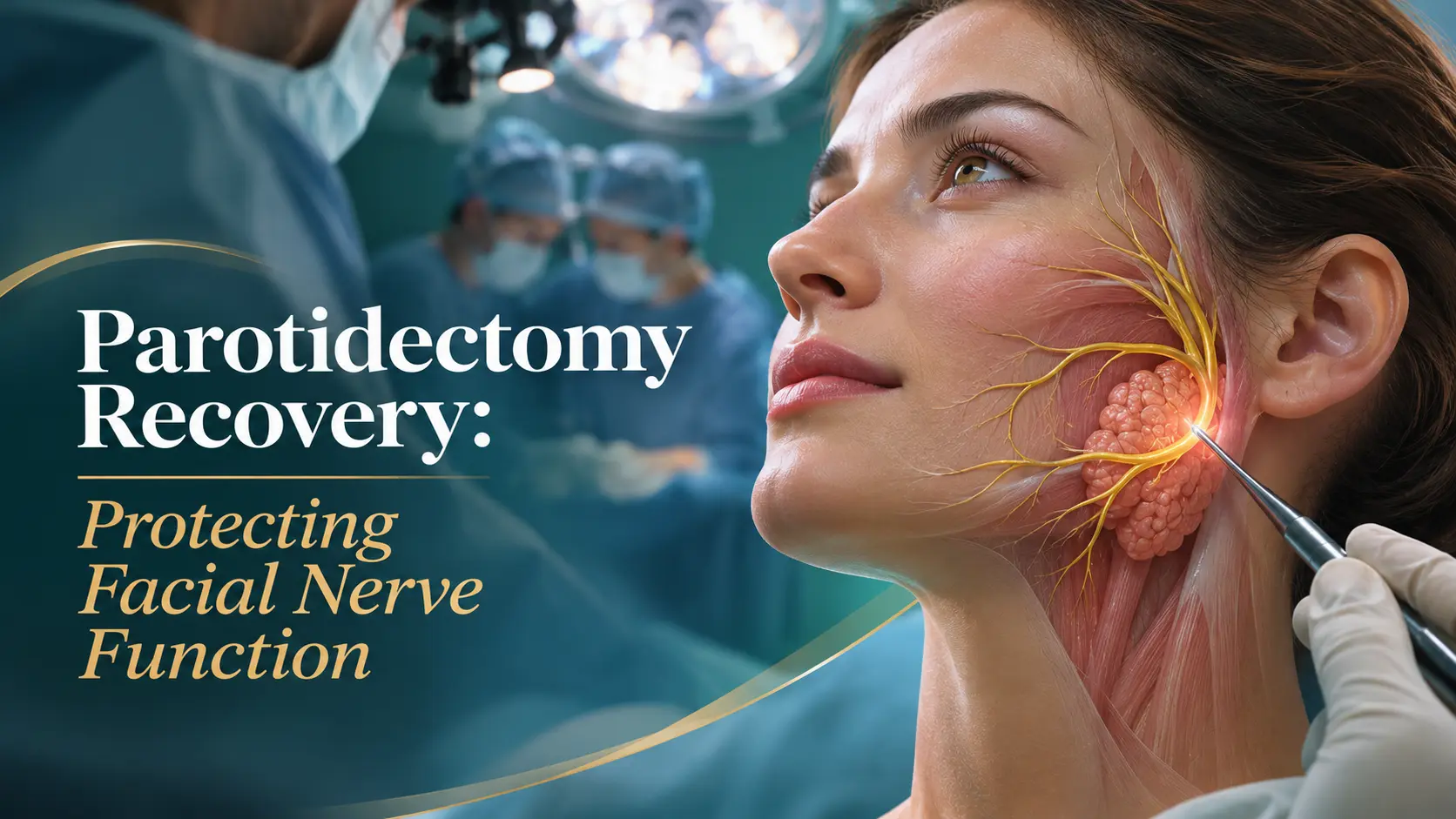
Understand Parotidectomy Recovery: Protecting Facial Nerve Function—how it is assessed, which care options may be discussed, and which symptoms need prompt.
Read More