
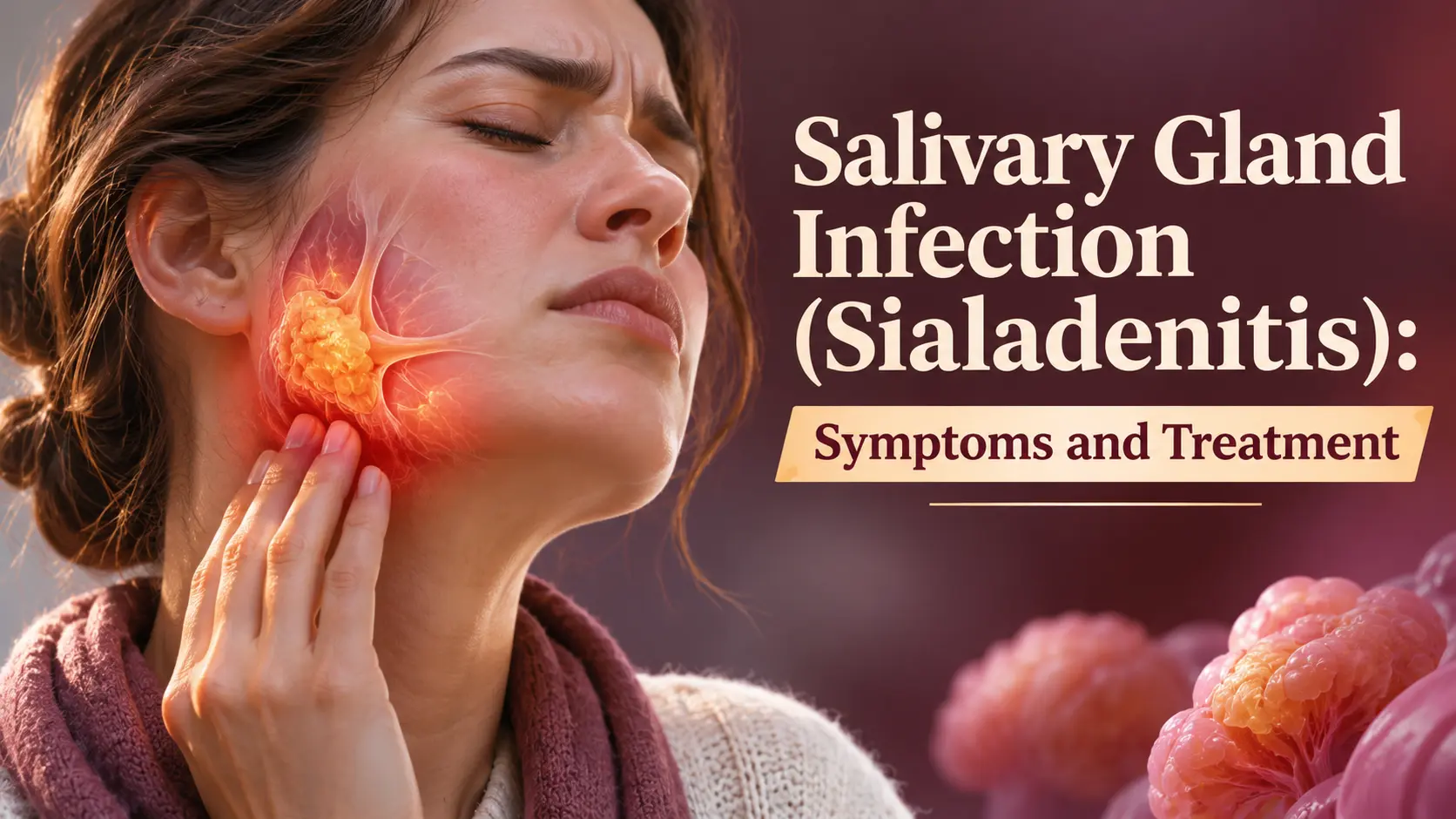
Sialadenitis is inflammation of a salivary gland, sometimes caused by bacterial infection. Painful swelling near the cheek or beneath the jaw may worsen during meals. Dehydration, reduced saliva flow, a salivary stone, medicines that cause dry mouth, and some health conditions can increase risk. An examination helps identify the cause and severity.
Common symptoms
Swelling and tenderness may occur near the ear, under the jaw, or in the floor of the mouth. Fever, a bad taste, reduced saliva, or pus from a salivary duct can occur with infection. Similar swelling can arise from stones, viral illnesses, dental disease, or other neck masses, so symptoms should be assessed in context.
What treatment may involve
Care depends on the cause and severity. A clinician may recommend hydration, warm compresses, gentle gland massage, oral hygiene, and medicines; antibiotics may be used when bacterial infection is suspected. Imaging or specialist assessment may be needed for recurrent episodes, a stone, an abscess, or a persistent lump.
When to seek urgent help
Seek urgent assessment for rapidly increasing swelling, high fever, severe pain, difficulty opening the mouth, or a worsening general condition. Difficulty breathing or swallowing saliva is an emergency. Do not attempt to probe a salivary duct or remove a stone with sharp instruments at home.
Frequently asked questions
Can salivary gland infection recur? Yes, particularly if a stone, reduced saliva flow, or another contributor remains.
Does swelling during meals suggest a stone? It can, because saliva flow increases during meals, but examination is needed to confirm the cause.
Can I massage the gland? Gentle massage may be recommended in some cases; follow clinician guidance, especially when pain or infection is significant.
Explore our head and neck surgical care page for more information about this care option. A clinician can advise based on the individual history and examination findings.
Related reading
- Salivary Gland Stones: Why Swelling May Worsen During Meals
- Salivary Gland Swelling: Causes, Assessment and Warning Signs