Botox Treatment: Suitability, Safety and Expectations
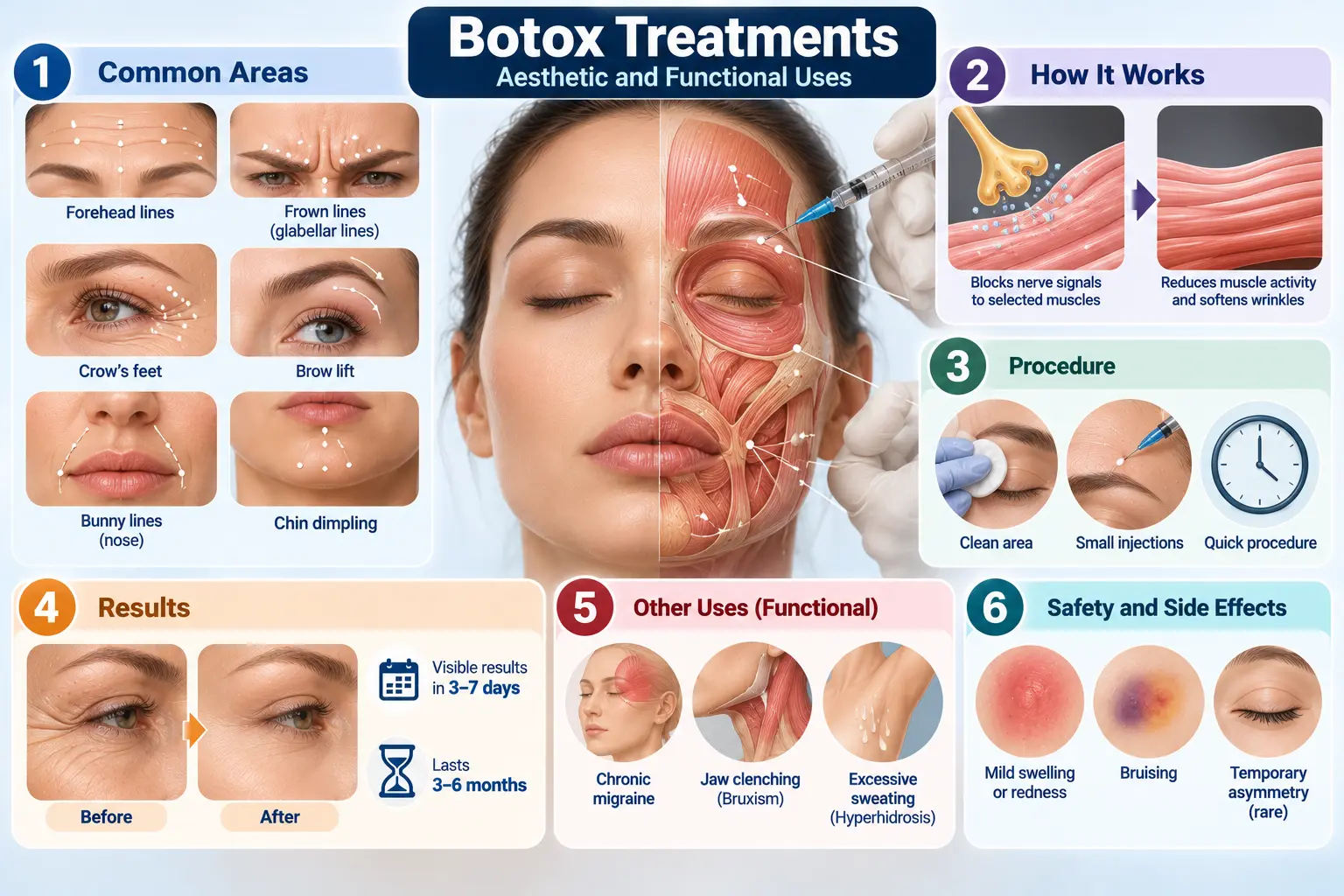
Botulinum toxin temporarily reduces activity in selected muscles, which may soften lines created by repeated facial expressions. It does not address every type of wrinkle, skin laxity or loss of volume, and the effect is temporary. A natural-looking plan depends on careful assessment of facial movement and proportion.
Before treatment, the clinician should review medical history, medicines, previous injections, expectations and potential side effects. The discussion should also cover alternatives, likely duration, aftercare and when treatment may not be appropriate.
Questions to cover before an injection
- Which lines concern you and when they are most visible
- Previous Botox or other aesthetic treatments and your response
- Relevant medical conditions, medicines and allergies
- The level of change you consider acceptable
Botulinum toxin is a medical treatment and is not suitable for everyone. Results vary, and treatment should follow an informed discussion of possible benefits, risks and alternatives.
What a proper assessment should include
A consultation should start with the movement or lines that concern you, not with a preset number of injection points. The clinician can assess facial movement at rest and during expression, brow and eyelid position, symmetry, skin quality and the way different muscle groups work together. Previous facial procedures and any change in facial movement should also be discussed.
Botulinum toxin may soften selected expression-related lines by temporarily reducing activity in specific muscles. It does not restore lost facial volume, remove loose skin or treat every line visible at rest. Where a concern is mainly related to skin texture, pigmentation or volume, a different approach—or no injection—may be more appropriate.
Suitability, medical history and product checks
Before a decision, share your medical history, current medicines and supplements, allergies, previous toxin treatments, any side effects from earlier injections and whether you have a neuromuscular or swallowing condition. Tell the clinician about pregnancy or breastfeeding, infection near a proposed injection site, and any planned procedures. These details help determine whether treatment should be avoided, delayed or discussed with another clinician.
Ask which exact botulinum toxin product is proposed, whether it is obtained through an authorised supply chain, who will administer it and what training they have. The product should be traceable to its labelled vial and batch. Dose, dilution and injection sites are product- and patient-specific; they should not be copied from another person or selected from an online template.
- The expected change and the limits of what the treatment can achieve
- The product name, source, planned treatment areas and total dose
- Common temporary effects such as bruising, tenderness or headache, and less common complications
- The alternatives, including skincare, another treatment or choosing not to proceed
What happens after treatment?
The onset and duration of effect vary with the product, dose, muscles treated and individual response. A clinician should explain when a result can reasonably be assessed and whether a review is appropriate. Do not arrange repeat treatment earlier than advised simply because the effect seems slower than expected.
Follow the specific aftercare instructions you are given and contact the clinic if you are concerned about an unexpected reaction. New difficulty swallowing, speaking or breathing, or marked generalised weakness after a botulinum toxin injection requires urgent medical assessment rather than waiting for a routine review.
Questions patients often ask
Will Botox remove every wrinkle?
No. It is most relevant to selected lines associated with muscle activity. Skin quality, volume loss and skin laxity are different concerns and may not respond to it.
Can the exact result be guaranteed?
No. Facial anatomy and response differ between people. The consultation should set a realistic goal and explain what may remain unchanged.
Can treatment be repeated?
Some patients choose repeat treatment, but timing should be based on the product guidance, response and clinical review—not a fixed schedule for everyone.
Related assessment and treatment information
Further patient information
The clinic is based in Limassol. Patients travelling from other parts of Cyprus can contact the practice to enquire about appointment arrangements at the Limassol clinic.
This information is general and does not replace an individual medical assessment.