
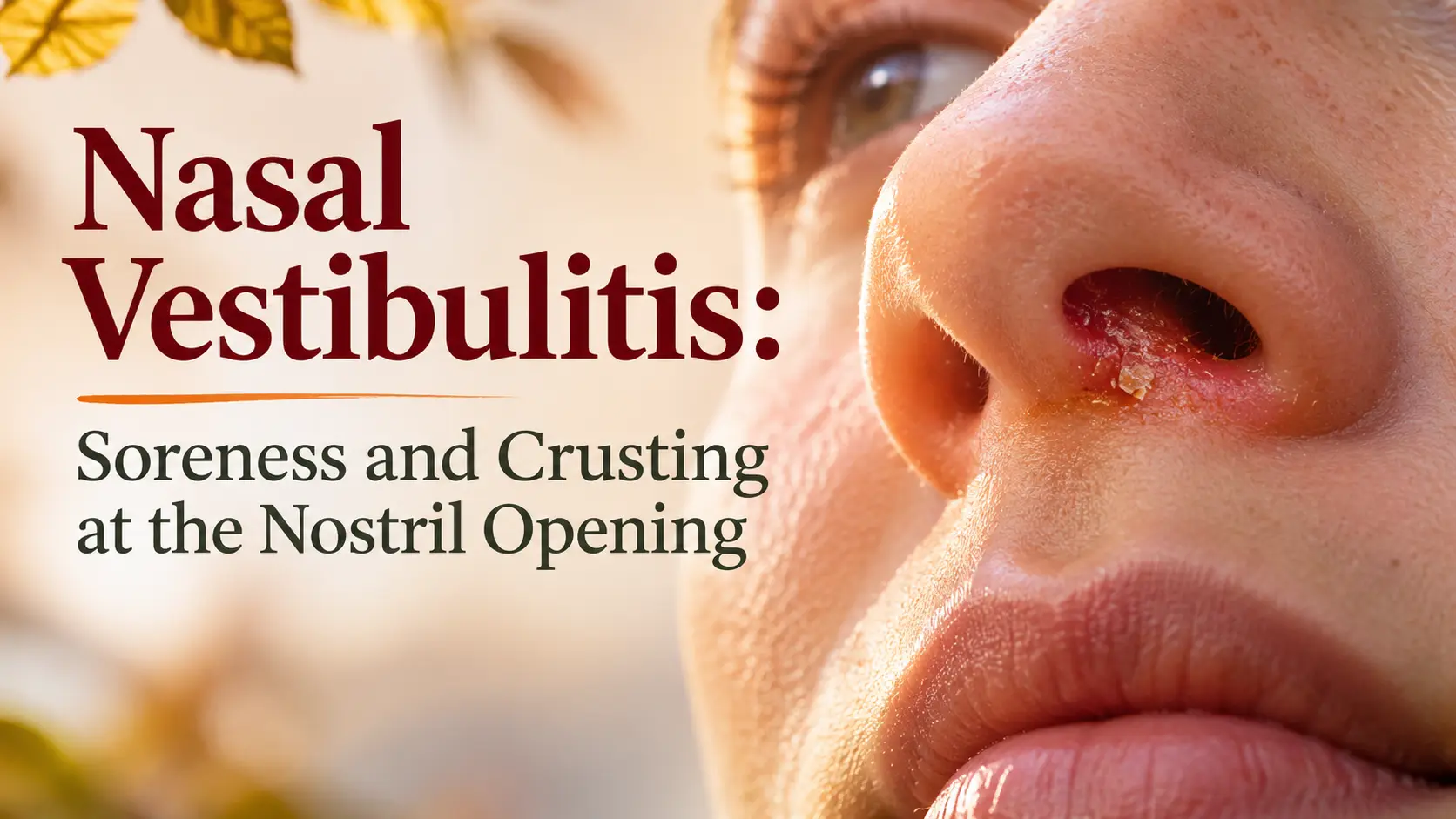
Nasal vestibulitis is inflammation, sometimes due to bacterial infection, of the skin just inside the nostril. It may cause tenderness, redness, pimples, crusting, or small areas of bleeding. Picking, plucking nasal hairs, frequent wiping, or prolonged irritation can contribute. Persistent symptoms should be assessed rather than repeatedly scraped or squeezed.
What symptoms are typical?
The entrance of one or both nostrils may feel sore and dry, with crusts or a small painful bump. Similar symptoms can result from eczema, dryness, a cold, or other skin conditions. A clinician can examine the area to decide whether infection, skin irritation, or another problem is more likely.
Care and treatment
Gentle cleaning and avoiding trauma can help. If bacterial infection is present, a clinician may prescribe a suitable topical or other treatment depending on severity. Do not squeeze lesions or apply harsh antiseptics inside the nose. Recurrent cases may need review of contributing skin conditions or repeated irritation.
When symptoms are more serious
Seek prompt care if redness or swelling spreads across the nose or face, pain becomes severe, fever develops, or there is swelling around the eyes. People with diabetes, immune suppression, or repeated infections should contact a clinician earlier. Avoid sharing towels and wash hands before touching the area.
Frequently asked questions
Should I pull out nasal hairs? Avoid plucking them because it can damage the skin and encourage infection; carefully trimming visible hairs is generally less traumatic.
Can I use antibiotic cream I already have? Do not use old or unprescribed topical antibiotics without advice; the product may be inappropriate for nasal tissue.
Is crusting always an infection? No. Dryness, eczema, and irritation can also cause crusts, so persistent or recurrent symptoms need assessment.
Explore our ENT consultation page for more information about this care option. A clinician can advise based on the individual history and examination findings.
Related reading
- Nasal Dryness and Crusting: Safe Ways to Soothe Irritated Nasal Passages
- How to Stop a Nosebleed: First Aid and Warning Signs