
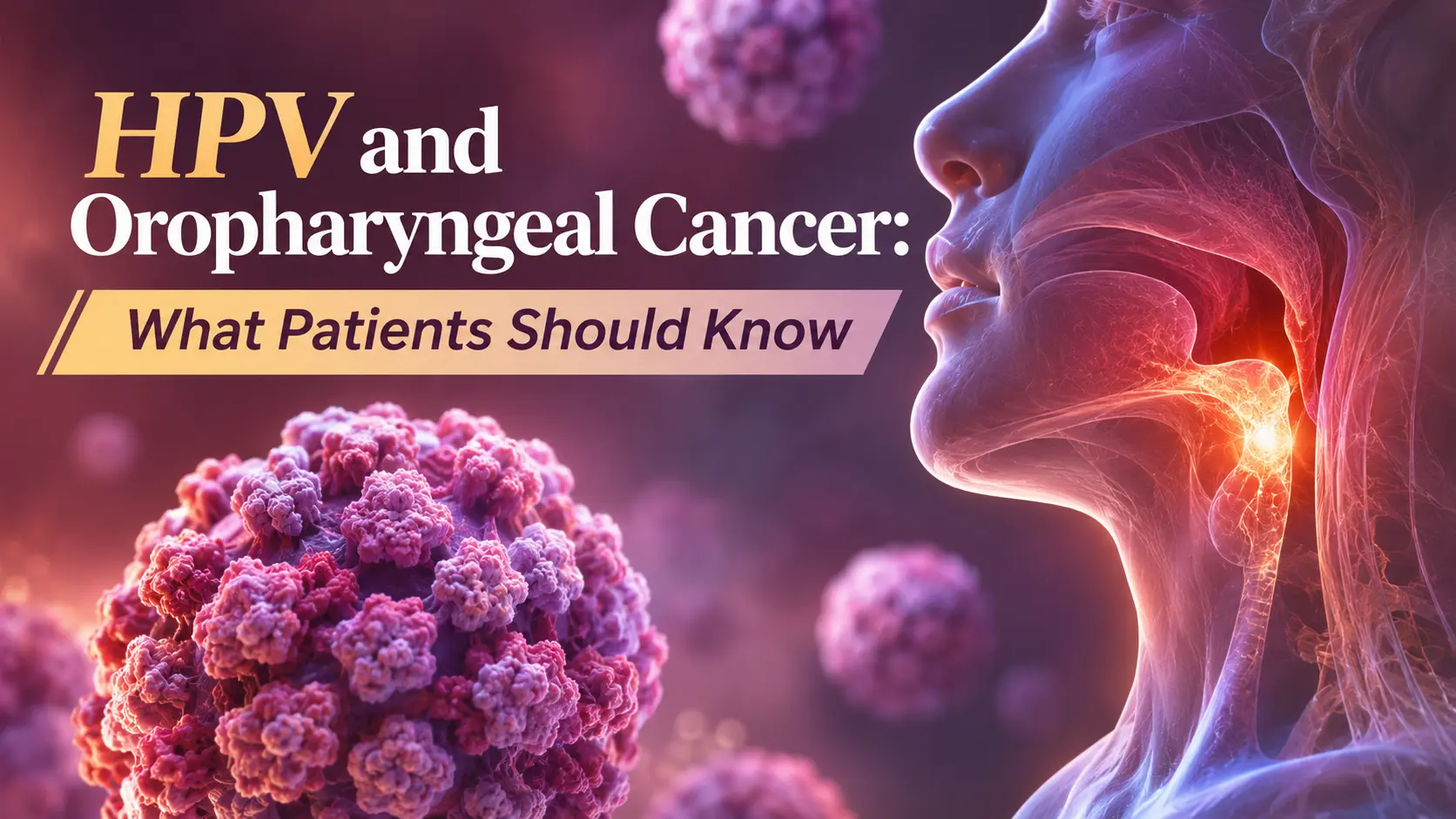
Human papillomavirus (HPV) is a common virus, and some HPV types can contribute to cancers of the oropharynx, an area that includes parts of the throat, tonsils and base of the tongue. HPV infection is not the same as having cancer, and many infections do not lead to cancer. Accurate information helps people understand prevention, symptoms and when a clinical assessment is appropriate without unnecessary alarm.
What the association means
Some persistent HPV infections can lead to cellular changes over time. A person cannot determine from symptoms alone whether HPV is present or whether a throat lesion is cancer. Oropharyngeal cancers may present with a neck lump, persistent sore throat, difficulty swallowing, one-sided ear pain or voice changes, but these features have many other explanations. Persistent or progressive symptoms should be assessed.
Prevention and vaccination
HPV vaccination is designed to prevent infections from HPV types responsible for several cancers and other diseases. Recommendations and eligibility vary by country, age and prior vaccination status, so people should follow local public-health guidance and ask a healthcare professional if uncertain. Vaccination does not replace assessment of symptoms and does not treat an existing cancer.
How concerning symptoms are investigated
Assessment may include examination of the mouth and throat, neck examination, endoscopy and imaging or tissue sampling when indicated. The clinician will explain which tests are appropriate based on the findings. A persistent neck lump or a throat symptom that does not resolve should not be ignored, but neither should it be assumed to be cancer before investigation.
Talking about HPV without stigma
HPV is common and can remain silent for a long time. A diagnosis related to HPV does not establish when or from whom an infection was acquired. Patients deserve factual, confidential and non-judgmental discussion. Ask the clinician what is known from testing, what remains uncertain and which prevention or follow-up steps are relevant for you.
Frequently asked questions
Does HPV infection mean someone has cancer? No. HPV infection is common, and only some persistent infections lead to cancer.
Can vaccination help prevent throat cancer? HPV vaccination can prevent infection with HPV types that cause many HPV-related cancers; follow local vaccination guidance.
What symptoms should prompt assessment? Persistent neck lump, swallowing problems, a lasting sore throat or one-sided ear pain should be assessed, especially if they progress.
Explore our ENT consultation page for more information about this care option. A clinician can advise based on the individual history and examination findings.
Related reading
- Head and Neck Cancer: Symptoms That Should Not Be Ignored
- A Neck Lump in Adults: What Should Be Assessed?
- Persistent Hoarseness: Causes and When to See an ENT Specialist