
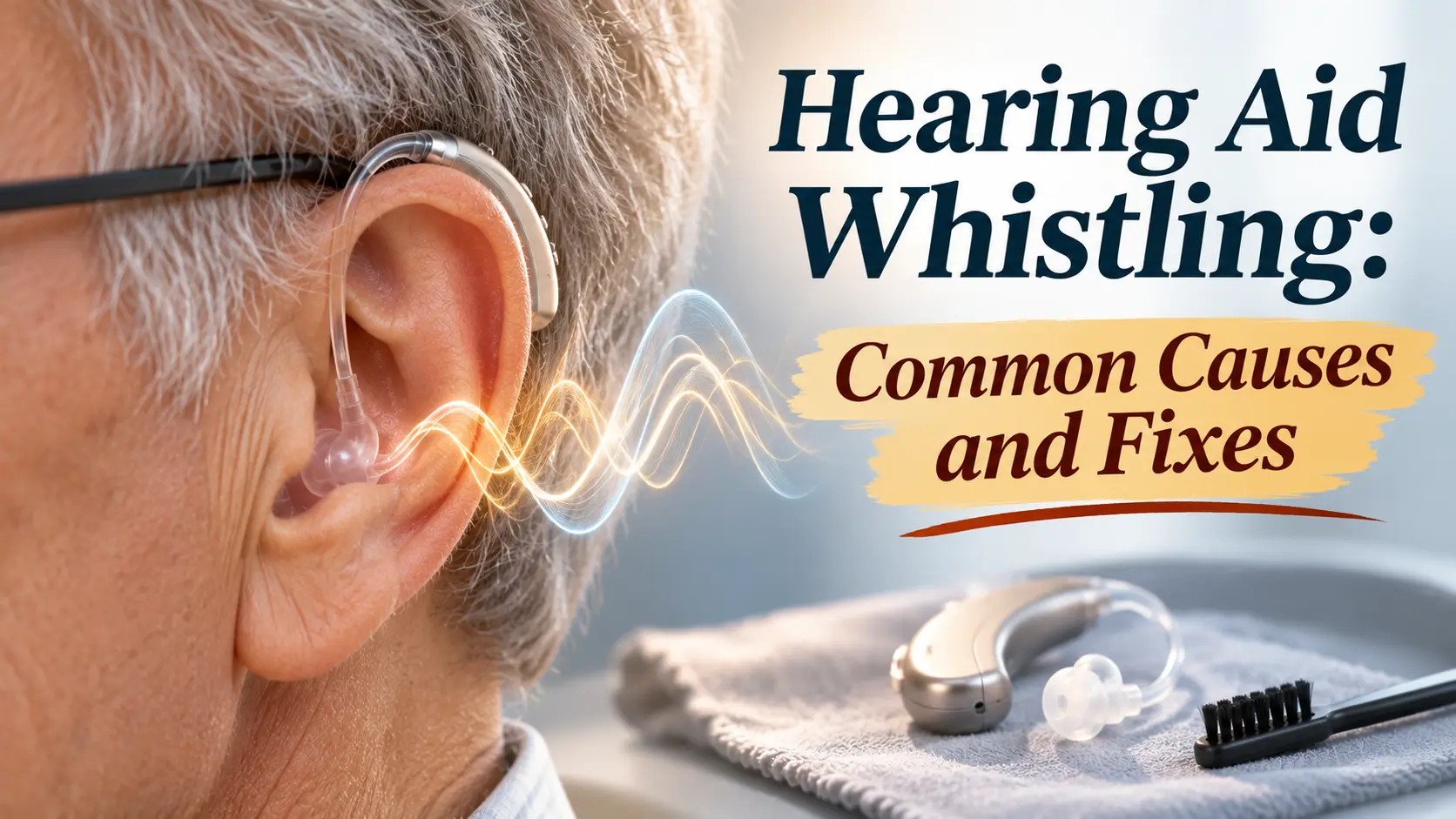
A whistling sound from a hearing aid is often acoustic feedback: amplified sound escapes from the ear canal and is picked up again by the device microphone. Feedback can be related to fit, earwax, damaged tubing, or device settings. It is common, but persistent whistling deserves a practical check rather than repeatedly turning the volume down.
Common reasons for feedback
A loose or poorly seated earmould or dome can allow sound to leak. Wax in the ear canal, cracked tubing, a damaged seal, or placing a hand or hat near the microphone can also trigger whistling. New feedback after months of stable use may indicate a change in fit, ear health, or device condition.
Safe checks you can make
Reinsert the device according to the fitting instructions, check that tubing or domes are seated and not visibly damaged, and clean the device only as directed by the manufacturer. Do not push tools into the ear or alter advanced programming without guidance. If the ear itself is painful or blocked, arrange an examination.
When to contact the hearing-care team
A hearing-care professional can check the fit, inspect the ear, replace worn parts, and adjust feedback management settings. A new hearing change should not be assumed to be a device problem. Sudden hearing loss or severe ear pain needs prompt clinical assessment.
Frequently asked questions
Should I just lower the volume? Lowering volume may reduce the whistle temporarily, but it does not fix a poor seal or other underlying cause.
Can earwax make a hearing aid whistle? Yes, wax and changes in the acoustic pathway can contribute, so persistent feedback may warrant an ear check.
Is a whistling device damaged? Not always. Fit, settings, and ear conditions are common explanations, but a device inspection can identify hardware problems.
Explore our hearing assessment page for more information about this care option. A clinician can advise based on the individual history and examination findings.