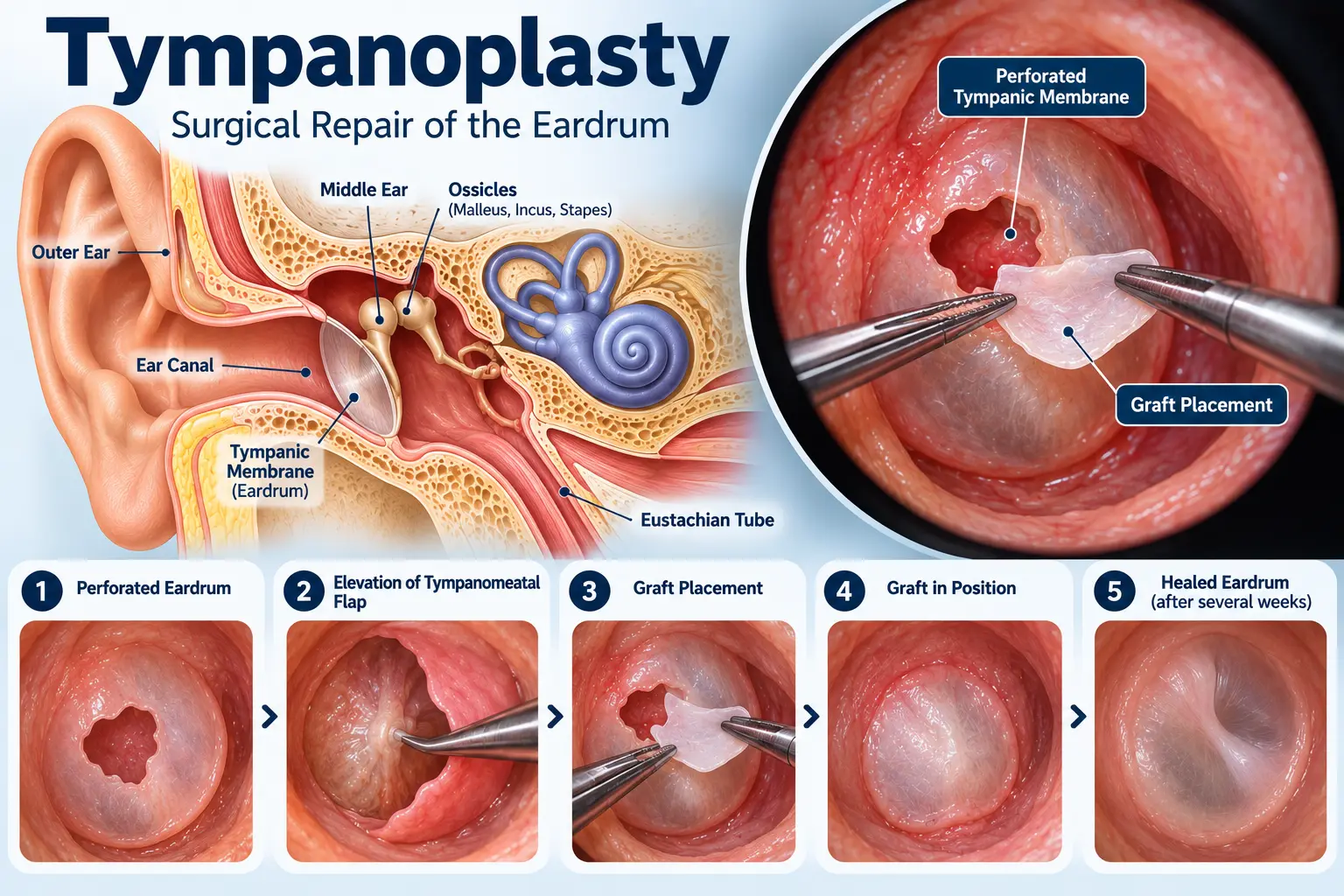
Perforated Eardrum: Causes, Care and Recovery
Find out what can cause a hole in the eardrum, why keeping the ear dry matters, and when hearing or balance symptoms need prompt review.
Read MoreThe assessment reviews the size and position of the perforation, infection history, hearing tests and whether the ear is dry. The clinician may also assess the middle-ear structures and discuss whether repair alone is appropriate or another procedure could be needed.
The goals may include closing the perforation, reducing recurrent discharge and supporting hearing, but improvement is not guaranteed. Risks, recovery, keeping the ear dry, follow-up and the possibility of a residual or recurrent perforation should be covered before surgery.
Repair decisions depend on more than the hole itself. Active infection, hearing status and the condition of the middle ear all influence planning.
This information is general and does not replace an individual medical assessment.
Patient Resources
Patient-friendly articles related to this service and common questions about assessment and care.

Find out what can cause a hole in the eardrum, why keeping the ear dry matters, and when hearing or balance symptoms need prompt review.
Read More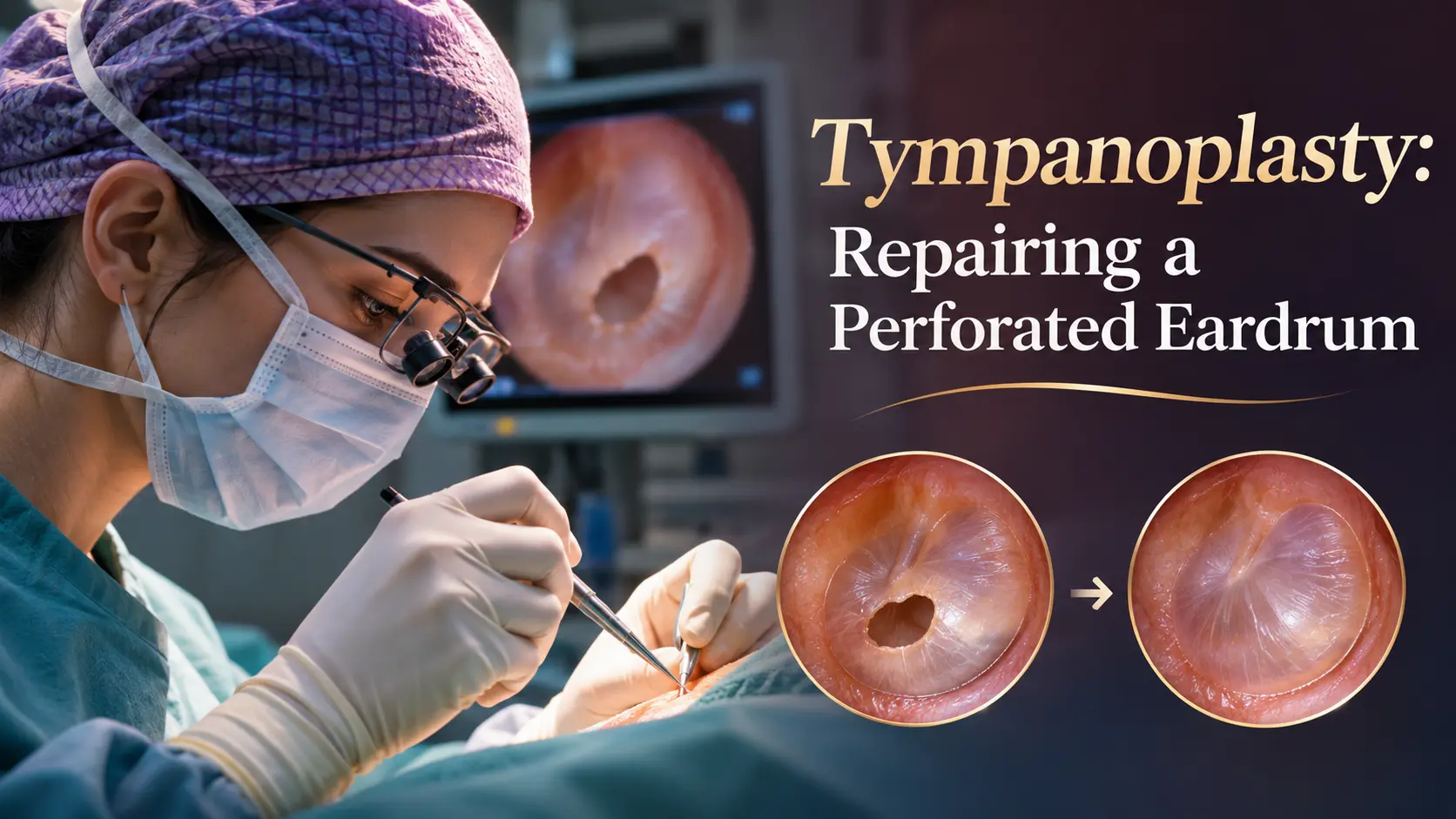
Understand Tympanoplasty: Repairing a Perforated Eardrum—how it is assessed, which care options may be discussed, and which symptoms need prompt medical attention.
Read More