Tonsillitis: Viral or Bacterial, and What Helps?
Learn the common symptoms of tonsillitis, how clinicians assess possible bacterial infection, and when throat symptoms need urgent attention.
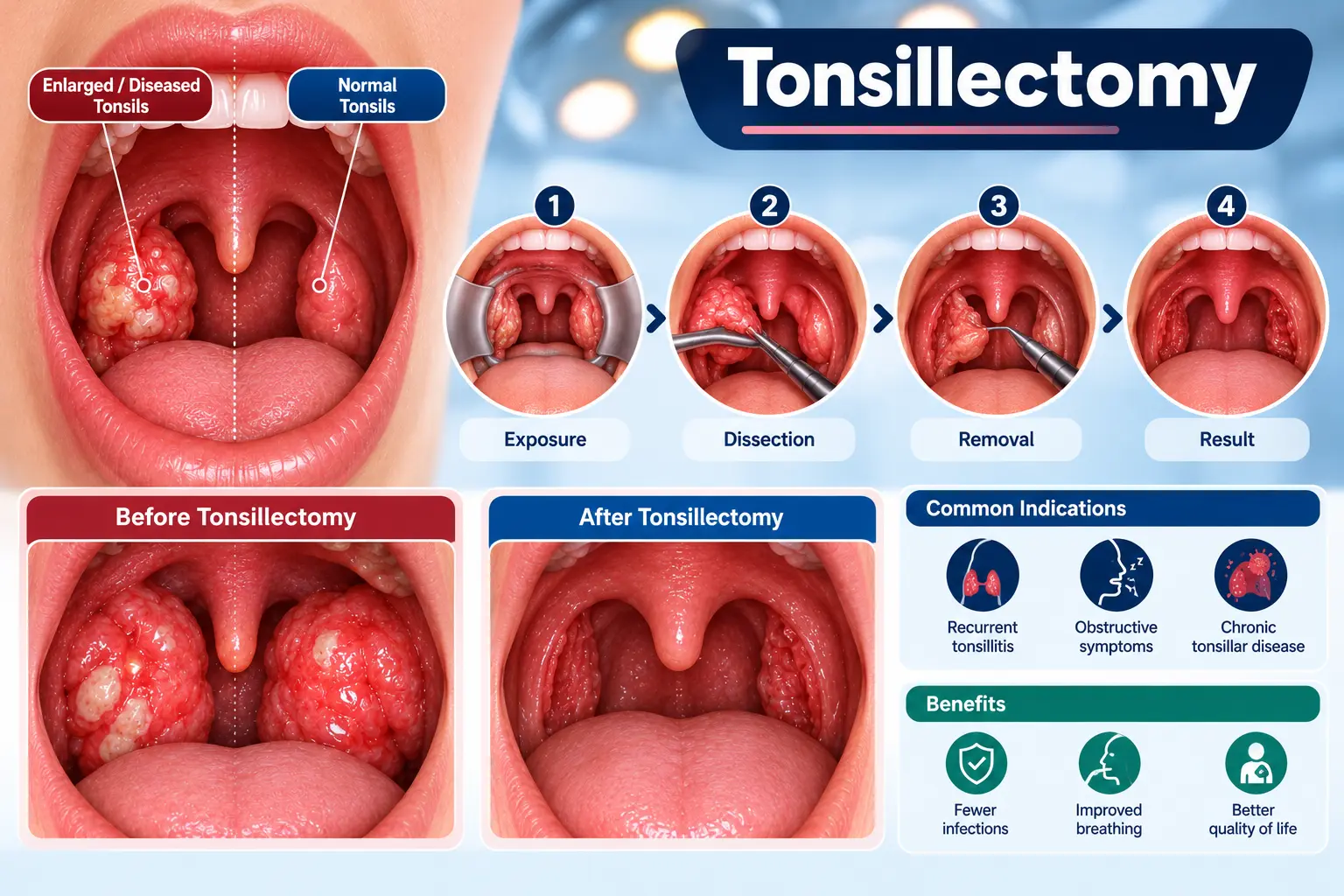
Read MoreThe clinician reviews the pattern and severity of infections, documented episodes, response to care, abscess history and the effect on eating, sleep or school/work. For obstructive symptoms, the tonsils are assessed alongside other potential airway contributors.
Surgery has potential benefits but also a meaningful recovery period, pain and a risk of bleeding. The consultation should explain alternatives, the expected course after surgery and when urgent medical help is needed.
The decision should weigh the burden of the symptoms against surgical risks and recovery. Tonsillectomy is not necessary for every sore throat or large tonsil.
This information is general and does not replace an individual medical assessment.
Patient Resources
Patient-friendly articles related to this service and common questions about assessment and care.

Learn the common symptoms of tonsillitis, how clinicians assess possible bacterial infection, and when throat symptoms need urgent attention.
Read More
Learn why tonsil removal may be offered for selected patients, what to discuss before surgery, and why recovery instructions matter.
Read More
Understand Recurrent Tonsillitis: When Is Surgery Discussed?—how it is assessed, which care options may be discussed, and which symptoms need prompt medical.
Read More