Tonsillitis: Viral or Bacterial, and What Helps?
Learn the common symptoms of tonsillitis, how clinicians assess possible bacterial infection, and when throat symptoms need urgent attention.
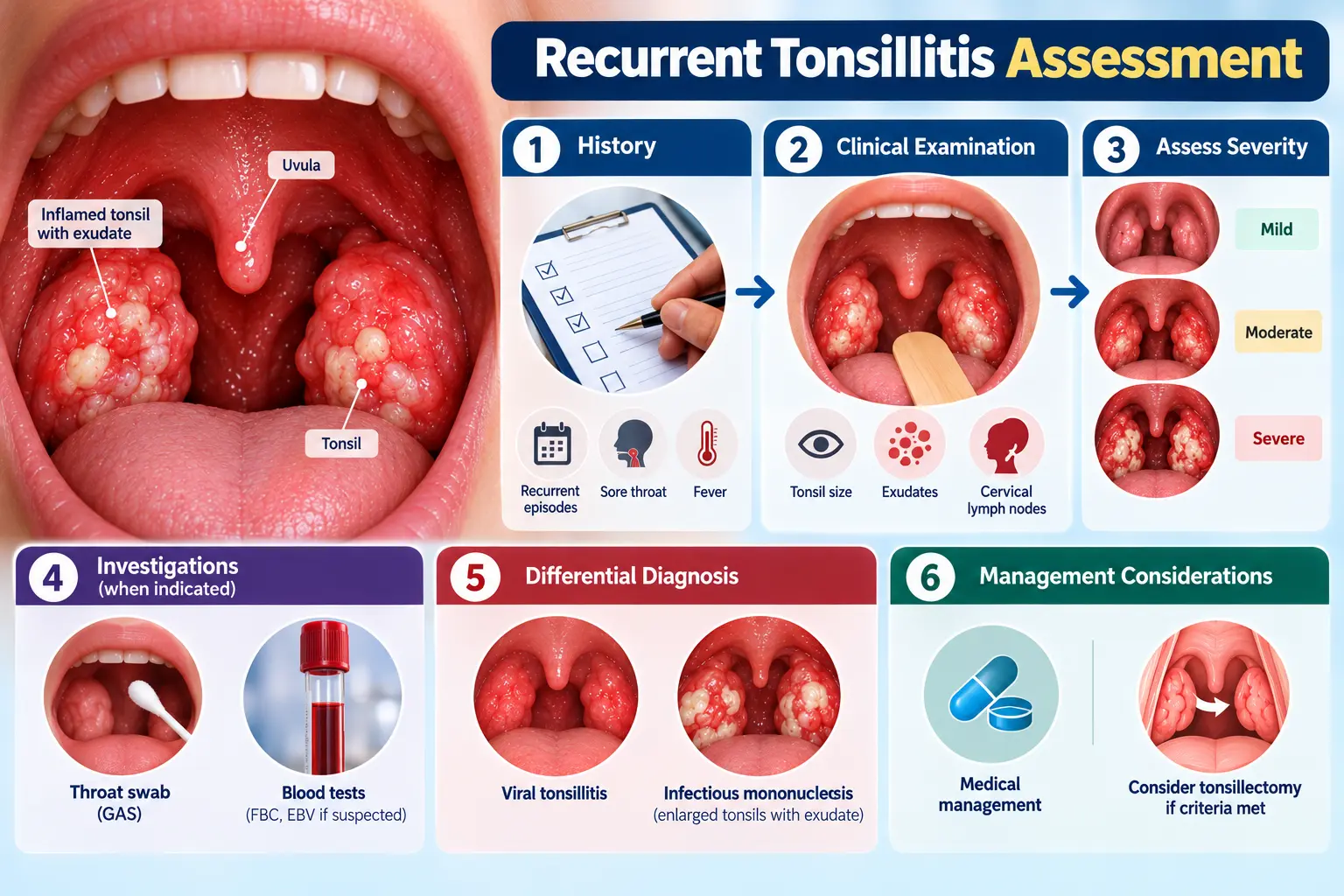
Read MoreThe clinician reviews previous episodes, fever, tonsil findings, tests or prescriptions, recovery between infections and the impact on daily life. The assessment also considers other causes of sore throat, since not every episode is bacterial tonsillitis.
Management may involve supportive care, treatment of a current infection when indicated, or discussion of tonsillectomy in selected cases. The potential benefits, post-operative pain, bleeding risk and recovery need to be weighed against the frequency and impact of episodes.
The decision depends on the pattern and documented impact of episodes, along with individual risks and preferences.
This information is general and does not replace an individual medical assessment.
Patient Resources
Patient-friendly articles related to this service and common questions about assessment and care.

Learn the common symptoms of tonsillitis, how clinicians assess possible bacterial infection, and when throat symptoms need urgent attention.
Read More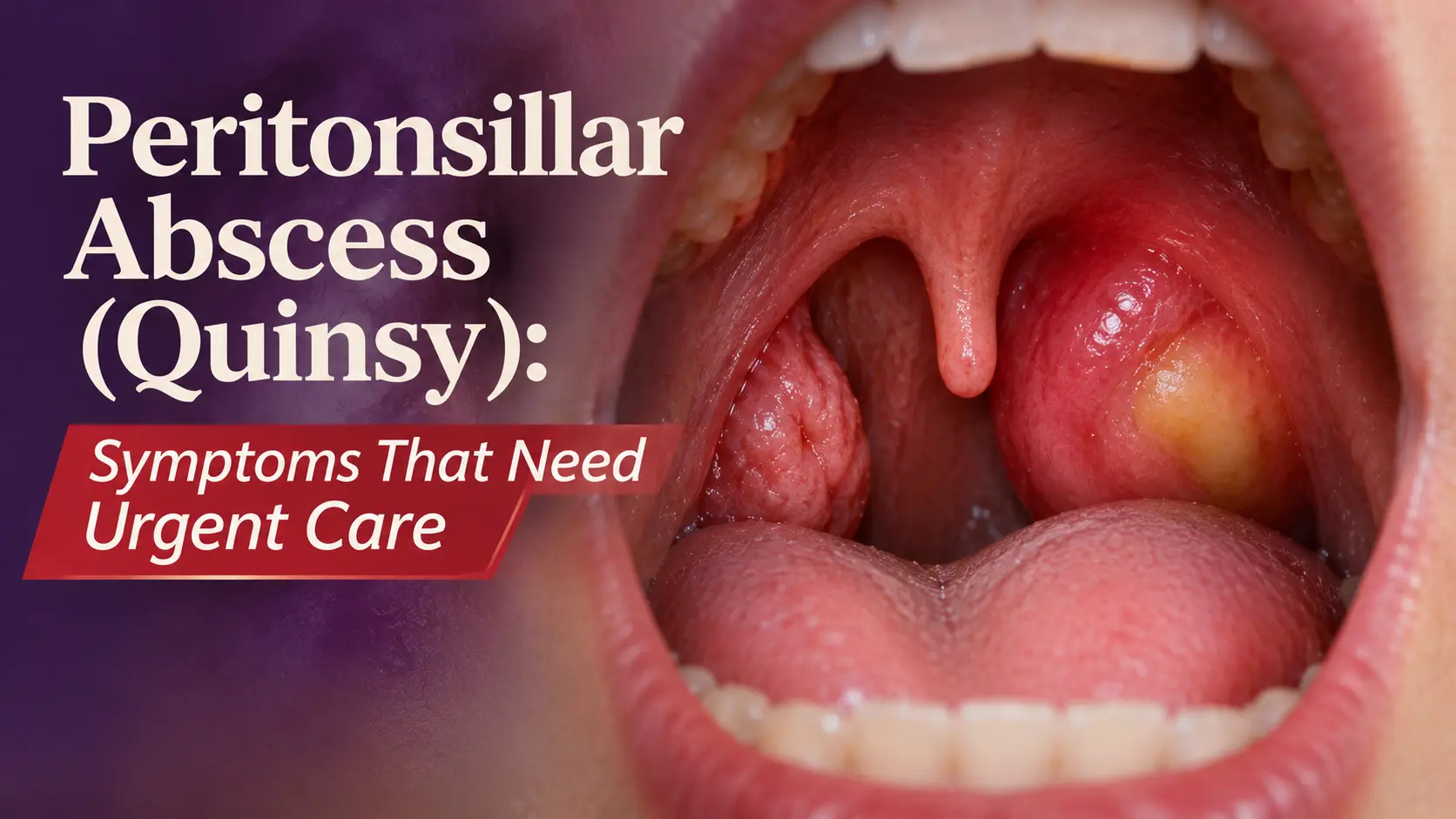
Recognise signs of a peritonsillar abscess, a complication near the tonsil that may require urgent assessment and drainage.
Read More
Understand Recurrent Tonsillitis: When Is Surgery Discussed?—how it is assessed, which care options may be discussed, and which symptoms need prompt medical.
Read More