Nosebleeds in Children: First Aid and When to Get Help
Learn the correct first-aid position for a child’s nosebleed, common causes and signs that require medical attention.
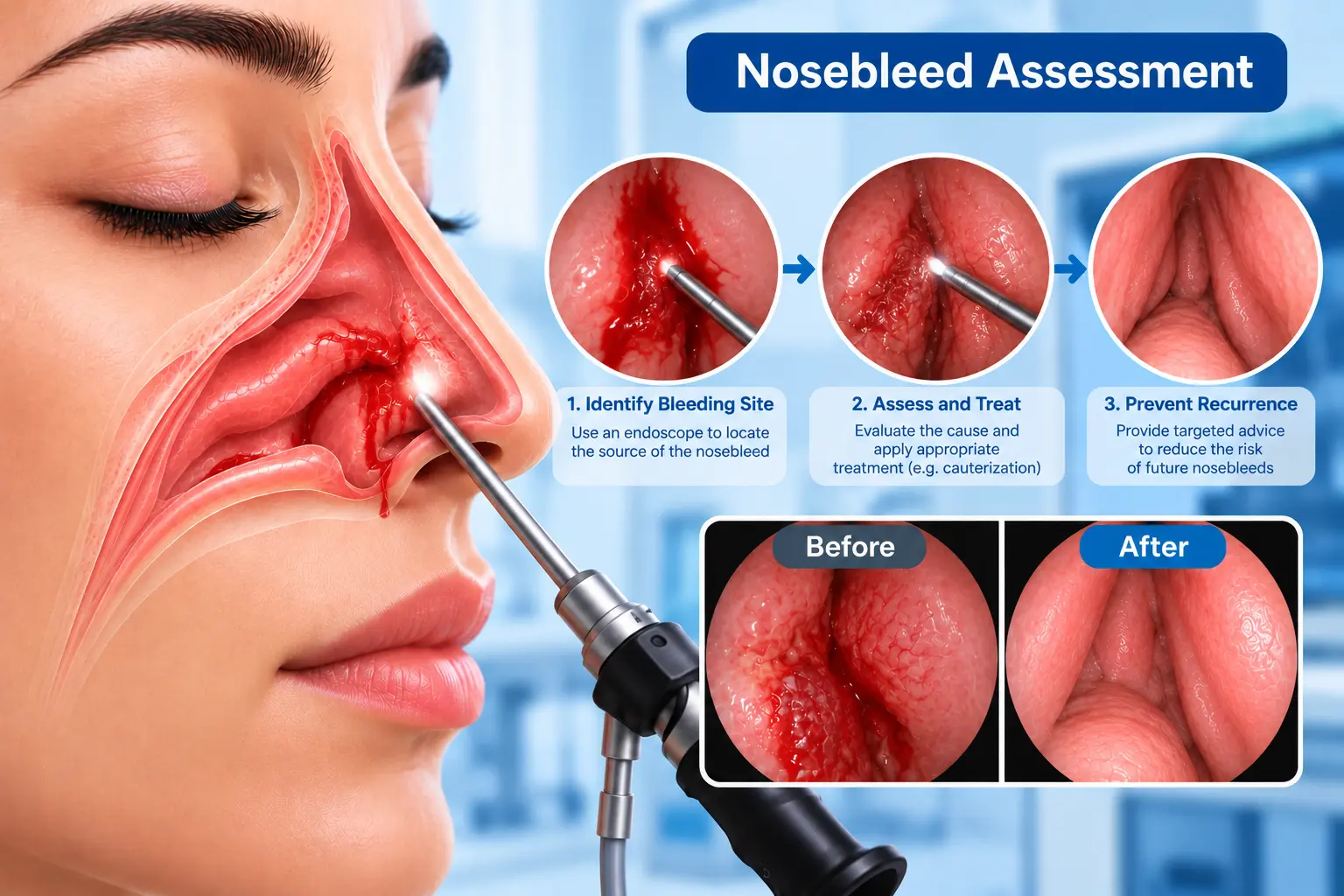
Read MoreThe clinician asks about frequency, duration, which nostril is affected, possible triggers, medicines and bleeding history. Examination may identify a visible bleeding point, inflammation or another nasal problem; endoscopy may be considered when the source is not clear.
Management depends on the cause and can include practical measures to protect the nasal lining, review of contributing medicines with the prescriber, or treatment of a visible bleeding point. Do not stop prescribed blood thinners without medical advice.
For heavy bleeding, sit upright and lean forward while pinching the soft part of the nose continuously. Seek urgent care if it does not stop after sustained pressure, causes weakness, or follows significant trauma.
This information is general and does not replace an individual medical assessment.
Patient Resources
Patient-friendly articles related to this service and common questions about assessment and care.
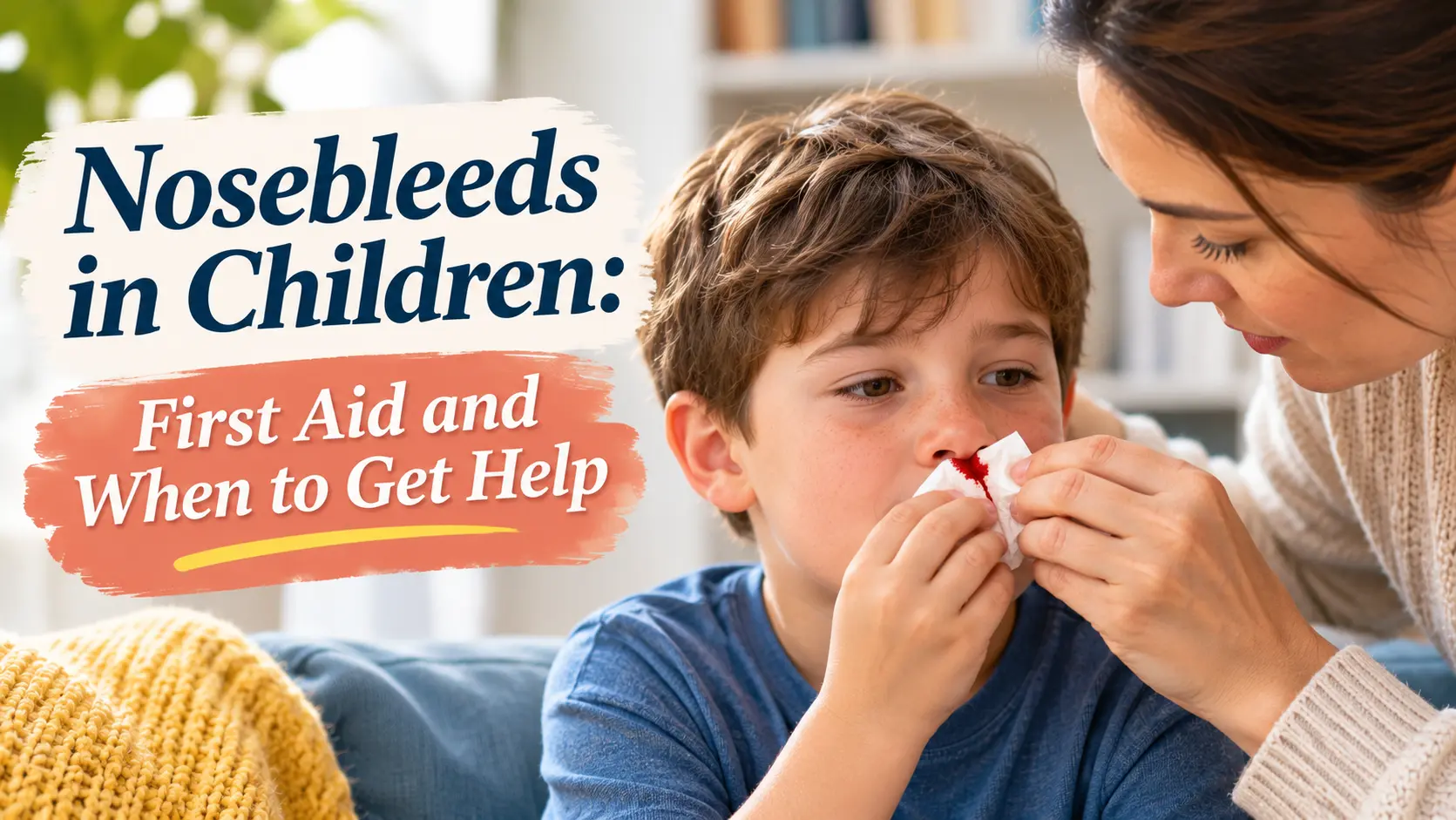
Learn the correct first-aid position for a child’s nosebleed, common causes and signs that require medical attention.
Read More
Understand Nosebleeds While Taking Blood Thinners: What to Do—how it is assessed, which care options may be discussed, and which symptoms need prompt medical.
Read More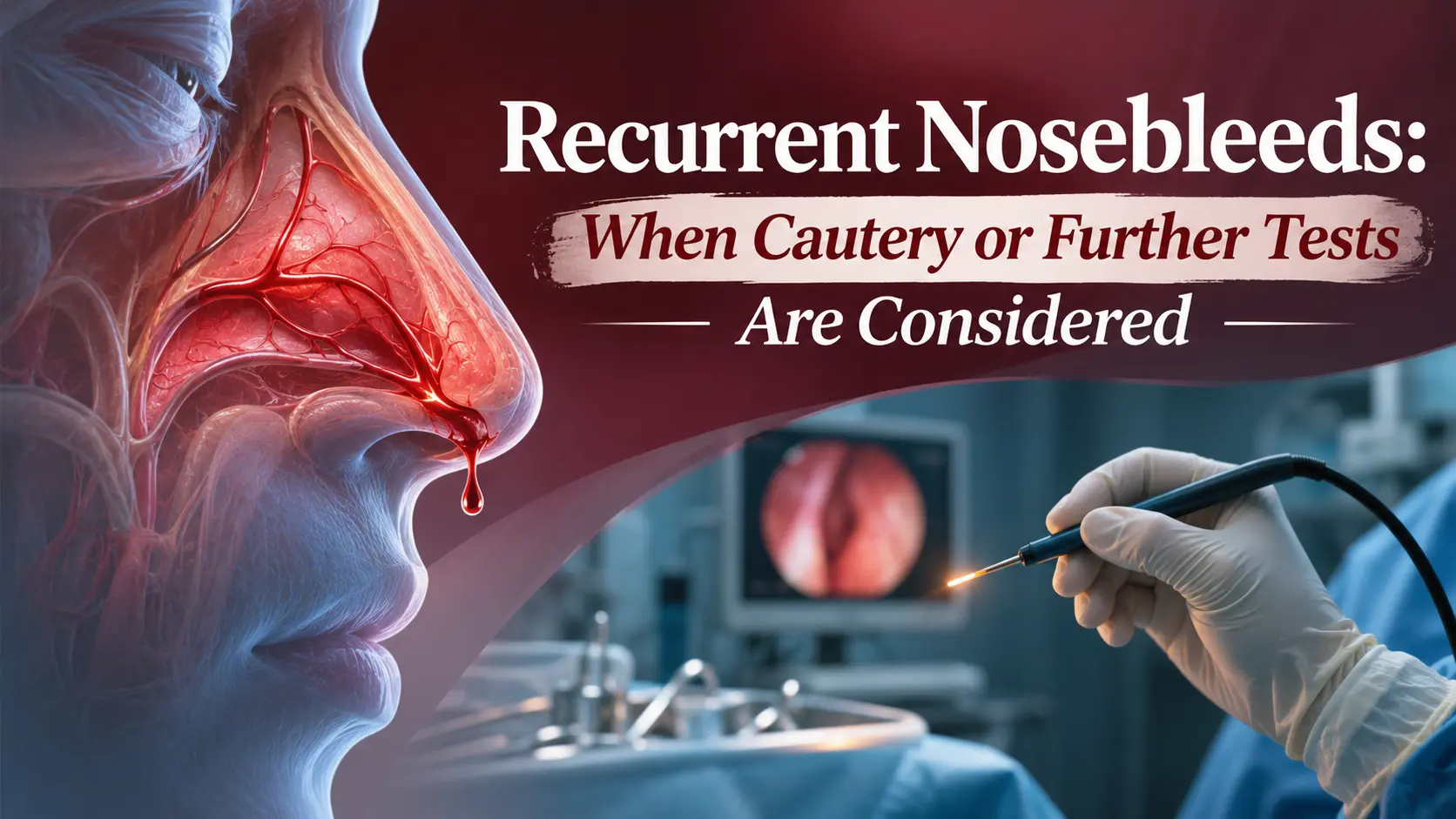
Understand Recurrent Nosebleeds: When Cautery or Further Tests Are Considered—how it is assessed, which care options may be discussed, and which symptoms need.
Read More