
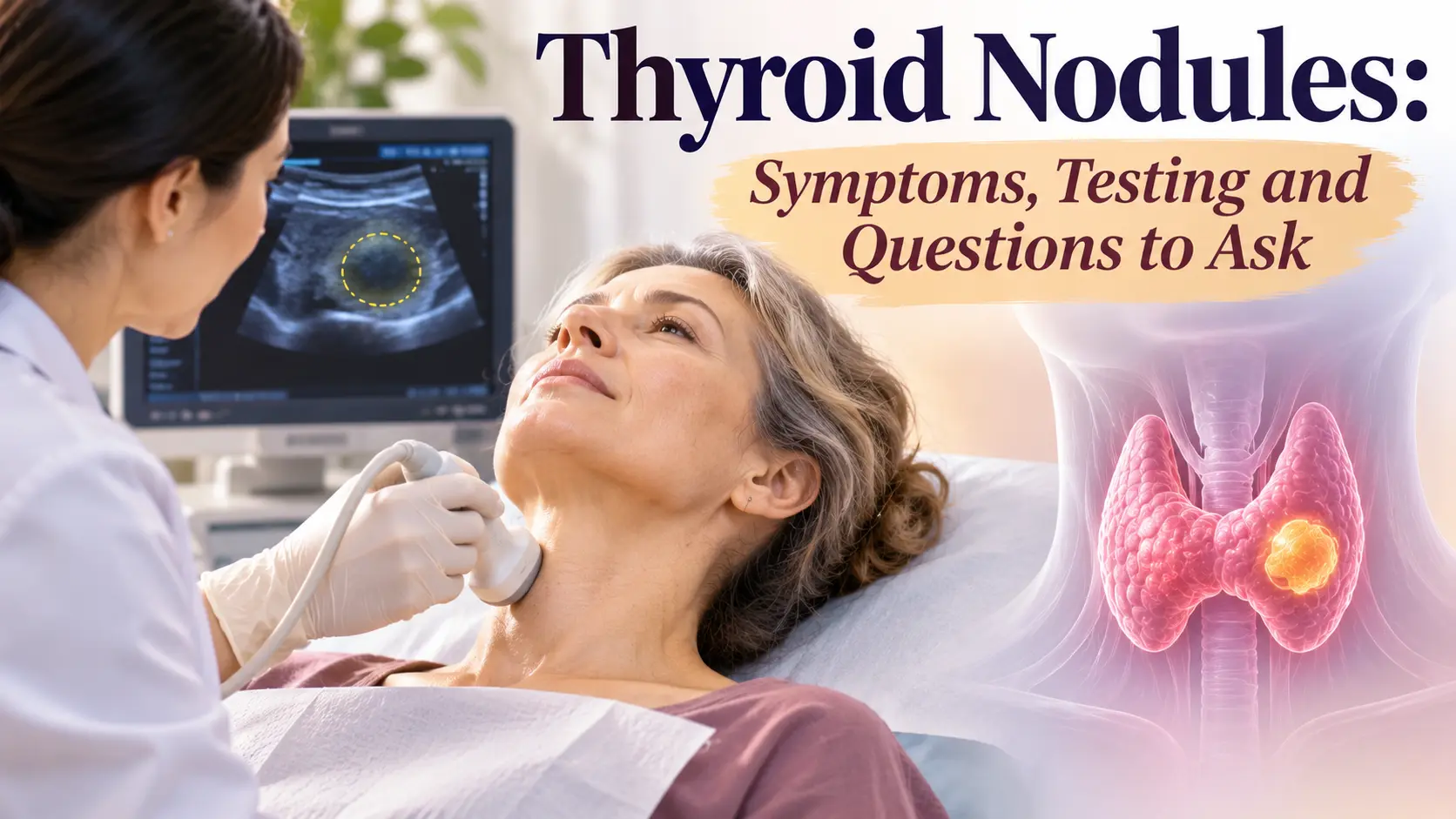
A thyroid nodule is a lump within the thyroid gland at the front of the neck. Nodules are common and many are benign, but they need evaluation to decide whether monitoring, further testing or treatment is appropriate. Most nodules do not cause obvious symptoms. A new neck lump, rapid growth, voice change, swallowing problems or breathing symptoms should be brought to a clinician’s attention.
Symptoms and examination
Some nodules are found incidentally on imaging, while others are noticed as a lump. Larger nodules can sometimes cause pressure, swallowing discomfort or voice changes, although these symptoms have several possible causes. The clinician assesses the neck, medical history, family history and any previous radiation exposure or thyroid disease. A physical examination alone usually cannot determine whether a nodule is benign.
Ultrasound and needle sampling
Ultrasound helps describe the nodule’s size and features and may guide whether a fine-needle aspiration biopsy is appropriate. Blood tests assess thyroid function but do not, by themselves, establish whether a nodule is cancerous. Recommendations depend on ultrasound appearance, size, growth, risk factors and previous results. Not every nodule requires biopsy, and the specialist should explain why a test is or is not recommended.
Monitoring and treatment
Benign nodules may need periodic clinical or ultrasound follow-up. Treatment may be considered if a nodule causes pressure symptoms, grows, affects thyroid function or has concerning findings. Options vary and may include surgery or other selected interventions. Avoid assuming that every thyroid lump needs removal or that a single normal blood test ends the evaluation; decisions depend on the full assessment.
When to seek prompt care
Arrange timely evaluation for a new or growing neck lump, persistent hoarseness, swallowing difficulty or unexplained pressure symptoms. Rapid swelling, breathing difficulty or inability to swallow needs urgent care. Ask for a clear plan for results and follow-up, particularly if monitoring is recommended, so changes are not missed.
Frequently asked questions
Are thyroid nodules usually cancerous? Many are benign, but risk is assessed using history, ultrasound features and sometimes biopsy.
Can blood tests tell if a nodule is cancer? Thyroid blood tests assess function but do not by themselves determine whether a nodule is cancerous.
Does every nodule need surgery? No. Many are monitored; treatment depends on risk, growth, symptoms and test results.
Explore our head and neck surgical care page for more information about this care option. A clinician can advise based on the individual history and examination findings.
Related reading
- A Neck Lump in Adults: What Should Be Assessed?
- Head and Neck Cancer: Symptoms That Should Not Be Ignored