
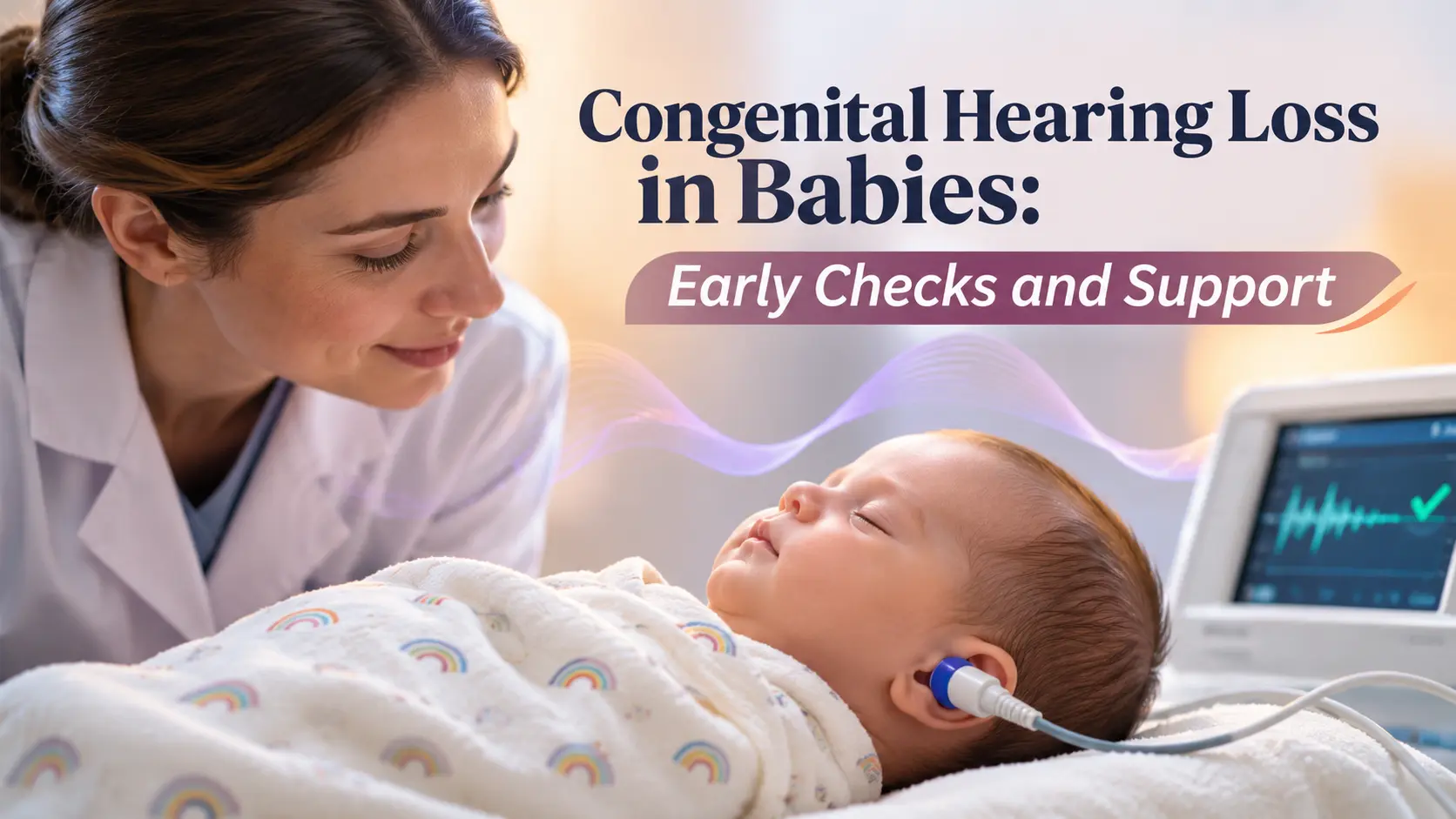
Hearing loss present at birth may affect access to speech and language, so screening and timely follow-up matter even when a baby responds to some sounds. This guide provides general education for patients and caregivers; it cannot diagnose an individual or replace advice from a qualified clinician who knows the medical history and examination findings.
Why assessment matters
A failed screen does not prove permanent loss; diagnostic testing is needed. Care may include audiology, medical evaluation, hearing technology, family-centred communication support, and early intervention. Because similar symptoms may have different causes, assessment should be guided by the history, examination, and any relevant test results rather than by a single symptom or online description.
What an appointment may involve
When discussing congenital hearing loss in babies: early checks and support, describe the pattern rather than only the worst episode: when it began, how often it occurs, whether it is changing, and what seems to trigger or relieve it. Mention any related symptoms, previous assessments, current medicines and relevant medical history. These details help the clinician decide whether examination or further testing is appropriate; the choice of tests should be individualised.
Treatment and practical steps
Care for congenital hearing loss in babies early checks and support should follow the cause established during assessment, not the wording of a symptom alone. Depending on the findings, the discussion may cover observation, conservative care, medication, rehabilitation, a device or a procedure. Ask why a particular option is being considered, what improvement is realistic, what limitations or risks apply, and what follow-up is needed. Do not start, stop or change prescription treatment without advice from the clinician responsible for your care.
When to seek urgent help
Arrange prompt follow-up after a missed or failed screen; concerns about response to sound or communication deserve assessment at any age. Seek emergency help for severe breathing difficulty, blue lips, new stroke-like symptoms, collapse, or a rapidly deteriorating condition. When in doubt about a severe or sudden symptom, choose urgent professional assessment rather than waiting for a routine appointment.
Questions to ask your clinician
For an appointment about congenital hearing loss in babies: early checks and support, consider asking: Which possible causes best fit my history and examination? Is there a specific finding that needs confirmation? Would a test change the plan? What are the reasonable options and their trade-offs? What should I monitor at home, and when should I return if the problem persists or changes?
Frequently asked question
What should I do first?
The next step for congenital hearing loss in babies early checks and support is to match the symptoms with the examination and, where appropriate, test results. A procedure is not automatically necessary; the decision depends on the diagnosis, severity, previous care and the person’s priorities. Seek prompt medical advice if symptoms become severe, sudden or rapidly worse, or if the warning signs described in this article occur.
Explore our hearing assessment and otology consultation pages for more information about related care options. A clinician can advise whether either is appropriate based on the individual history and examination findings.